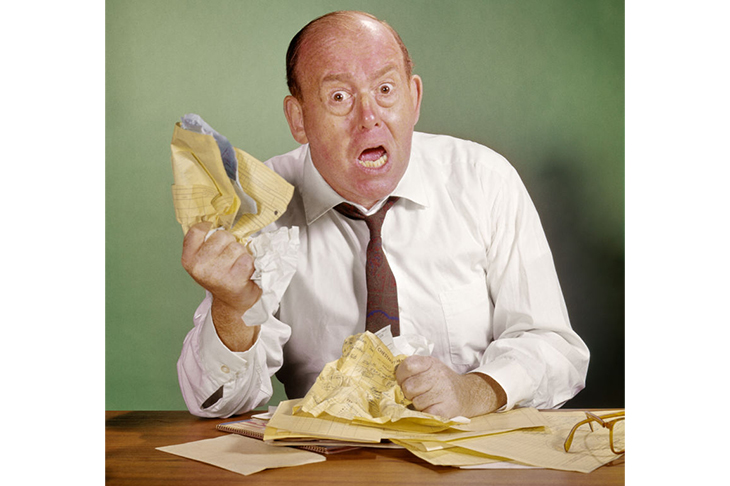
My rage against the journalistic abuse of ‘populist/populism’ continues. As I have pointed out in the past, the meaning of ‘populist’ is identical to ‘democracy’. The word ‘populist’ comes from the Latin word populus meaning people, while ‘democracy’ comes from the Greek demos also meaning people – so both words mean the will of the people. But that’s not how ‘populist’ is being used. It is regularly employed by journalists as a sneer word – as a way of putting down a person or plan or movement. As I have complained in the past: what on earth do these journalists think they mean by ‘populist’? Well, I have been following this irrational abuse of the English language, and I now think I know what they imagine they are saying – they seem to think that ‘populist’ means ‘lowbrow’. A recent headline read: ‘ALP goes populist to woo lost voters.’ The story said that Albanese is pursuing ‘a broad populist push to woo back frustrated young voters’. That’s why I am guessing these journos mistakenly believe that ‘populist’ means ‘lowbrow’. To ‘go populist’ in their minds means to dumb down policy, to appeal to voters at their dumbest, non-thinking level. Of course, ‘populist’ doesn’t mean anything of the sort. But looking at the context where it is being thrown around, that appears to be their assumption. It is, of course, an offensively arrogant assumption – we the political journalists take an intelligent and well-informed approach to policy, but the dumb voters don’t know what day of the week it is, and they have to be pandered to with ‘populist’ (lowbrow) policies. Now I am happy to be proven wrong – but that seems to how the word ‘populist’ is being abused by journalists. Yet again the English language is butchered by the inky brigade!
John writes: ‘Hearing the Coalition described as a rabble, got me wondering how that word came into usage?’ ‘Rabble’ started life, in the 1400s, as a verb not a noun. The verb ‘to rabble’ came into English from Middle Dutch and meant to speak rapidly and incoherently (the sort of noise that a rowdy group, a ‘rabble,’ would make all speaking at once). In its origin it is related to the familiar word ‘babble’. And when a political movement becomes a rabble, they lose focus and all they do is babble!
Got something to add? Join the discussion and comment below.
Contact Kel at ozwords.com.au
You might disagree with half of it, but you’ll enjoy reading all of it. Try your first month for free, then just $2 a week for the remainder of your first year.