Did no one who lived through the Weimar Republic of 1918-33 see what was coming, asks Victor Sebestyen in his impressive new book. The politicians, the intellectuals, the foreign visitors who converged on Berlin in the wake of the first world war all wrote about the anti-Semitism and violence they witnessed, but virtually no one perceived where Germany was heading until it was too late. A great deal has been written about the Weimar years, much of it in hindsight; but Sebestyen, the author of bestselling books on Hungary and Russia, sets out to relate events as they unfold – to tell the story as it happened. The result is a fascinating portrait of how frighteningly easy it is for a democracy to crumble.
Unified only in 1871, Germany was an autocratic, rapidly industrialising Prussian-dominated monarchy when it entered the first world war. After its military defeat, a very reluctant Kaiser was forced to abdicate, leaving in place a coalition, crafted in the city of Weimar, under the small, stout, unimpressive but decent President Friedrich Ebert. A new constitution enshrined important civil rights but, fatally, handed presidents the power to rule by decree. Censorship was lifted, resulting in an explosion of cultural experiments, and the new Germany became the first major nation to give women the vote. Homosexuality was recognised. The transfer of power proved peaceful: ‘No French savagery, no Russian communist excess,’ wrote Thomas Mann. Before long, Berlin was publishing 149 newspapers, far more than any other city in the world.
But with the new freedoms came polarisation between extremes of left and right. A revolt of the Spartacists, later rebranded the German Communist party, was crushed and its leading heroes, Rosa Luxemburg and Karl Liebknecht, murdered. Reactionary demobilised soldiers, the Freikorps, emerged as ‘unruly and untamed adventurers’. The Versailles Treaty – excellently described by Sebestyen in all its humiliations and discords – left in place an undying German conviction that the country had been shamefully treated and wrongly blamed as the sole instigator of the war. Stiff reparations, and the seizure of the Ruhr industrial belt by the French when they were not forthcoming, fuelled further anger. As the astute Anglo-German diplomat Harry Kessler, much quoted by Sebestyen, put it: ‘A terrible era begins for Europe… It will end in an explosion probably more terrible than the world war.’ Hyperinflation, coming soon after the devastating Spanish flu, led to economic ruin. Theatre tickets were paid for in eggs and butter.
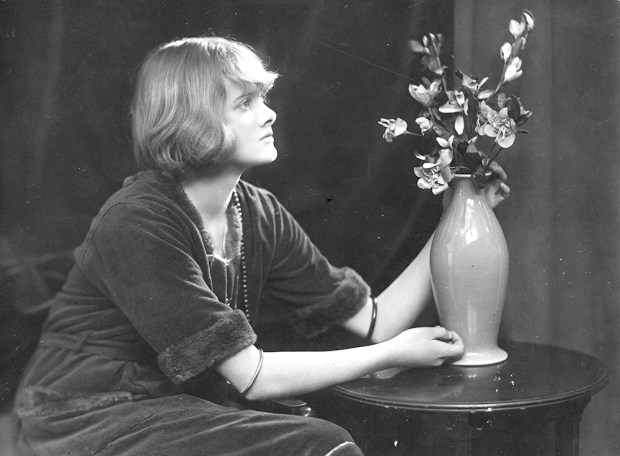
Yet the early 1920s also brought a time of subversive cultural ebullience, with the anarchical, whimsical Dadaists and the socially conscious Bauhaus movement. The German film industry turned out as many, and often better, films as Hollywood. People danced the charleston and listened to jazz. Women, described by Robert Musil as ‘comradely, athletically brittle and childlike’, cut their hair in bobs. In Berlin’s 16,000 cafés, bars and dance halls, customers wrote poetry, drew, composed, flirted, debated and did business. Here, wrote Christopher Isherwood to W.H. Auden, ‘there is a place for every taste’. And because Berlin was the most exciting city in Europe, its many visitors included Vladimir Nabokov, Joseph Roth, Sergei Eisenstein, Maxim Gorky and Sebastian Haffner. One of the most enjoyable aspects of Sebestyen’s book is his copious use of their diaries, memoirs and letters and his deft pen-portraits.
The pace of social change brought with it a backlash against permissiveness and calls for German culture to be protected from corrosive and degenerate foreign influences. ‘Modernity’ became anathema. Just weeks after the death of Gustav Stresemann, one of Germany’s most stabilising foreign ministers, the effects of the Wall Street crash brought a fall in wages, a rise in prices and a dramatic increase in long-simmering antiSemitism. As the British consul in Frankfurt wrote to Lord Balfour, the far right was now openly advocating ‘the physical murder of Jews as a legitimate weapon of defence’. All the main political parties were acquiring their own paramilitary forces. The number of homeless people soared and soup kitchens turned desperate people away. Berlin had become, noted Ben Hecht, the ‘prime breeding ground for evil’.
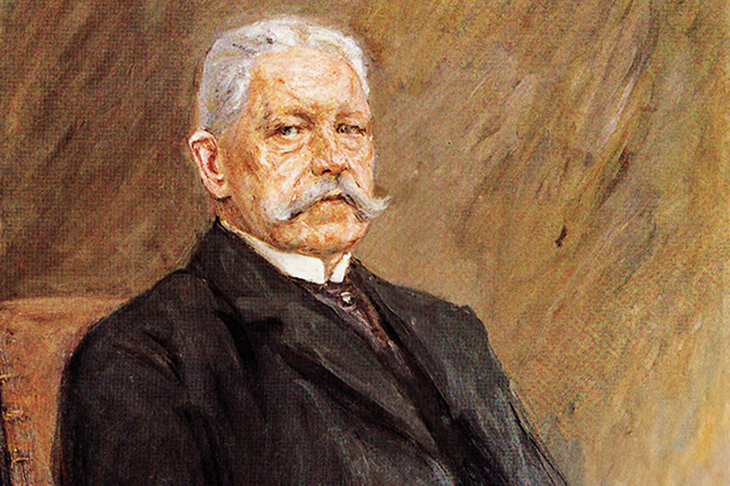
Of the many far right demagogues, Adolf Hitler and his Nazi party were the best organised. No one could rival the brilliance of Joseph Goebbels’s propaganda skills. The young warmed to Hitler’s oratory and his alternative reality of lies, inconstancies and hatred. He spent his six months in prison after the failed coup of 1923 usefully writing Mein Kampf, which was soon selling more copies than the Bible. Sebestyen reserves some of his harshest criticism for Field Marshal Paul von Hindenburg, the Prussian aristocrat who became president, aged 77, in 1925 – a ‘coward’ who never took responsibility for his part in the horrors of the trenches but did all he could to fan myths about the war.
By 1932, Sebestyen writes, Germany was living under an authoritarian regime with a barely functioning government, a judiciary strongly biased in favour of the right and a president ruling largely by decree in a country riven by extreme poverty. The question was not whether Germany would choose democracy or autocracy but rather which kind of autocracy – Hitler’s demagoguery or Hindenburg’s cronyism. By the time he handed the chancellorship to Hitler, Hindenburg had achieved what he really wanted: an end to the Weimar Republic, effectively killed off ‘through a form of political suicide’. ‘The entire class representing intellectual Germany is Nazi-infested,’ lamented Kessler.
Sebestyen ends his book with Hitler’s ascent to power. Katja Hoyer also asks the question why Germany allowed itself to become a genocidal dictatorship, but she writes not about the country as a whole but about Weimar itself – a quaint, old-fashioned small city of cobbled streets and timber-framed houses. Once visited by Goethe, Schiller, J.S. Bach, Liszt and Nietzsche, it became the place where Germany reinvented itself and where the Nazi party tried out its rallies and salutes. Baldur von Schirach, the founder of the Hitler Youth, came from Weimar.
No one could rival the brilliance of Joseph Goebbels’s propaganda skills
To shape her narrative, Hoyer follows the stories of half a dozen characters, none well known to history but each symbolic of German life between the wars. Carl Weirich owned a stationer’s shop; Rosa Schmidt, who was Jewish, ran a hotel where the Nazis celebrated their feats; and Elisabeth Nietzsche devoted her life to keeping her brother’s flame alive. This is history laced with fiction – ‘Carl’s heart filled with a mixture of awe and anxiety’ – which creates some scepticism; unfair perhaps, because Hoyer is also scrupulous about her sources.
Through these and other minor characters, she traces Weimar’s golden years. But Weimar was also the place where the first state institution for race studies was set up. The concentration camp of Buchenwald, opened in 1937, lay 8km from the city. Hoyer describes how, by 1938, there was just one Jewish-owned shop left, a toy shop. On Kristallnacht it was attacked and no one in the street paused to help the elderly proprietor as she begged for mercy. Even before the Nuremberg Laws of 1935, Jewish children there were being expelled from schools.
Weimar, writes Hoyer, was the city that perhaps best represented German high culture before it collapsed under right-wing nationalism. Its people were witnesses, victims, perpetrators and survivors, and studying them can take us closer to understanding how Nazism took hold, spread and eventually killed democracy. Both she and Sebestyen provide lively accounts of the battles between left and right to control a country in which too much was fragile and where there were in the end simply not enough democrats to defend and save it. Decent men made terrible misjudgments and there were too many malign ones capable of seizing power.
Sebestyen goes further. Though current times cannot be compared to Weimar’s economic crises, civil violence and racism, there are echoes of them today in the rise of autocrats and nationalist populism and in the rifts in previously trusted geopolitical alliances. What the Nazis provided was order – as long as people did what they were told and were not too squeamish about what was happening to minorities. Are we, he asks, in a ‘Weimar moment’?
Got something to add? Join the discussion and comment below.
You might disagree with half of it, but you’ll enjoy reading all of it. Try your first month for free, then just $2 a week for the remainder of your first year.