On Wednesday, NASA lit the fuse on its Artemis II rocket, and the world watched four astronauts begin the first crewed journey toward the Moon since Apollo 17 in 1972.
The back-patting was immediate and thunderous.
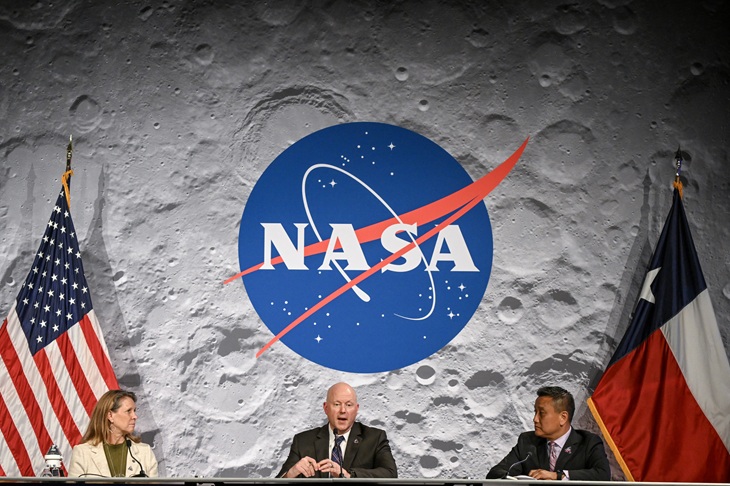
LIVE: Artemis leaders are discussing the successful launch of NASA's Artemis II mission and the next steps for the astronauts headed on their journey around the Moon. https://t.co/U1Bt9FPNc1
— NASA (@NASA) April 2, 2026
You could be forgiven for thinking something genuinely new had happened.
But it hadn’t.
NASA is re-running an episode that aired more than 50 years ago – and billing the taxpayer $93 billion for the privilege.
Ironically, the very same day, Elon Musk’s SpaceX filed for its initial public offering, expected to value the company at over $2 trillion – larger than Meta, larger than Tesla, and enough to make Musk the first trillionaire in human history.
The contrast between the old and new guard of space exploration could not be more vivid: one is a monument to bureaucratic ambition, funded by other people’s money; the other is a testament to a single man’s refusal to accept that the science-fiction dreams of our childhood must remain fiction.
The truth is, the Artemis program was a failure before it ever launched.
The Space Launch System (SLS) rocket was built by NASA’s legacy contractors – Boeing and Lockheed Martin, with a contribution from Airbus – on a cost-plus contract.
It is my opinion, that these setups reward delay, gold-plating, and mediocrity. There are no consequences for overruns, no incentive to innovate, and no penalty for failure beyond a strongly worded Senate hearing.
The results are as predictable as they are staggering.
SLS costs roughly $4 billion per launch. Nothing is reusable.
In the lead-up to Wednesday’s mission, a $23 million faulty toilet nearly derailed the whole thing.
See at SpaceX, they don’t do cost-plus plumbing. SpaceX’s Starship costs only $100 million per launch, and with a bonus set of reusable boosters.
For the price of a single SLS launch, NASA could theoretically fly Starship 40 times. Not to low Earth orbit. To the Moon.
Had SpaceX been entrusted with the mission, even after accounting for the extra orbital refuelling required for a lunar mission – estimated at $1-1.7 billion all-in – you’re looking at a cost up to four times cheaper.
And yet what truly sets SpaceX apart is not the cost curve – it is the man at its centre. Most billionaires who dabble in space are playing an expensive hobby. Elon Musk is playing a different game entirely.
He does not merely want to reach the Moon. He wants to build cities on Mars, seed data centres in orbit, manufacture AI chips on American soil, and make humanity a multi-planetary species as insurance against its own self-destruction.
These are not the ambitions of a CEO. They are the ambitions of a civilisation – held by a single man who, uniquely, has the resources, the engineering culture, and the sheer obstinacy to pursue them.
This is the marvel of capitalism: a private company, answerable only to its ambitions and its balance sheet, has made the most powerful government space agency on Earth look like a rounding error.
In 2025, SpaceX generated an estimated $15.5 billion in revenue – more than doubling in two years. Starlink alone brought in $11.8 billion in sales, making it the largest satellite communications company on the planet. SpaceX now holds 97 per cent of the US launch market and 83 per cent globally.
The incoming NASA Administrator Jared Isaacman, appointed by President Trump, appears to understand the score.
In March, he scrapped the long-delayed Gateway lunar space station – widely seen as a politically motivated jobs program – and redirected the agency toward commercial partnerships.
NASA now plans to use Starship to ferry crews and materials to the Moon rather than building the hardware itself.
Next year, SpaceX and Jeff Bezos’s Blue Origin will compete to see whose lunar lander can dock with Orion in orbit, ahead of a crewed landing in 2028 – the free market at work in all its glory.
Remember too that in March 2025, it was SpaceX that came to the rescue of two astronauts stranded aboard the International Space Station – after NASA’s procured Starliner malfunctioned, turning an eight-day test mission into a 286-day ordeal.
The Apollo program was never about cost-benefit analysis.
It was about geopolitics, urgency, and national will. But Apollo ended. What Musk is building does not end – it compounds.
SpaceX thrives because it has the freedom to fail fast, iterate faster, and answer to no committee. You cannot out-innovate a company playing for its life with its own capital when you are playing for consensus with someone else’s taxes.
I have no doubt Artemis II will be the last government-owned vehicle to carry humans beyond low Earth orbit.
What comes after – the Moon economy, the Mars ambition, the genuine expansion of our species into the solar system – will be built by private enterprise, on commercial logic, at commercial speed.
When the Moon is treated as a business opportunity rather than a photo opportunity, things actually get done.
Of course, Musk may not succeed in achieving his always opportunistic timelines. But we should not scoff at those more ambitious than ourselves – particularly those rare individuals who, once in a generation, look at the impossible and simply decide to do it anyway.
The future of space has a distinct Musk about it. And that, for all the fanfare from Cape Canaveral, is the real story. It’s time to pass the baton in the space race to Silicon Valley.