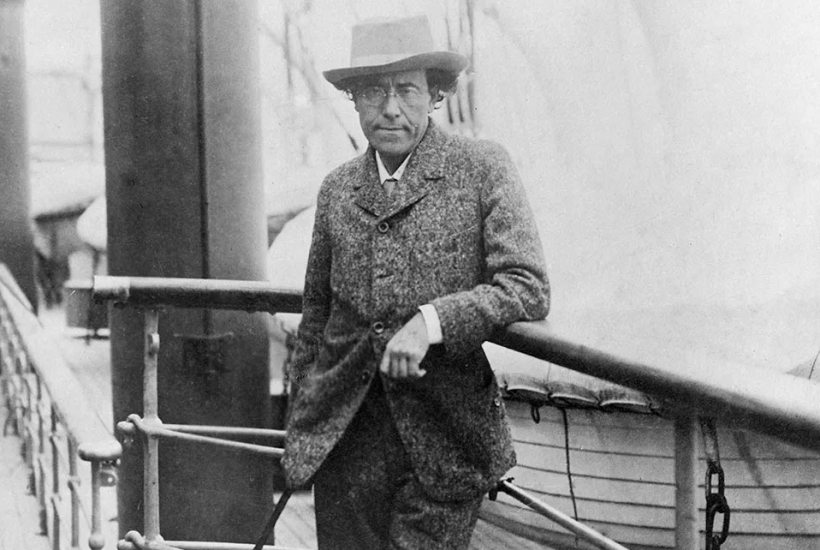
Robert Seethaler is known for celebrating the unsung: commonplace characters – peasants, labourers or shop assistants – who draw us into their quiet lives. But the protagonist in The Last Movement is a celebrated historical figure: Gustav Mahler. For those in search of biographical information, as W.H. Auden put it, a shilling life will give you all the facts. Today we’d go online. How will Seethaler, a distinguished miniaturist, deal with an icon?
We meet the composer in 1911 aboard the SS Amerika on his final journey across the Atlantic, homebound and dying. A respectful ship’s boy brings him a tray of tea as he sits on the sundeck, wrapped in a blanket, contemplating the ocean and his turbulent life. With flying fish gleaming alongside, he revisits past success and hostility – feted as a conductor in New York; lampooned in Vienna as ‘a Jewish monkey’ despite conversion to Catholicism. His first meeting with Alma, ‘the most beautiful woman in Vienna’, is love at first sight – on his part. Increasing celebrity brings pressures; symphonies are completed and acclaimed.
On the windblown deck, Mahler calls the boy for more tea and looks back at the pleasures and darkness of the past – swimming in the lake with a laughing daughter; jotting down the trill of birdsong in his rural retreat. The marriage is disintegrating under the weight of family tragedy, the tension between Mahler’s obsessive need to compose and his besotted need for Alma. The catastrophic discovery of her affair with Walter Gropius sends the composer on a two-day journey to seek guidance from Freud, who offers little beyond a suggestion to wear a warm jersey on the train home. With grim humour, Mahler works out that he’s travelled more than 1,000 kilo-metres to deliver a four-hour monologue to the great man.
Seethaler describes Mahler’s ferocious intensity, his composing difficulties and meditations on art and mortality, but there’s a sense of something unexamined. It is Alma who emerges most vividly, deprived of a career in music; finding comfort in alcohol; adored and imprisoned. The notorious scandals and racist politics lie beyond these pages.
The fine translation by Charlotte Collins reflects Seethaler’s spare, cool style. The Last Movement avoids a grand symphonic finale. As the implacable waves roll past, the dying composer shares his days with a true Seethaler character. In a poignant afternote, like a Mahler elegy, the last chapter belongs to the ship’s boy.
Got something to add? Join the discussion and comment below.
You might disagree with half of it, but you’ll enjoy reading all of it. Try your first month for free, then just $2 a week for the remainder of your first year.