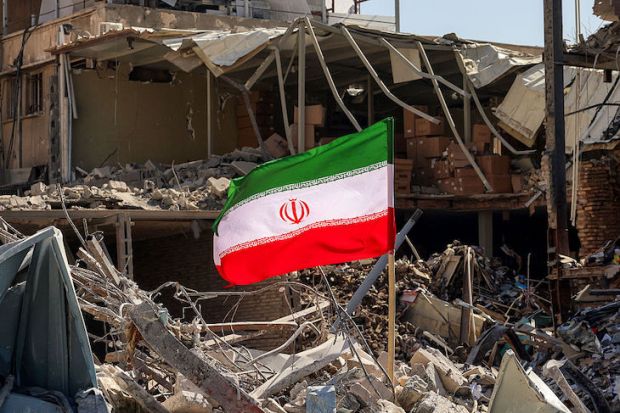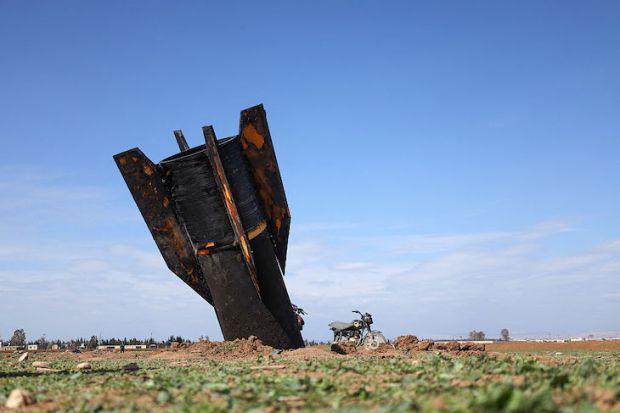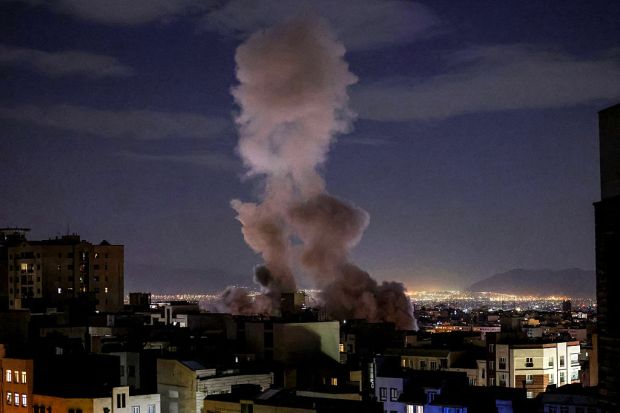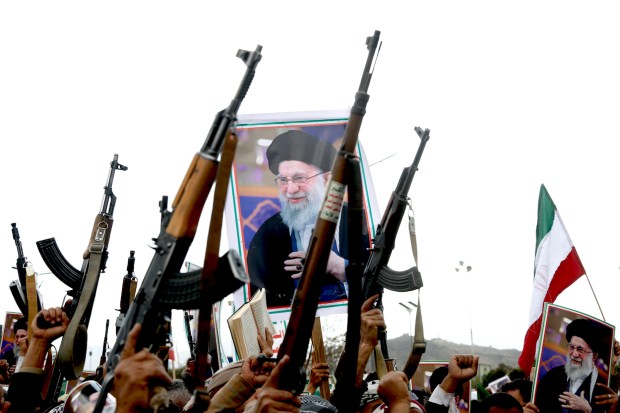
The question of whether America is fighting Israel’s war is perhaps the least interesting one. Strip away the noise, and a more consequential picture emerges. The United States has used overwhelming force to dismantle what had quietly become the most significant Chinese forward position outside East Asia.
Over the past half-decade, Tehran transformed itself from a regional irritant into a structural component of Chinese strategic architecture. Roughly 90 per cent of Iran’s crude exports flowed to Chinese refineries operating beyond the reach of American sanctions enforcement. That revenue funded approximately a quarter of the Iranian state budget, including the military forces that Washington now considers a direct threat. China, for its part, was not being philanthropic. Cheap Iranian crude helped Beijing accumulate a strategic petroleum reserve reportedly exceeding a billion barrels – enough to sustain the Chinese economy for roughly a hundred days in the event of a Pacific naval blockade. Iran was a hedge against American sea power, and a lucrative one at that.
But the energy relationship was the least of it. The deeper entanglement was military-industrial. In the weeks before the strikes, Reuters reported that Iran was days from finalising a deal with China for CM-302 supersonic anti-ship cruise missiles. These weapons are capable of evading Aegis defence systems and threatening American carrier strike groups from nearly 300 kilometres away. China had been supplying dual-use components, allowing Iran to reconstitute its missile production lines at speed. Joint naval exercises between China, Russia and Iran in the Strait of Hormuz had become routine. Iran had switched from GPS to the Chinese BeiDou navigation system. And the port at Jask, on the Indian Ocean, was being developed as part of China’s ‘string of pearls’ basing network.
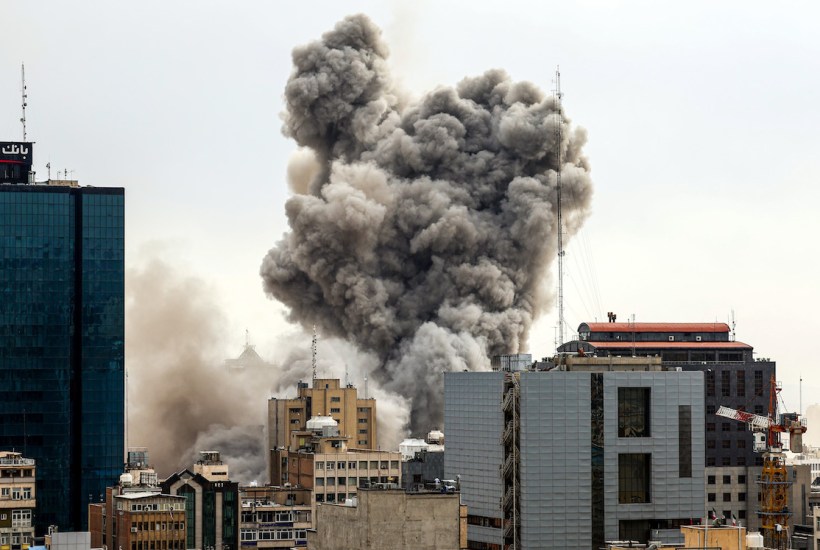
What this amounted to was a Chinese-backed anti-access architecture positioned at the throat of global energy supply – armed with weapons specifically designed to kill American sailors and constrain American freedom of manoeuvre in any future conflict over Taiwan. Interpreted this way, Iran was not just Israel’s problem, but to the extent American grand strategy is driven by the new great game of great power competition with China, it also became America’s. The strikes on the IRGC Navy, on missile production facilities at Isfahan and Tabriz, on Jask itself – these were not about the Israeli-Iranian standoff. They were about dismantling the infrastructure of Chinese power projection before it hardened into permanence.
Cautiously, acknowledging this strategic logic should not mean sleepwalking into triumphalism. This operation may prove to be one of the most consequential gambles in post-Cold War American foreign policy, and the downside risks are formidable.
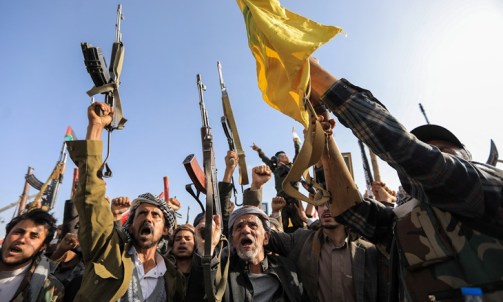
The most immediate concern is energy. The Gulf remains the world’s most important energy chokepoint. It holds nearly half of global proven oil reserves, and a fifth of the world’s oil supply passes through the Strait of Hormuz. A prolonged disruption – whether from Iranian retaliation, Houthi escalation in the Bab el-Mandeb, or strikes on Saudi infrastructure – could generate an inflationary shock at precisely the moment when the global economy can least absorb one. Markets have so far been sanguine, pricing in a short war. Markets can often be very wrong.
Then there is the question of what follows. The ‘Venezuelan option’ – go in, cut a deal with whoever holds the levers of power, get out – sounds elegant in theory. But Iran is not Venezuela. It is a civilisational state of 90 million people with a revolutionary identity forged over four decades. The Revolutionary Guards are not a junta that can be bought off with oil concessions. They are a sprawling economic-military-ideological complex with deep roots in Iranian society. If the regime fractures, the resulting instability could be worse than what it replaces. There is also the very real danger of human capital proliferation from Iran: scientists and engineers being ‘let loose upon the world’ in the face of state collapse in nuclear-threshold countries.
Those who see the spectre of a third world war are both right and wrong
The China dimension cuts both ways as well. Beijing’s conspicuous failure to defend Iran – Russia’s radar systems reportedly went dark in Syria, China issued statements and nothing more – is indeed a blow to the credibility of the alternative order that Brics and the Belt and Road are meant to represent. Every government from Central Asia to sub-Saharan Africa is taking note. But humiliation does not breed acquiescence. It breeds adaptation. China will draw lessons, harden its remaining partnerships, and diversify its hedging strategies. The long game does not end because one node in the network has been disrupted.
Those who see in this moment the spectre of a third world war are both right and wrong. They are wrong if they mean a singular, cataclysmic escalation. They are right if they mean that a structural contest between the United States and a loose Sino-Russian-Iranian axis is already well underway, fought through proxies, economic leverage, and the systematic contestation of strategic geography. What the Iran strikes reveal is not the beginning of that contest but a new and more kinetic phase of it. The Russia-China-Iran axis emerges from this episode considerably weakened – Russia bogged down in Ukraine, Iran decapitated, China seen as an unreliable patron. But weakened is not defeated, and the contest for the international order will continue long after the fires in Tehran are out.
The honest assessment is this: the strategic logic behind the strikes is more coherent than most of the administration’s public explanations suggest. But coherent logic and successful execution are very different things. The next chapter depends on whether Washington can convert military disruption into a durable political settlement – and history offers precious few examples of that trick being pulled off in the tragic recent history of the Middle East.