Almost three decades ago, the regime in Iran launched a new campaign. Its goal was to fabricate legitimacy and break the isolation resulting from its reign of terror during the first decade after the 1979 revolution. The campaign was a multi-faceted propaganda effort promising political reform, a change in behaviour, economic opportunities, and cultural freedoms. Promises they could never keep.
Prelude to metamorphosis
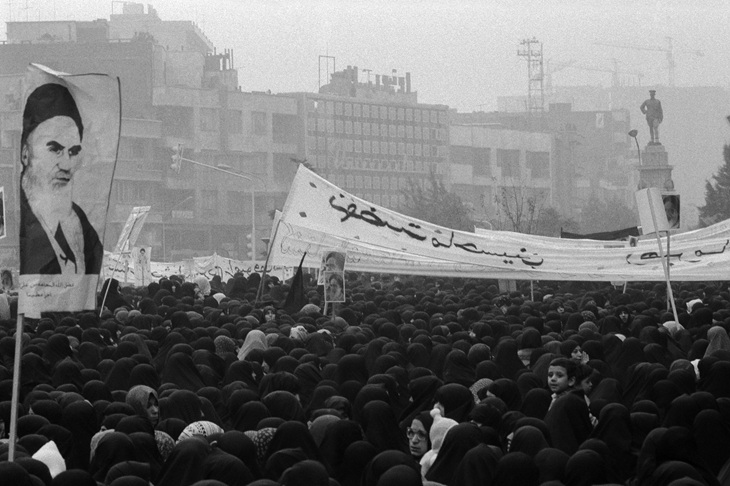
In 1989, after the war with Iraq ended in a stalemate, the regime had already depleted the resources inherited from the Shah’s era. The Islamic Republic was left with the destruction of an eight-year war, internal bleeding from conflicts with socialist factions within the revolutionary forces, and immense pressure from sanctions imposed after the 1979 attack on the US embassy.
Over the following eight years, the regime spent what remained on ‘reconstruction’ with Rafsanjani in charge. At that time, the newly appointed Supreme Leader, Khamenei, held limited power. To prevent any chance of a second coup by remaining military elements, having barely survived the failed Nojeh coup in 1980, Rafsanjani empowered the IRGC. Through reconstruction projects, he injected billions of dollars into the IRGC as well as a network of companies controlled by mafia-like families.
One outcome of these projects was the strengthening of the IRGC’s Quds Force, through which the regime accelerated its ‘exporting the revolution’ project. This included sending mercenaries to assassinate Iranian dissidents in Europe and carrying out terror plots against the US and Israel.
As a result, the regime became increasingly isolated: its diplomats were expelled from many countries, and severe sanctions in combination with uncontrolled injection of money into the economy, triggered the first wave of hyperinflation (exceeding 50 per cent) and a sharp devaluation of the currency. Dissident voices grew louder, culminating in the 1995 protests in Eslamshahr, where the regime opened fire on demonstrators with automated machine guns. The incident served as a stark warning to the regime of an existential threat posed by mounting economic pressures and international isolation, ultimately contributing to the emergence of the so-called reformist movement.
A new mask
In 1997, Khatami (former Minister of Culture) ran for president as the candidate of the Islamic-left faction of the regime. Previously known by various names, this group was most famously called the ‘student followers of Imam Khomeini’ who had stormed the US embassy in 1979. As leftists often do, they rebranded themselves as ‘reformists’.
Many individuals, including some IRGC founders, were marketed as moderates, reform advocates, and champions of freedom. Yet nearly all had been fanatic revolutionaries involved in seizing private property, raiding the US embassy, founding the Sharia Police (Revolutionary Committees), establishing the Intelligence Ministry, cracking down on dissidents, informing on fellow leftists, and most importantly participating in armed rebellion against the Shah.
Khatami was promoted as a ‘moderate’ alternative to Nategh-Nouri (a close Rafsanjani ally) who later rebranded as another moderate. The narrative was pushed not only by political activists but also by celebrities, journalists, famous athletes, and even some formerly anti-regime figures abroad. Reformism became hugely popular. After a landslide victory (allegedly 20 million votes), however, the enthusiastic public saw none of the promised changes materialise.
Truth revealed
Just two years later, in 1999, student protests erupted after newspaper offices were raided and shut down under new media laws. These protests were brutally suppressed under Hassan Rouhani, then head of the Supreme National Security Council. The events exposed a deeper flaw in the regime: its source of legitimacy and the structure of the Islamic constitution, which positions the Supreme Leader as the representative of God on Earth. His decrees are considered divine and override any legislative or constitutional provision.
Despite these failures, the reformist narrative persisted. Reformists blamed ‘hardliners’ and the IRGC for every obstacle. Their response to calls for meaningful change was typically: ‘They won’t let us. We don’t have enough power.’
In subsequent decades, key figures and founders of the Islamic Revolution were rebranded as reformists, pushing a ‘choice between bad and worse’ narrative. In 2005, Rafsanjani ran alongside Karroubi (both former parliamentary heads). In 2009, Mousavi – with his questionable 1980s record of hostility toward the US, support for mandatory hijab, and approval of mass executions of dissidents – lost the presidential election, claimed it was rigged, handled the protests, and used the narrative to remain relevant. In 2013, Hassan Rouhani (the same figure who oversaw the 1999 student crackdown) ran as the ‘moderate’ against Qalibaf.
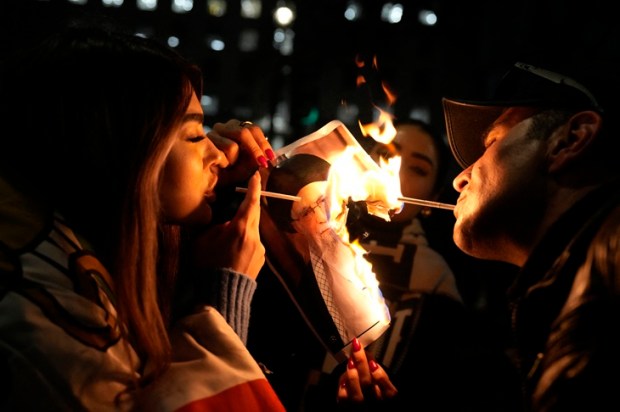
In other words, the man who ordered the 1999 crackdown posed as a moderate, while the one executing it was labelled as the hardliner. This pattern repeated until the 2017–2018 protests, when crowds chanted: ‘Reformist, hardliner – the game is over.’
Foreign buy-in
Unfortunately, the campaign succeeded remarkably abroad. Driven by a collective desire to maintain the status quo, so-called reformists marketed themselves to the international community as the force capable of delivering the behavioural change everyone hoped for. Decades of global havoc, combined with a massive media effort, created the perfect recipe for re-evaluating the regime’s intentions.
Khatami introduced ‘Dialogue Among Civilisations’ at the UN; filmmakers attended international festivals; foreign news media were allowed back into Iran; and analysts from numerous think tanks published articles claiming Iran was becoming a reformed Islamic country ready to rejoin global markets. The campaign worked so well that in 2003, after the Bam earthquake, the US sent millions in humanitarian aid. The regime gained enough trust to play key roles in Iraq and Afghanistan: in Iraq, it propped up puppets and radicalised Islamists against US forces, killing and wounding thousands with IEDs; in Afghanistan, it lobbied against restoring the monarchy under Zahir Shah and sheltered Taliban leaders.
A new kind of export
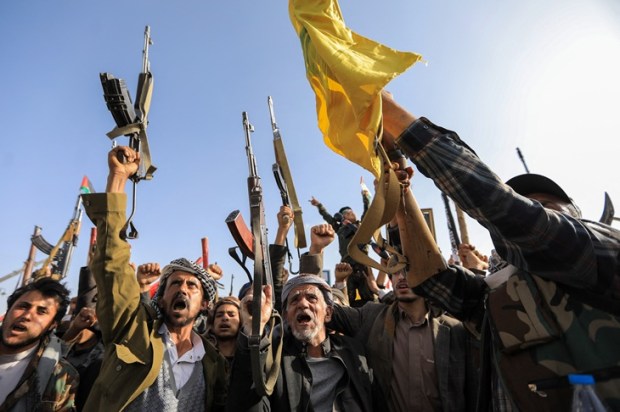
The regime’s international rebranding initially succeeded but suffered a major setback with the 2003 revelation of its nuclear program. The US opted for sanctions over military action. Early nuclear talks stalled, and sanctions tightened under Obama’s first term. But the ‘moderates’ intervened, leveraging their Western networks to delay action until the moderates ‘gained power’ and could negotiate a deal. They framed sanctions as the barrier preventing Iran from becoming a progressive haven under reformists. The result was the 2015 JCPOA deal, described by President Donald Trump as ‘the worst deal ever’. It granted the regime billions in relief, access to international banking, in exchange for a pause in enrichment (with no limits on missiles or any mention of human rights). The regime then expanded funding for proxies like Hamas, Hezbollah, the Houthis, and Afghan/Pakistani mercenaries in Syria, extending even to Africa and Latin America. While moderates were smiling on the global stage, the hardliners were building the missile program and exporting terror with full internal support from those same moderates.
The regime’s menace extended domestically. ‘Moderate’ Rouhani oversaw brutal suppression of major protests in 2017, 2019, and 2020, with death tolls in the thousands. Internet censorship expanded via the National Information Network. Tens of billions were lost to systematic corruption. Inflation hit 45 per cent, and the rial collapsed, all while experts, analysts, academics, and human rights organisations portrayed the regime as on a path to reform.
The broken vase
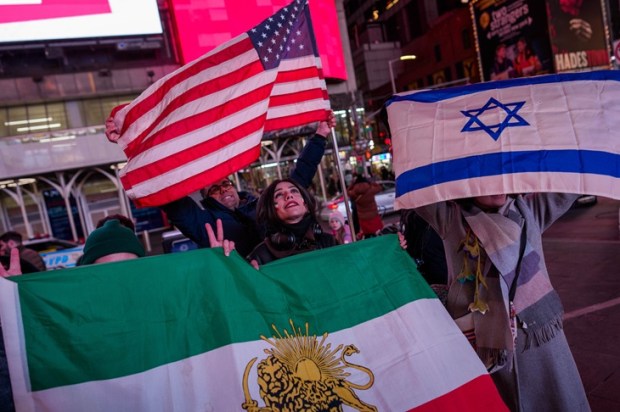
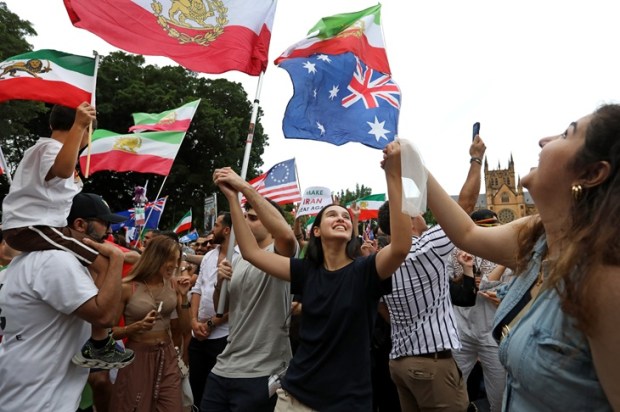
Two decades after its launch, the slogan ‘Reformist-hardliner – the game is over!’ shattered the rhetoric. People demanded real change, calling the name of Reza Shah who had truly transformed the nation a century earlier by curbing clerical power. Pro-reform elements labelled protesters ‘lumpen’, ‘peasants’, and ‘anti-democratic’ but to no avail. The rhetoric was irreparably broken. Protests grew year after year until late 2025 to January 2026, when millions took to the streets calling for the Shah’s return (Javid Shah). ‘Moderate’ President Pezeshkian carried out Ayatollah Khamenei’s orders, resulting in a brutal crackdown with death toll estimates above 35,000 and some unofficial claims even higher. The regime lost its last shreds of legitimacy.
The risk
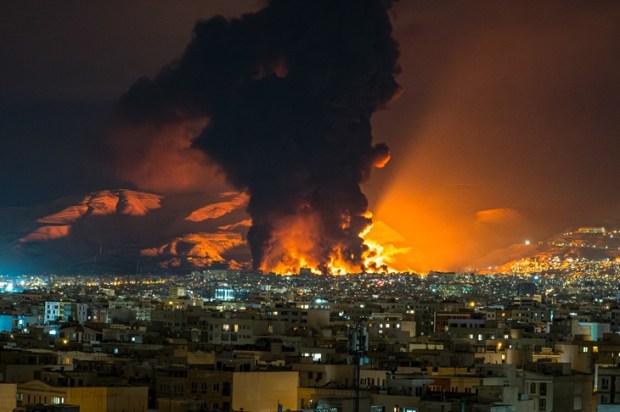
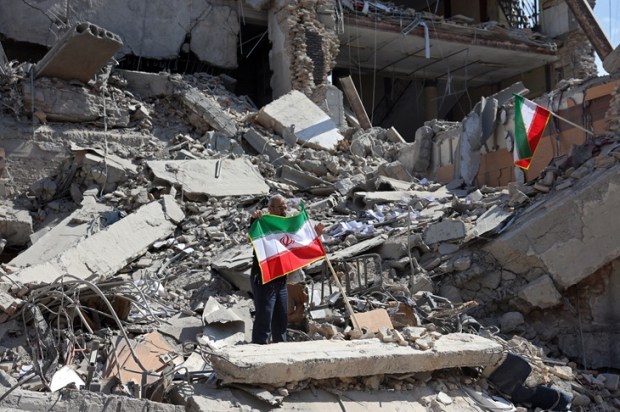
Now, with the war entering a new phase after strikes that eliminated much of the regime’s missile and nuclear capabilities, the main threat is that one of these so-called moderate figures might cut a deal to emerge as the new leadership. Rumours that the CIA provided Israel with a list of protected individuals, mirrored by the fact that reformist figures have not yet been targeted, heighten this risk. The ‘Venezuela model’ often discussed would involve exactly that. Something that is considered the worst outcome by most Iranians. The problem with the Islamic Republic is not merely a figurehead to remove, but the ideology itself which is created and sustained by these very reformists.