Only a few days ago, on February 24, I argued that because of Iran’s:
…egregious violations of basic human rights, there is an incumbent moral duty to support the Iranian people in their fight for freedom and basic human rights. The West urgently needs to demonstrate its unconditional support for the Iranian people in their noble struggle for basic human rights.
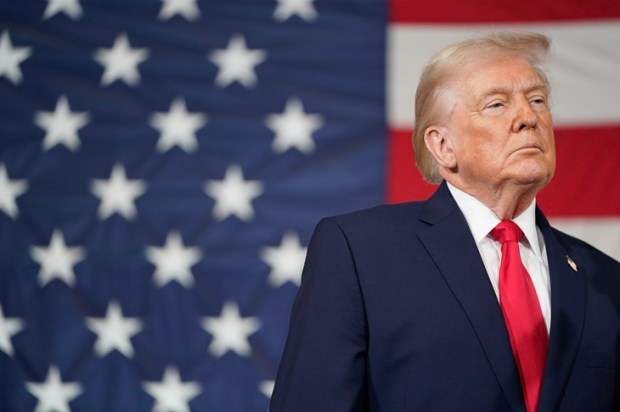
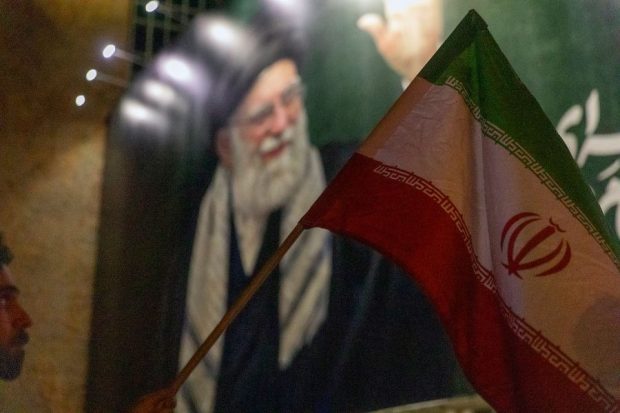
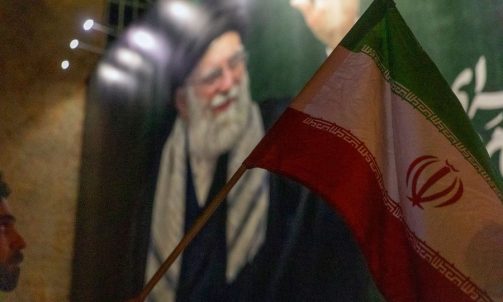
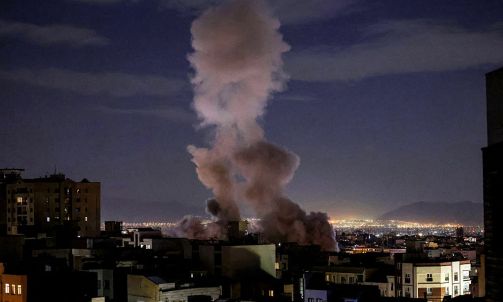
This ‘support’ came to Iran on Saturday, February 28. On that day, President Trump and Prime Minister Netanyahu authorised sustained air strikes on the facilities of the Iranian regime. They succeeded in decapitating the regime by killing Ayatollah Ali Khamenei and members of his inner circle in a surprise daylight attack. The attacks have energised the Iranian population, with people dancing in the streets, blaring their car horns, and ignoring the hated dress code. Iran is responding by bombing locations in Israel and Gulf states, even in Cyprus, which hosts American installations. The mission has thus become a regional conflict.
Trump and Netanyahu’s objective appears limited to destroying Iran’s nuclear and missile facilities and capacity, whilst encouraging the Iranians to overthrow their government and bringing about a change of regime.
The reality of human misery, economic incompetence, executions without trial, as well as the outsourcing of global terrorism are hard to deny, and the brutality of the Islamic regime is difficult to fathom.
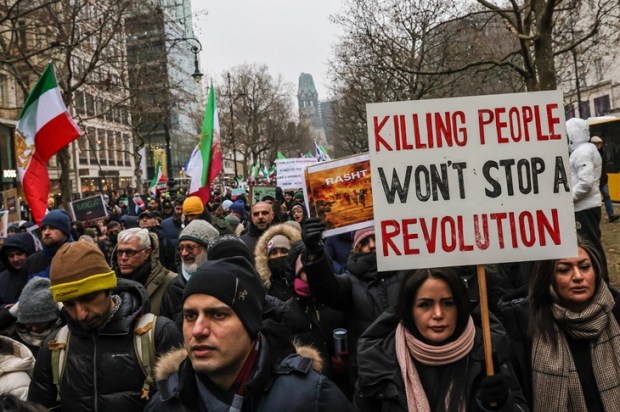
Reportedly, during the January protests, the regime’s stormtroopers, the cruel Islamic Revolutionary Guard Corps (IRGC), killed thousands – the number is estimated to be between 36,000 to 50,000 people – and even executed those who were wounded during the demonstrations and sought medical help in hospitals. The barbarity and the human rights violations committed by the regime against its own people are beyond any comprehension and language is incapable to describe the enormity of these crimes.
And yet, the left, whilst relentlessly criticising Israel for allegedly committing genocide in Gaza, fervently seek to resolve the dispute by dialogue and diplomacy.
Meanwhile, António Guterres, Secretary-General of the United Nations, pontificated that disputes must be settled by negotiation:
I call for an immediate cessation of hostilities and de-escalation. Failing to do so risks a wider regional conflict with grave consequences for civilians and regional stability. I strongly encourage all parties to return immediately to the negotiating table.
How is it possible to negotiate with a totalitarian theocratic regime that only knows the language of hate and murder?
Is it moral to allow a regime to remain in existence when it slaughters tens of thousands of citizens in what it thinks is the name of Allah?
In these situations, dialogue passively yields to evil, which can only be ended by eliminating it. Subject to the validity of this point, the advice of the United Nations does not, in my view, advance the pursuit of peace by respecting human rights but facilitates the perpetuation of horrific abuses which cannot be countenanced by humanity.
Such a strategy is evocative of a reported discussion between Stalin and President Roosevelt at the Tehran Conference in 1943. Stalin suggested (or demanded) the execution of at least 50,000 German officers, Roosevelt, believing that Stalin could not be serious, answered facetiously that 49,000 officers would suffice!
The reaction of some politicians and media personalities is as unsurprising as it is concerning.
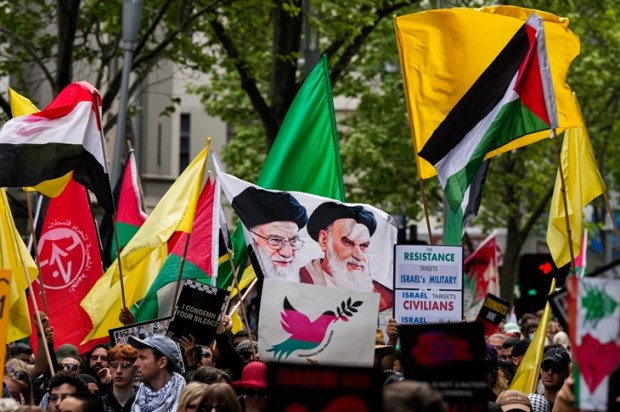
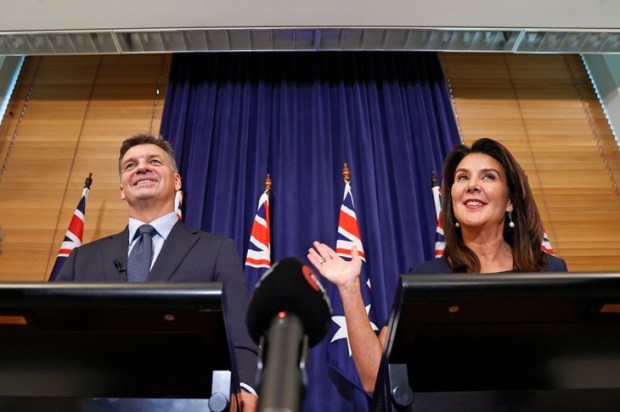
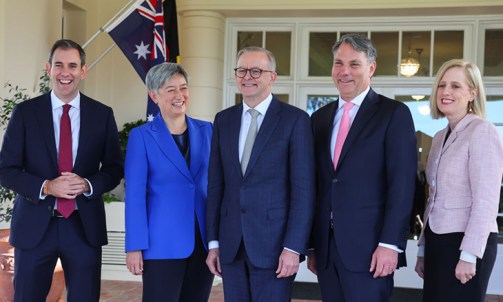
State media castigated the Australian Prime Minister’s support of the strikes on Iran, as ‘political propaganda’. The Foreign Minister, Penny Wong, mimicked Guterres and called for diplomacy and a de-escalation of the conflict.
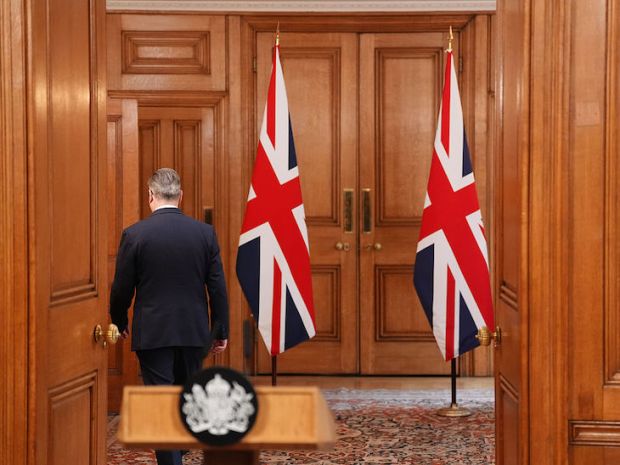
How could a call for de-escalation of the conflict be squared with support for America’s intervention?
These reactions are, perhaps unintentionally, supportive of Iran’s barbaric regime.
In the United States, prominent members of the Democratic Party strongly criticised the President’s decision, arguing that only Congress has the authority to declare war – a point that is open to debate. Another complaint accused Trump of religious discrimination because the hostilities were started during Ramadan, the Holy Month of Islam. Yet, such criticism conveniently overlooks that Jewish people have been attacked several times during their religious festivals, most recently in Bondi Beach on the first day of Hanukkah on December 14, 2025.
The American and Israeli intervention provides an opportunity for the Iranian people to rise and bring about a change of regime that, hopefully, will respect human dignity and basic rights. Even admitting that Iranians lived in a police state prior to the Islamic Revolution of 1979, there was at least a modicum of individual freedom and a government constrained by the rule of law. The intervention may also result in important geopolitical advantages because China would no longer have unrestricted access to Iranian oil; this might dampen its own expressed intentions to compulsorily acquire Taiwan.
Nevertheless, the intervention is fraught with danger. Indeed, a study of recent history reveals that, whilst the United States is particularly good at winning a battle, it has been bad in maintaining its victory long term. This is demonstrated by the dramatic withdrawal from Afghanistan, which enabled the Taliban – America’s adversary for decades – to regain power and capture billions of dollars’ worth of US equipment. Afghanistan is now again under the tyrannical Islamist regime that dehumanises women. Furthermore, the removal of Colonel Muammar Gaddafi has not led to improvements in Libya’s situation, nor has Iraq’s situation improved under similar circumstances.
The fear of a long-term, and ultimately futile involvement in these countries, with the prospect of many American casualties, explains why Trump does not want boots on the ground and seeks to bring about regime change with sustained air strikes – a risky and unproven strategy that may or may not be successful. But if successful, the Iranians will need to select their own preferred political system because the exportation of democracy to Iran may not be aa feasible strategy.
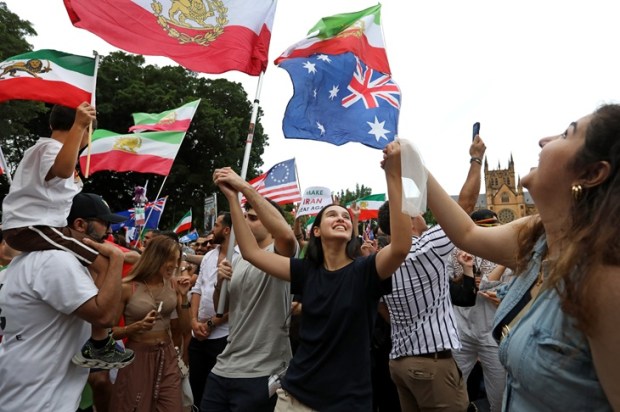
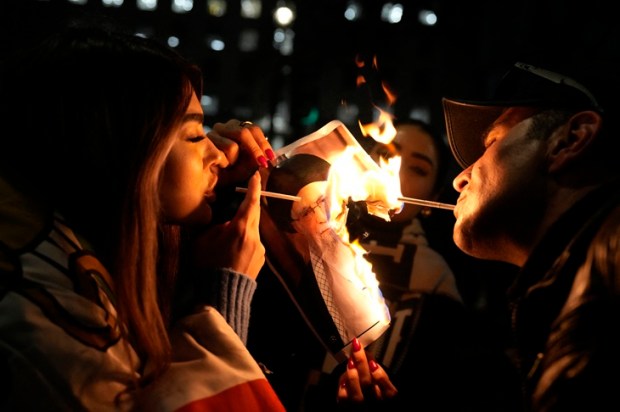
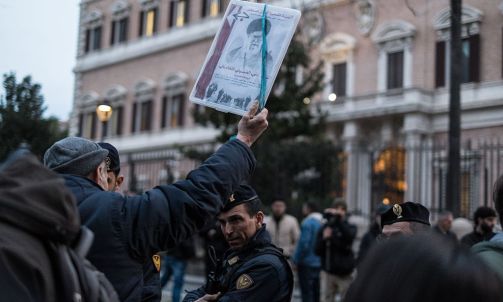
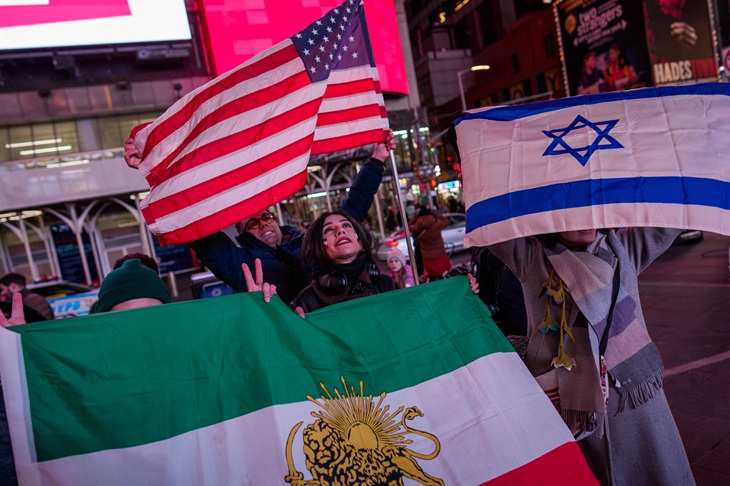
As I am watching the news reports, it is pleasing to see people dancing in the streets of Tehran, destroying a statue of the tyrannical leader, and people removing religion-mandated attire. The spontaneous and joyous celebrations in Western countries, and the expressed hope of many of these demonstrators to reactivate the Monarchy under the Shah, is testimony to the fact that the people of Iran want to free themselves from the oppression of its tyrannical regime. This is in sharp contrast with the mourning of Ali Khamenei’s death in several Australian mosques.
Nevertheless, it will be difficult to remove the current regime if it is supported by the fanatical ideological praetorian guard, the IRGC, consisting of approximately 200,000-armed fanatics, who are going to defend the regime no matter what happens. Trump wisely gave them an ultimatum: lay down your arms or suffer a certain death.
Another unscripted danger of the American/Israeli intervention will be the possibility of Iranian refugees overwhelming Western Europe. While this issue does raise some concerns, it is unlikely to cause any significant problems. This is because there would be no reason to leave a liberated country and it could also be expected that Iranians in the West might even want to remigrate to Iran.
In summary: the stand taken by the United States and Israel could be supported on humanitarian grounds. It is a stand that energises humanity and reaffirms people’s belief in human dignity and freedom.