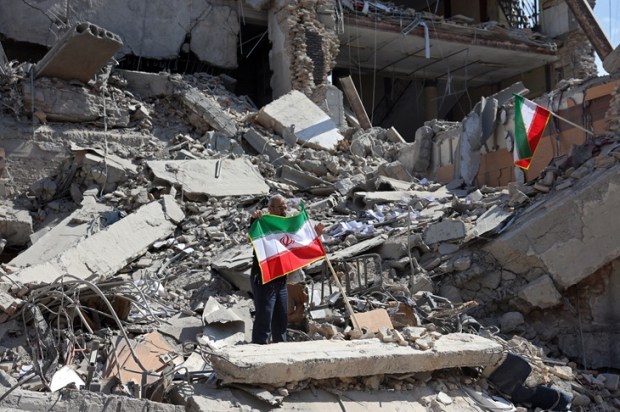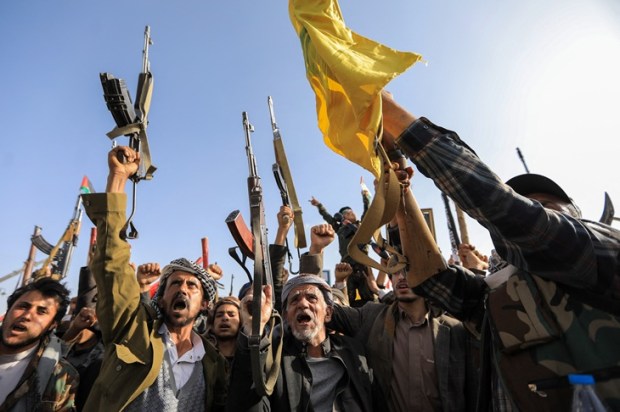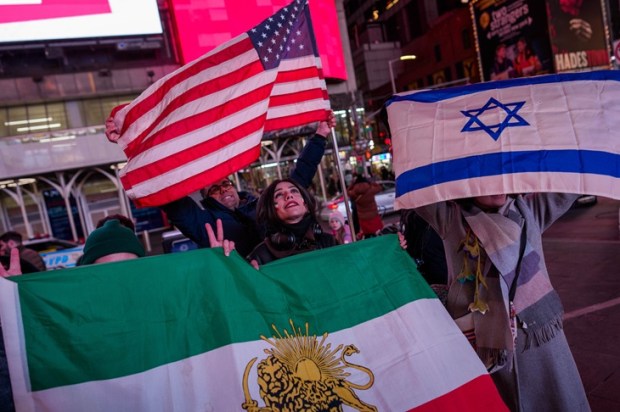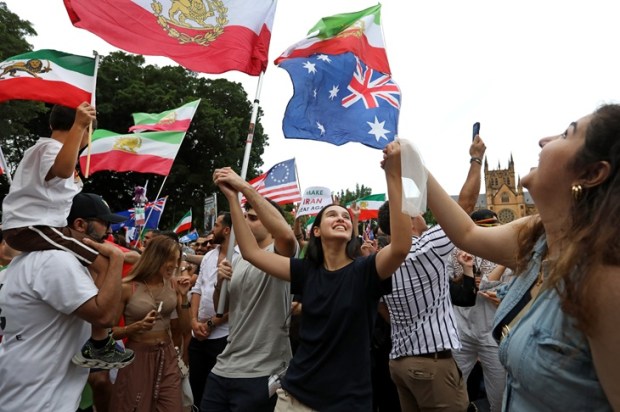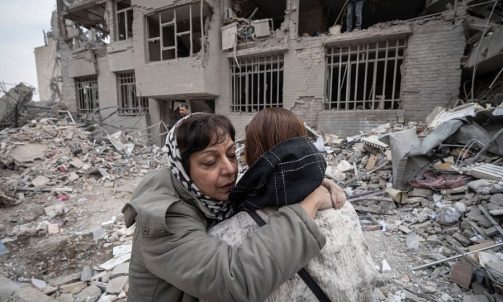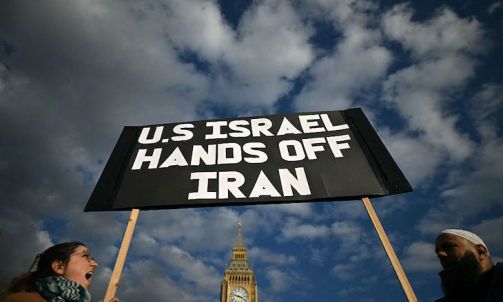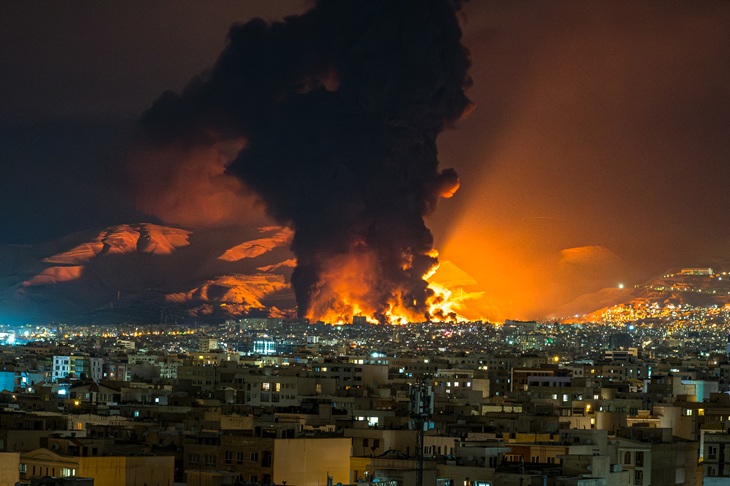
In the context of US-Israeli attacks that have decapitated the Iranian leadership, prophets of doom are already predicting an Iranian descent into the chaos and violence seen in surrounding Arab nations.
I believe that such prophecies are based on a superficial account of the region’s history, while deeper knowledge gives us hope. Despite civilian suffering, and the risk of chaos, Iran’s deep history and culture will help them endure.
The doomsayers neglect the decades-long internal pressure for change.
Despite initial enthusiasm from some people, the Islamic revolution never delivered on its promises. It instead engineered decades of oppression, and produced economic turmoil characterised by double-digit unemployment and inflation rates.
Under the fanatical leadership of Mahmoud Ahmadinejad, the Iranian government went so far as to actively pursue nuclear apocalypse in the belief that the deaths of millions of Iranians would prompt the return of the Hidden Imam and an era of ideal governance.
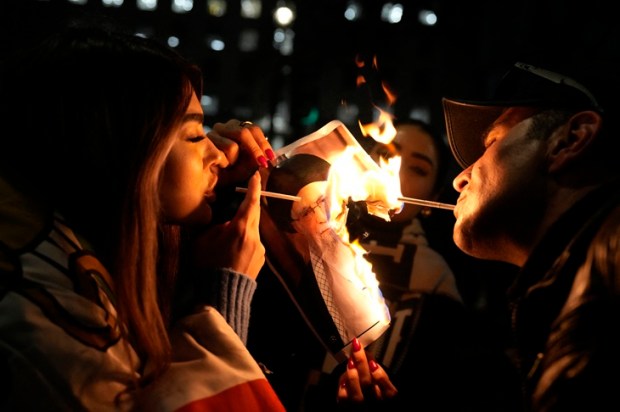
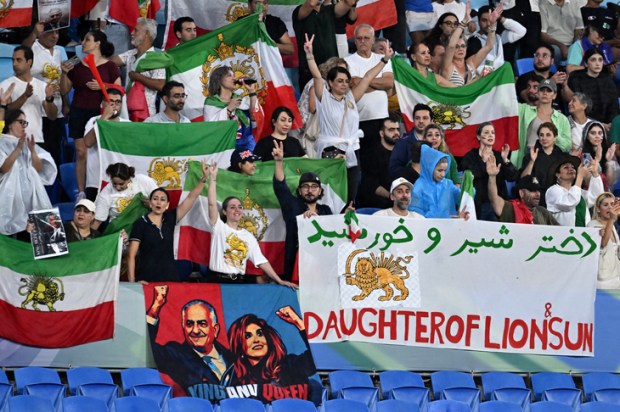
Against Islamist-generated poverty and oppression, repeated protests and anti-government movements have been repressed brutally. The protests of December 2025-January 2026 have been most important. The regime responded sadistically, reportedly killing many thousands and subjecting others to torture and sexual violence that is too hellish to describe. For most Iranians, especially those most affected by decades of repression, the US-Israeli attacks are not seen as a precursor to invasion, but the promise of liberation.
But why should outside observers have hope in Iran’s future? It is because, as Andrew Breitbart reminds us, ‘politics is downstream of culture’, and the Iranian people have a solid national identity and a long, rich national culture that is amenable to peace, unity, and prosperity.
It is also important to note that the states, to which the doomsayers look to support their dark predictions, are creations of post-colonialism. They have artificial borders and they have brought together people who have traditionally been separated. In such states, loyalty is often not national, but sectarian. Instead of being a ‘state of nations’, Iran has the advantage of being both a nation and a state. Iranians have deep foundations in their historic homeland, and they see national unity as more important than divisive ideologies or sectarian loyalties.
Even more significant is that Iran’s culture and national identity are not recent developments, but they go back millennia. Iranian tradition is so ancient that Zoroastrianism, formerly the majority faith in Persia, had strong influences on Judaism and Christianity. Against foreign pressures, Iranians preserved their distinct Persian language, and have respected their pre-Islamic heritage, and national identity. Most Iranians thus identify as ‘Persian’, which connects them with their ancient, pre-Islamic heritage. While Iran has different ethnic groups, their shared Iranian character transcends sectarian or tribal loyalties. What can give us hope, then, is that the Iranian people’s culture is more likely to foster a unified nation, rather than sectarian division.
Another advantage, which should help Iran, will be its renewed relationship with Israel. Both nations have long memories, and ancient Jewish-Persian relations will be important, just as they were before the Islamic revolution, and just as they should after the Islamists are overthrown. That relationship is deep and historical, as shown by the recent celebration of Purim, in which Esther, the Jewish queen of Persia, saved her people.
Also important is Cyrus the Great, who liberated the Jewish people from the Babylonian captivity, and helped them to rebuild the temple. This Persian king is so significant to the Jewish people that the Scriptures call him a ‘messiah’, the only non-Jew given such an honour.
A free and stable Iran is also more likely if the world recognises the unifying historical institution of the monarchy. Iran’s ancient and mostly unbroken tradition of a monarchy has fostered national unity for millennia. By restoring the monarchy, Iran would avoid the experience in Iraq, where a well-intentioned, but historically uninformed, initiative tried to impose Jeffersonian democracy onto a people who lacked the unity and cultural history amenable to such a government. This means that the attacks on Iran and the imminent fall of the Islamist regime will create a power vacuum, but Iran presents an unprecedented opportunity. Instead of new institutions imported from the outside, Iranians will have the chance to recover and renew their own distinct heritage.
It would seem that recognising the Crown Prince as opposition leader, as he has positioned himself, then holding free and fair elections, the Iranian people have the opportunity to choose their own destiny, uphold and renew their historical tradition, and to be uniquely and genuinely Iranian.
One can never guarantee success, but the Iranians have a solid chance to avoid the failures of other states in the region. For that reason, I think we can be more optimistic than the prophets of doom.