For forty-five years, the West has tried to weaken Iran’s regime without toppling it, and the people of Iran have paid the price.
Five days ago, the Middle East changed.
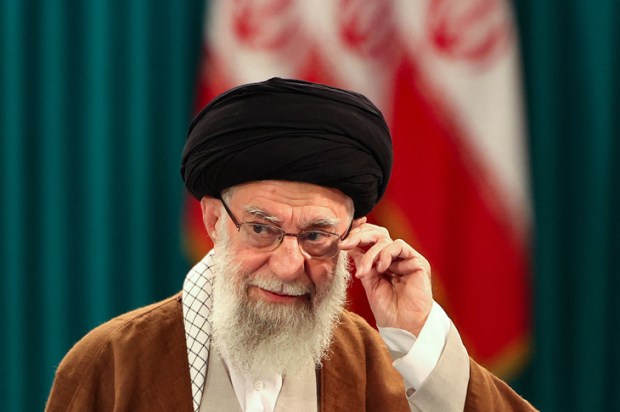
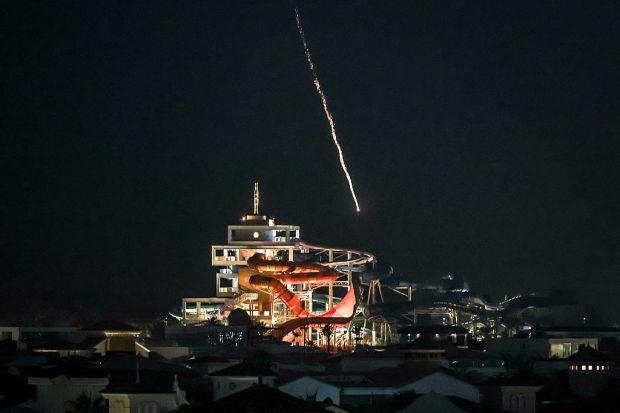
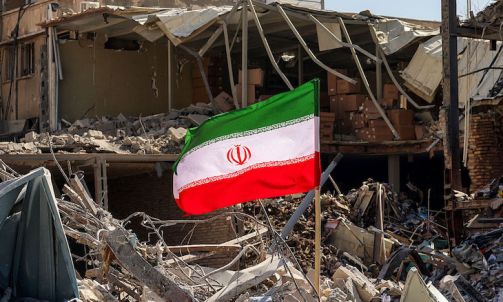
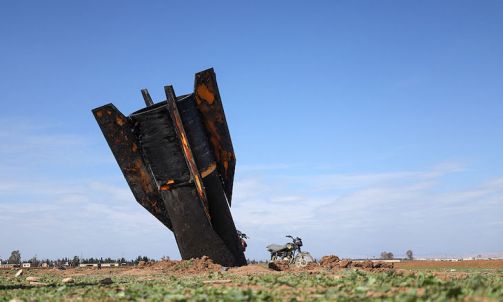
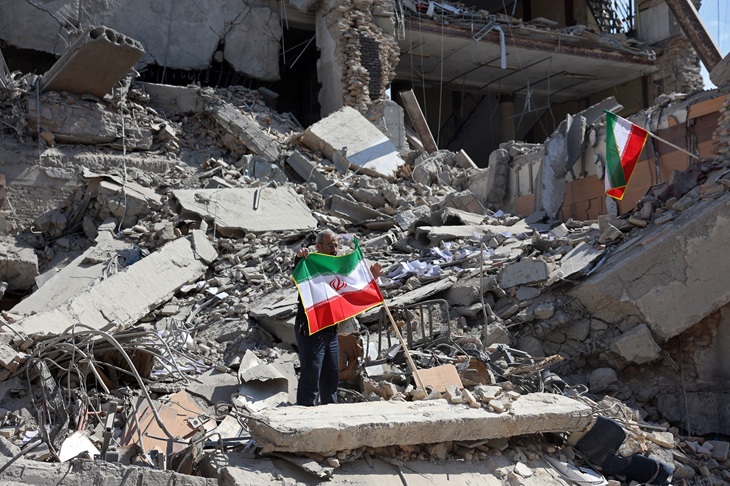
On February 28, 2026, at around 9:45 a.m. Tehran time, a joint US-Israeli airstrike struck Tehran, targeting the compound of Iran’s Supreme Leader. Ayatollah Ali Khamenei was killed in the initial wave, along with tens of other senior leaders and military generals. Since then, the conflict has continued. Israeli and American forces have struck military installations, missile infrastructure, and strategic facilities across Iran. Iran has responded with waves of missiles and drones against Israel and several countries across the region, including Saudi Arabia, Bahrain, Qatar, the United Arab Emirates, Kuwait, Jordan, and Oman.
Today, 6 March, the war is still unfolding.
And yet even now – while the conflict continues – voices in the West are arguing that the United States must not go further.
Commentators, politicians, and television personalities insist that regime change in Iran is not America’s responsibility. Their advice to Washington is simple: destroy the nuclear threat, damage the military, and then step away.
Leave Iran to deal with its own future.
Prominent online podcasters are advancing this argument, repeatedly warning that America should not involve itself in overthrowing foreign governments and that Iran only matters if it directly threatens the United States.
Versions of this argument appear across the political spectrum among European politicians, among Democrats, and even some Republicans in Washington, and among commentators who fear that deeper involvement could trigger chaos, civil war, or mass migration from Iran.
The argument sounds cautious. Even humane.
But it ignores a fundamental question.
Who is responsible for the economic war that has already been waged against the Iranian people for nearly half a century?
The conflict between the United States and the Islamic Republic did not begin last week. It began in 1979, when militants stormed the American embassy in Tehran and held US diplomats hostage for 444 days. From that moment onward, hostility between Iran and the West became permanent.
The Islamic Republic built its identity around confrontation with America and Israel. In response, Washington and its allies constructed one of the most comprehensive sanctions regimes ever imposed on a nation.
But after 45 years, the results are undeniable.
The regime remains in power.
The Revolutionary Guards remain dominant.
The political system remains intact.
What has collapsed instead is the Iranian middle class.
In 1979, when the revolution took place, one US dollar was worth about 70 Iranian rials. Today, a single dollar trades for roughly 1.6 million rials.
That collapse tells the story of Iran’s economy more clearly than any economic report.
Sanctions were intended to weaken the regime. Instead, they reshaped the economy in ways that strengthened corruption. The Iranian economy became a labyrinth of sanctions-busting networks, smuggling operations, and politically connected intermediaries who profit from navigating restrictions.
Those close to power adapted.
Ordinary people did not.
Savings evaporated. Salaries became worthless. Inflation turned everyday life into a constant struggle.
You do not need statistics to understand the consequences. Listen to ordinary conversations in Iran today. Many families cannot afford meat anymore, not because they have chosen to stop eating it, but because it has become unaffordable. In a country that once had a proud middle class, millions now go months without being able to buy basic food.
This is the human reality behind decades of economic pressure.
None of this absolves the Iranian regime of responsibility for its own actions. Its hostility toward Israel and the West has been constant, and its repression of its own citizens is undeniable.
But the Iranian people themselves have made something equally clear.
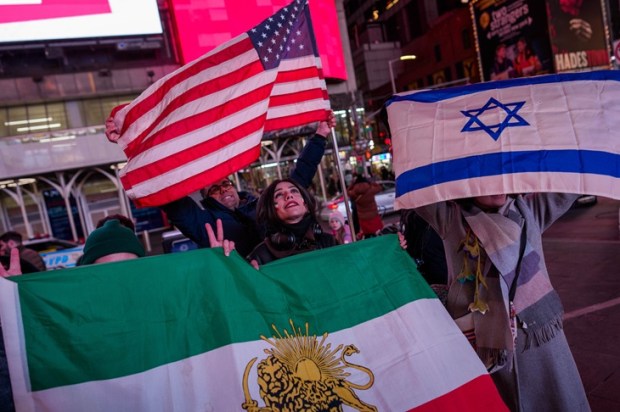
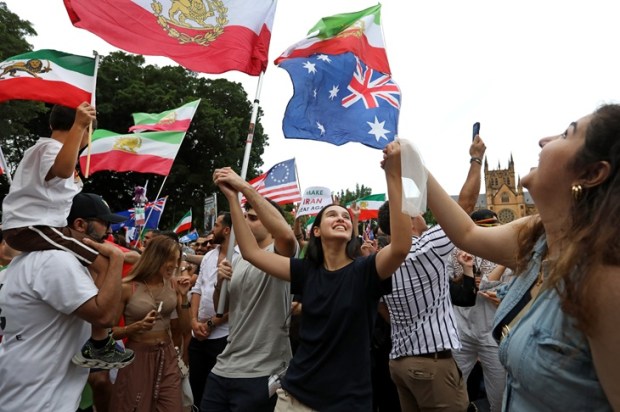
Inside Iran and across the diaspora, they have repeatedly demonstrated that they want democracy, freedom, and a normal relationship with the world. Many openly call for a secular political system. In demonstrations abroad, Iranian protesters have even carried Israeli flags; an unmistakable message that their quarrel is not with other nations, but with the regime that governs them.
The Iranian people are not the enemy in this confrontation.
They are its casualties.
Which brings us back to the argument now circulating in Washington and European capitals: that the United States should destroy Iran’s nuclear and missile capabilities, then step back and allow the regime to remain in power.
But what exactly would that mean?
Would the West simply return to the same strategy that has already failed for 45 years?
A hostile regime remains in place.
Sanctions remain in force.
Economic collapse continues.
And the Iranian people remain trapped between dictatorship and economic warfare.
Some commentators warn that removing the regime could trigger civil war or mass migration. Commentators have raised the possibility that instability in Iran could send millions of refugees toward Europe and destabilise the region.
But this argument ignores an obvious reality.
If the current strategy continues, if sanctions remain in place while the regime survives – the same outcomes will come anyway.
A collapsing economy eventually produces political collapse. Hunger eventually drives unrest. Unrest eventually produces instability and migration.
In other words, the nightmare scenario critics fear may arrive not because the regime falls, but because the current policy ensures that Iranian society continues to deteriorate.
The damage is not limited to the economy. Years of isolation have produced medicine shortages, environmental collapse, catastrophic air pollution from low-quality fuel, worsening water crises, and decaying infrastructure across the country.
This is not stability. It is slow national exhaustion.
Which is why Western governments cannot escape responsibility for what happens next.
Sanctions were not a neutral diplomatic tool. They were deliberate instruments of economic pressure imposed by the United States, the European Union, and their allies. They reshaped Iran’s economy and helped produce the devastation millions of Iranians live with today.
You cannot impose the harshest economic restrictions in modern history and then declare that the consequences are someone else’s problem.
Responsibility does not disappear simply because the results are inconvenient.
If the West believes diplomacy is still possible, then negotiations must be genuine and decisive. Any settlement must lead to the complete removal of sanctions and the normalisation of Iran’s economic life.
But if Western governments believe the regime can never be trusted; if they believe it will always threaten Israel and the West, then honesty demands a different conclusion.
The halfway strategy must end.
For millions of Iranians, the country has already been living through a form of war – one fought not only through inflation and collapsing currency, but through poisoned air, empty pharmacies, failing water systems, and the slow suffocation of a once-vibrant society.
And the West can no longer pretend it has nothing to do with it.