What has happened to Western Civilisation?
At what point did its moral and intellectual foundations begin to erode?
How did public discourse in the West become so deeply confused about fundamental ethical distinctions?
In December 2025, a mass shooting occurred at Bondi Beach in Sydney during a public Hanukkah celebration organised by the local Jewish community. The attack, which was treated by Australian authorities as an act of antisemitic terrorism, resulted in the deaths of numerous Jewish civilians and left many others injured. The event should have provoked unequivocal moral condemnation across Australian society and the wider Western world.
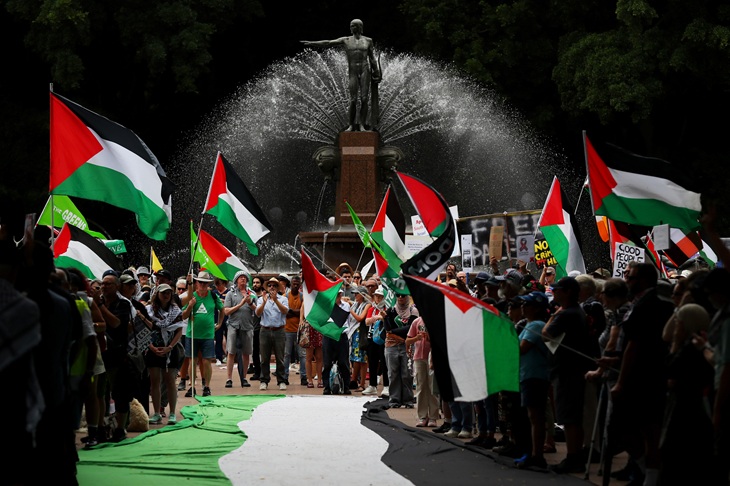
Yet the aftermath revealed something more troubling. Instead of a clear and unified moral response, public discourse rapidly shifted toward a broader political framing centred on the language of ‘Palestinian genocide’, ‘resistance’, and ‘intifada’. In segments of Western media and activist culture, attention moved away from the targeted killing of civilians and toward contextual justifications grounded in distant geopolitical conflicts.
This was not an isolated phenomenon. In recent years, attacks against Jewish individuals and institutions – including synagogues, schools, and community centres – have become increasingly frequent across a number of Western societies. While such incidents are often formally condemned by political leaders, they are simultaneously accompanied by a parallel discourse in which antisemitic violence is rationalised, relativised, or treated as morally ‘complex’ rather than unequivocally illegitimate.
The logic underlying these justifications reflects a form of collective moral attribution: the idea that Jewish communities in Western countries can be held symbolically or morally responsible for the actions of the Israeli state. This mode of thinking is fundamentally incompatible with classical Western ethical frameworks, which emphasise individual moral responsibility, the rule of law, and the moral inviolability of civilians. To hold non-combatant citizens accountable for geopolitical events beyond their control is to abandon the very principles that underpin liberal democratic moral reasoning.
Jewish citizens in Australia are not participants in the Israeli–Palestinian conflict. They are not agents of state policy, nor combatants in a war. They are Australian citizens: workers, parents, students, and neighbours who live under the same legal and civic institutions as all other Australians. Their moral and political identity is defined by their citizenship, not by international conflicts in which they have no direct role. This distinction should be ethically and intellectually self-evident.
In response to the Bondi attack, a visit by Isaac Herzog, President of Israel, was organised as a symbolic gesture of solidarity with the Australian Jewish community. In societies committed to democratic values, such acts are ordinarily understood as legitimate expressions of support for victims of violence. Yet the visit was met with protests, hostility, and, in some instances, public disorder.
During these events, groups of demonstrators engaged in Muslim prayers within police-restricted security zones, in defiance of lawful directives. Rather than being clearly framed as breaches of public order, such actions became the subject of national controversy, with some commentators criticising law enforcement and adopting the narratives of activist and Islamic religious organisations. Political slogans and explicitly hostile chants were publicly displayed, while the police response consisted merely of enforcing existing legal restrictions – actions entirely consistent with standard practice in liberal democracies.
What is increasingly evident is that antisemitic sentiment, often expressed through the language of political solidarity, has become normalised within segments of Western political culture. Positions that were once considered morally indefensible – such as the contextual justification of violence against civilians – are now framed as legitimate or even virtuous forms of resistance. What was once ethically clear is now presented as morally ambiguous.
The Israeli–Palestinian conflict is not the most violent or destructive conflict in the contemporary world. Numerous wars, particularly in Africa, the Middle East, and parts of Asia, have produced far higher civilian death tolls with far less international attention. What distinguishes this conflict is not its empirical scale, but its symbolic, theological, and ideological power. It functions as a moral and political lens through which deeper ideological hostilities are projected and legitimised within Western discourse.
Paradoxically, at a historical moment when many Muslim-majority societies are beginning – albeit slowly and unevenly – to critically reassess inherited religious and authoritarian moral structures, segments of the Western world appear to be moving in the opposite direction. Instead of defending universal moral principles such as individual responsibility and civilian inviolability, Western discourse increasingly absorbs forms of ideological absolutism and collective moral reasoning that it once claimed to have transcended.
In doing so, Western civilisation risks not merely political confusion, but the erosion of the ethical foundations that once defined its commitment to liberalism, human dignity, and the moral limits of violence.
Amani Gayed is an Australian-Sudanese Lawyer