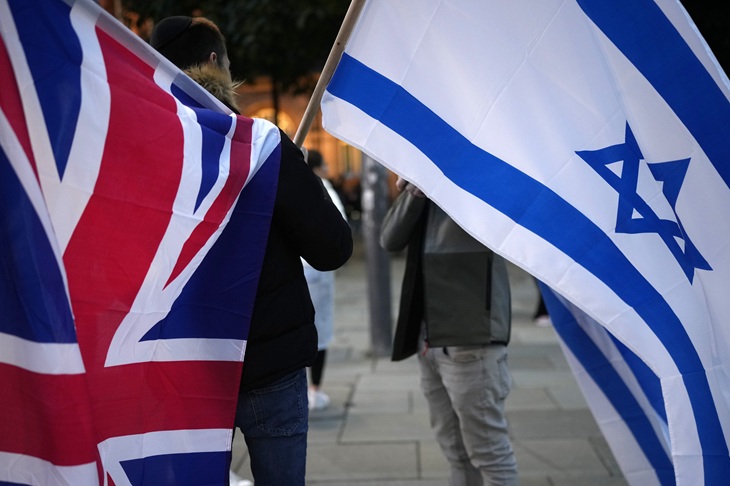
The brand of British Jewry was built in the shadow of genocide and the rebirth of Jewish sovereignty. For decades, survival shaped how we presented ourselves to the world. After October 7, survival alone is no longer enough and we as a community must decide what the brand of British Jewry looks like for our future.
The Holocaust was not simply a tragedy in Jewish history. It was genocide, so mechanised, so industrial, so systematised that humanity had to invent new language to comprehend it. The vocabulary of civilisation expanded because the old words could not contain the scale of annihilation. Six million Jews were not killed in chaos; they were identified, catalogued, transported, and murdered with administrative precision.
My grandmother escaped Nazi Germany. The majority of my mother’s family were murdered in Auschwitz, murdered not for what they had done, but for what they were. On my father’s side, my grandparents met during the Siege of Jerusalem. They fought in Israel’s War of Independence, they helped build the Jewish state as Europe’s ashes were still warm.
One side of my family survived by fleeing extermination, while the other survived by restoring sovereignty. One inherited the instinct to keep a suitcase packed, the other inherited the conviction that Jews should never again be powerless.
Those two forces, genocide and statehood, shaped British Jewry simultaneously. But over time, the fear born from genocide quietly overshadowed the strength born from sovereignty and that imbalance shaped how British Jews presented themselves to the world.
Outwardly, we became survivors. We integrated, assimilated, avoided provocation, proved our Britishness, sought to become indispensable.
Internally, Zionism anchored us, but externally, caution defined us.
For decades, this duality worked. From post-war reconstruction through the early 2000s, British Jewry experienced something close to a golden age. Jewish identity was confident but understated. Antisemitism existed, but it was marginal and we certainly didn’t look to draw it to anyone’s attention. Israel was debated, but its legitimacy was rarely denied outright.
Then the equilibrium fractured.
The Corbyn years did not invent antisemitism, but they legitimised a discourse in which hostility toward the Jewish state became obsessive and disproportionate. Ancient suspicions resurfaced in modernised form and anti-Zionism became this generation’s barely concealed veil for good old-fashioned Jew hate.
Then came October 7.
As news broke of families slaughtered in their homes, children kidnapped, communities burned, something else surfaced alongside the horror … celebration.
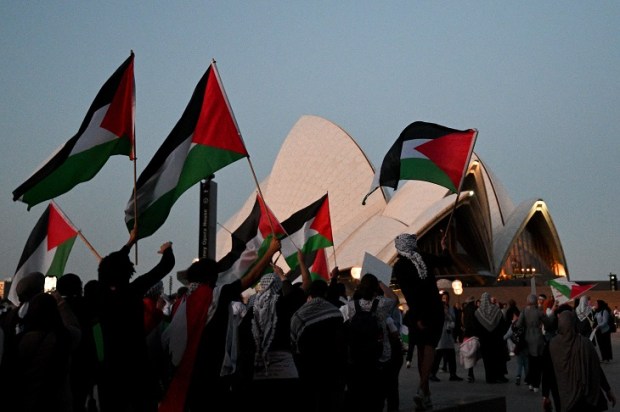
Before the full scale of the massacre was known, crowds gathered, chants filled Western streets, and the slaughter of Jews was reframed as resistance. For many British Jews, the rupture was psychological as much as political. The old fear, inherited from those who kept suitcases under their beds, no longer felt historical, it felt immediate.
What followed were months of hate marches where anti-Israel rhetoric frequently bled into open hostility toward Jews. Jewish students were marginalised and attacked on campuses. Jewish professionals found themselves increasingly isolated in industries that once championed inclusion. Security around communal life intensified, at schools, synagogues and Jewish-owned shops. Online hatred metastasised, while institutional responses often hesitated when clarity was required.
The survivor instinct no longer looked excessive, it looked rational. For decades, sovereignty had softened fear. October 7 reversed that balance.
And yet, at precisely this moment of historical clarity, an internal fracture exists within British Jewry. We are no longer brand-cohesive, far from it, in fact we’re more dispirited than we ever have been as a community.
There is now a visible and vocal minority cohort of progressive Jews who, in pursuit of political alignment and social acceptance, are willing not merely to criticise Israeli governments, which is wholly legitimate, but to question or deny the legitimacy of Jewish sovereignty itself.
This is not a debate about policy. It is a debate about whether the central lesson of post-genocide Jewish history, that Jewish self-determination is non-negotiable, still stands. To argue that the Jewish state should not exist is not nuanced. It is the rejection of the mechanism that ensures Jews are never again entirely dependent on the goodwill of others.
History is not theoretical, certainly not for those shaped by families murdered in genocide and families who fought for sovereignty. The idea that Jewish self-determination is optional feels less like moral evolution and more like historical amnesia, dare I say it, even betrayal.
A brand cannot be coherent if it refuses to define its core. If Zionism, the belief in Jewish self-determination in our ancestral homeland, is the post-genocide expression of Jewish agency, then a British Jewish brand that excludes it becomes something fundamentally different. Others will define themselves as they choose, but the Zionist majority must define itself clearly, or risk being defined by others.
Which returns us to the foundational question: Who is this brand for?
For decades, it was optimised outward. Be measured, be moderate, be palatable. But safety cannot be outsourced to likeability, a mistake made in spite of the clarity the lesson the Holocaust so painfully taught.
Many who read my writing know that I question whether British Zionist Jews have a guaranteed long-term future in this country. The past few years have shaken that confidence profoundly. But the branding imperative is independent of geography, independent of whether I am pessimistically incorrect, or realistically prescient.
If our children do not have a secure future here, strength will be necessary wherever they go. If they do have a secure future here, strength will be the reason.
The survivor-forward brand was necessary in 1946, it is grossly insufficient in 2026. The lesson of genocide was vulnerability, while the lesson of statehood was agency. The defining brand of British Zionist Jewry moving forward must integrate both, without allowing fear to eclipse sovereignty again.
It must be morally clear, unapologetically British, intellectually serious, visibly proud, calm but unyielding. Most of all the brand must serve internally first.
My three children will inherit two legacies: relatives murdered in genocide, a warning of what happens when Jews are powerless; and great-grandparents who fought in Jerusalem to restore Jewish sovereignty, proof that powerlessness is not destiny.
Suitcases and sovereignty. Ashes and independence. Fear and agency.
The old brand taught us how to survive, the next brand must teach them how to stand.
Jewish, Zionist, unapologetic, courageous.
History forced us into the brand of survivor, the next chapter demands the brand of sovereign, because the brand we define now is the one our children will inherit.