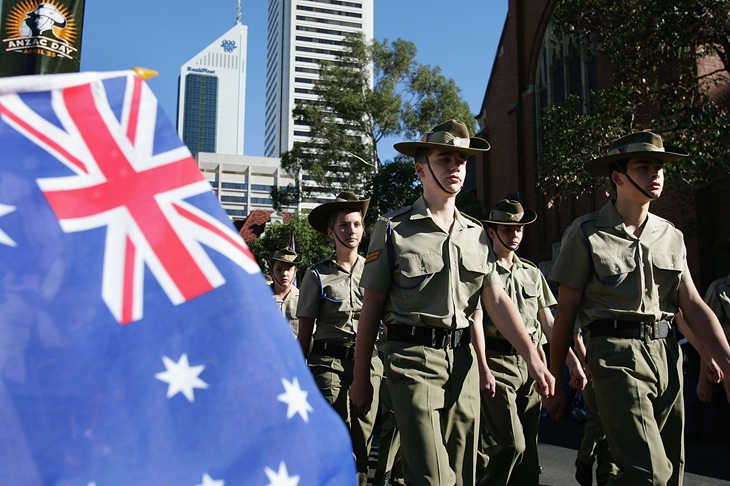
Australia Day 2026 represented a high point in a steady trend of more and more Australians wanting to keep the date of our National Day of Celebration.
Whilst Australia remains a nation moulded by immigrant culture and character post-the second world war, Australians are increasingly prioritising shared purpose, values, and commitment to our country.
NSW Premier Chris Minns rightfully pointed out:
‘We can’t let the things that make us different get in the way of the things that bind us together as Australians. Diversity cannot trump shared purpose.’
Outward commitment to country and unity is a welcome and positive trend. The importance of more and more young people displaying patriotic behaviours cannot be understated. When young people share a sense of pride in their nation, they become more effective civic citizens. As the Roman statesman Cicero reminds us: ‘Not for ourselves alone are we born; our country claims a part of us.’
It is crucial, however, that we develop healthy, effective, and skill-equipping opportunities for our patriotic young people to channel their patriotism and pride into. One such idea is the introduction of a bold model for national service for our young people.
This is not a radical new proposal. Countries such as Singapore, Sweden, South Korea, Norway, and Switzerland have varying models of mandatory military service. Rishi Sunak in 2024 went to the UK general election with a mandatory service model, citing the need to bring young people together amidst ‘forces trying to divide our society in this increasingly uncertain world’. Sunak’s approach was far more than just a conservative dog-whistle, pledging a Royal Commission to advise on the scheme that envisioned 30,000 full-time army placements, with the alternative option to volunteer one weekend a month with community organisations like the NHS or fire service. Models can be flexible, suited to the needs and character of young Australians.
Whilst critics will consider such policy to verge somewhere between dystopian or straight from the 1960s, it is undeniable that base-level military training would instil a level of discipline, skill, and respect for country into this generation of young Australians who have grown up in a polarised society.
Singapore stands out as a commendable case study. The country requires men and permanent residents to serve either in the military, police, or civil defence force for two years. Reports have cited military service as a source of Singapore’s strong societal trust across different ethnic and religious groups, with the military comprising citizens of Chinese, Malay, and Indian heritage. Founding father of modern Singapore, Lee Kuan Yew, put it simply: ‘If you who are growing up do not understand that you have to defend this, then in the end, we will lose.’
I’ve had friends from overseas study exchanges tell me about their experiences in their home country’s respective mandatory military program. They told me that their experiences led to lifelong friendships and valuable technical and life skills. The common overall takeaway I heard, though, was one of pride: pride in one’s ability to overcome new and stressful situations, pride in one’s ability to learn new skills and develop discipline, pride in one’s country.
In this new world, it is pivotal that we send out our young people capable of overcoming adversity. It is pivotal that we send them out into the world unified by our flag. Whether it be by way of mandatory service or some other mechanism, policy makers must funnel this wave of patriotism in our young Australians into opportunities to unite and upskill our future leaders.