Albanese presides over a government that indulges in big-spending, a loser-industry reward structure, and investment-deterring policies that have sent the economy into a tailspin.
Labor’s support from welfare recipients, political elites, and activist groups – together with the unions and various Net Zero beneficiaries – makes the Prime Minister unable to contemplate corrective small government measures.
They have no plans to fix Australia.
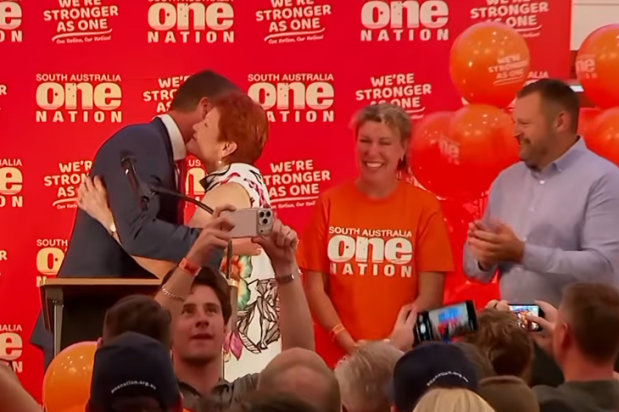
Meanwhile, the Coalition’s strategy of seeking power without further antagonising the aforementioned groups has been undermined by One Nation’s rocketing polling fired by much more radical solutions.
Losing ideological ground to One Nation is edging the Coalition towards rational policies.
However, a huge gulf remains – despite Sussan Ley leaving the scene.
Even now, we have yet to see cohesive proposals from the Opposition that can restore the economy and reduce social discord.
The key issues for voters relate to spending and circle around taxation, interest rates, housing affordability, immigration, energy, and climate change policy.
Shadow Treasurer, Tim Wilson, talks tough about cutting spending, but has yet to raise his head above the parapet by specifying which interest groups would lose out.
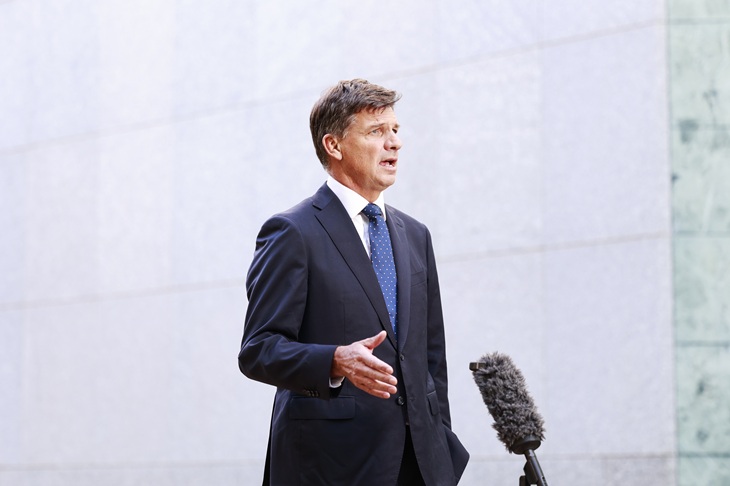
Opposition Leader Angus Taylor has promised to go further than Sussan Ley’s milk-toast suggestion of reducing immigration to 200,000 people a year. The Coalition has floated the idea of potentially designating various regions, mostly those with Islamic terror concerns, from which immigration would be banned. Taylor is talking assertively about closing the door to those who do not share our values.
If you do not support our values and accept the Australian way of life you are not welcome here. That's why we're proposing laws that would make it illegal to help repatriate people who have supported ISIS overseas.
Labor must support this proposal and protect Australians from… pic.twitter.com/tzx7iHiEQQ
— Angus Taylor MP (@AngusTaylorMP) February 24, 2026
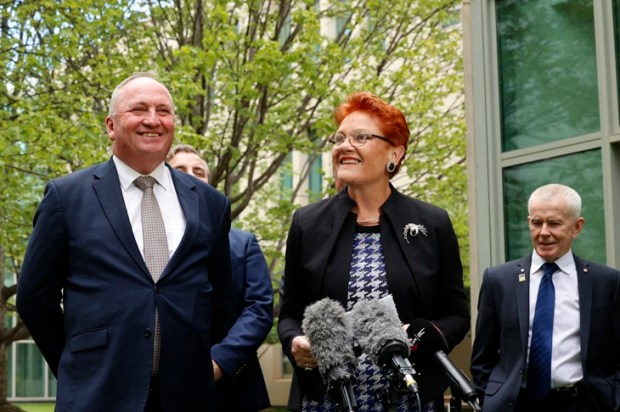
Pauline Hanson upped the ante by opening a more serious conversation about the threat of Islamic extremism being tied to migration and immediately faced a media pile-on. Headlines hinted at a schism with Barnaby Joyce and intensified hostility from Matt Canavan, a future Prime Minister and her natural ally.
Let Barnaby speak again!
My column in the @couriermail below. pic.twitter.com/WVOcsQf6U8
— Senator Matt Canavan (@mattjcan) February 19, 2026
Walking migration exclusions back to a position that excludes Muslims who reject Sharia Law, female circumcision, multiple marriages, and a global caliphate might dent the impact of this criticism among the public and even among many Muslims, but the extremists might interpret this as a de facto Christianisation of Islam.
Hanson claims that there are 18,000 people on the ASIO watchlist, which is a figure widely agreed upon by a broad spectrum of media and politicians while not being officially confirmed by ASIO. ASIO has clarified that the vast majority of those on the list are religious extremists, which most people interpret as Islamic extremism (especially based on global statistics).
Immigration concerns involve public safety but also relate to affordability of housing. Lower immigration would ease housing and rental prices, although neither the Coalition nor One Nation is willing or able to address the fundamental cause of this: high land prices induced by a scarcity of blocks for dwellings driven by restrictive planning regulations.
New dwellings per 1,000 people have fallen from 8.5 in the 1980s (when price strains were already evident) to around 6.5 in the 2020s. In that period, the median price (in 2025) of houses in Sydney has increased from $338,000 to $1,470,00, and that for apartments from $225,000 to $900,000. Other areas have shown comparable increases.
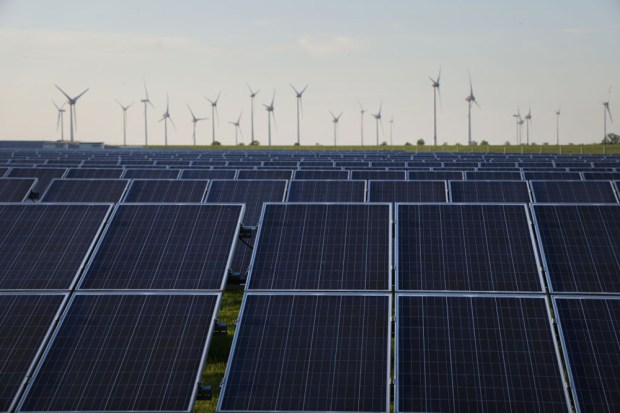
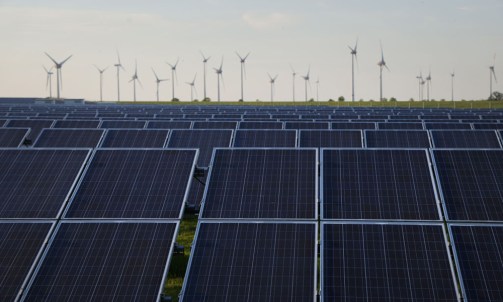
Energy and climate change policy is the key driver of the current economic malaise, but little progress is being made. For its part, the government is pressing forward with its program of locking in the nation to decades of high-cost, unreliable energy by signing contracts at undisclosed prices for wind, solar, and batteries under its Capacity Investment Scheme. And it is examining new regulations to mitigate the effects of its policies higher costs, through a carbon tax on imported goods.
I suspect (or perhaps hope) that Angus Taylor is fully aware that the global warming scare is groundless and that renewable energy has no future as a practical, low-cost source of energy. I fear he is far too much of a traditional political pragmatist to state this openly. If he believes it, of course.
Taylor has retained Dan Tehan as his Shadow Energy Minister. Tehan has raised concerns about the impact of renewable energy on farmland, but his approach seems to involve balancing wind and solar with reliable electricity sources. His policy precepts are the perennial dead-end of carbon capture and storage, which the government believes will birth new technologies for Australia to export, and nuclear – a relatively distant prospect and one that would deliver far more costly electricity than coal.
Andrew Bragg, the Shadow Environment Minister, was wedded to Net Zero and the Paris Agreement. During the leadership struggle, he did not rule out resigning from the Ley’s Shadow Cabinet if Net Zero targets were abandoned.
Bragg will find an ally in Shadow Treasurer Wilson, whose kaleidoscopic worldview is dominated by his electoral vulnerability on energy policy within his Teal-ish seat.
The Opposition’s current policies would represent a giant advance from those the Albanese government is pursuing, but without more fundamental reforms in the key areas of welfare, housing, immigration, energy, and the environment, they can only slow the economic decline inaugurated by the Turnbull government and accelerated by Labor.