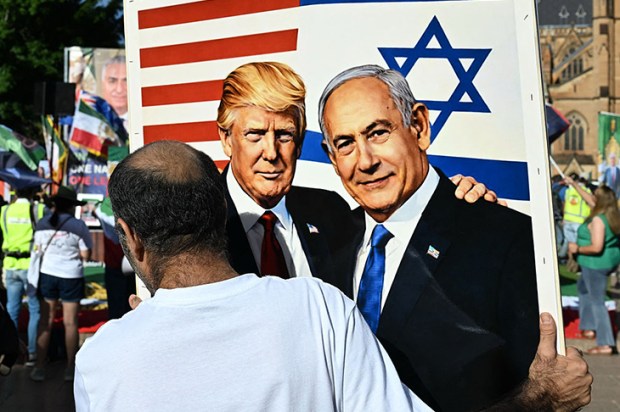
Outside a small lecture hall, protesters waved placards and shouted – blocking an Israeli speaker from entering. Inside, security struggled; the lecture was cancelled at the last minute. No laws had been broken. No threats made. Yet political inconvenience had done its work: debate silenced before it began.
This was not isolated. Across Australian cities since October 7, Israeli speakers have faced similar disruptions in a chilling preview of how the new ‘hate group’ laws are shaping public discourse.
Since then, several Israeli speakers have had events cancelled or disrupted. Public pressure campaigns succeeded. None of the speakers had been charged with a crime. None had advocated violence. Their offence was political inconvenience. At the same time, no neo-Nazi organisation has been proscribed. No Islamist extremist group is listed. That contrast is not incidental. It is instructive.
Australia has passed one of the most consequential and least examined pieces of legislation in recent memory. Branded as ‘hate group’ laws and sold as a measure to protect community safety, the reforms hand extraordinary discretionary power to the federal government to decide who may speak, organise, or protest and who may not.
The racial vilification component was removed late in the process, but the core structure remains intact. The Liberals supported the bill in the lower house. One Nation opposed it. The Nationals opposed it. The Greens opposed it. Despite minimal scrutiny and truncated debate, it passed.
No parliamentarian should have supported legislation of this scope without serious consultation. Laws that reshape the boundaries of lawful speech and association require precision and restraint. This bill provides neither.
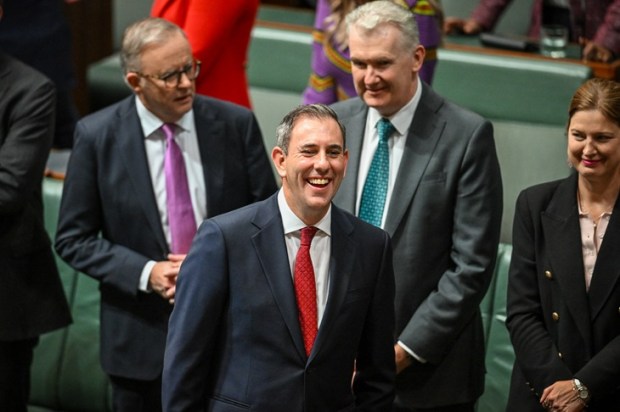
So far, no domestic extremist organisations have been banned. Neo-Nazis remain unlisted. Hizb ut-Tahrir remains unlisted. Instead, the early effects have fallen on politically unfashionable speakers, particularly those associated with Israel, following activist pressure. Within days of the laws passing, Tony Burke cancelled the visa of Israeli speaker Sammy Yahood, who was travelling to Australia to speak about his program Peace Through Strength. His program encourages pushing one outside their comfort zone – nothing hate-related. Had the Prime Minister not invited Israeli President Herzog to Australia after the Bondi massacre, we’d likely be betting on Tony Burke cancelling his visa on the very day of his departure.
The emerging principle is difficult to ignore: if your speech aligns with prevailing elite sentiment, it is tolerated. If it cuts against it, it becomes ‘risky.’
Take a portion of this sermon from November 2023, which has alarmed Australians:
‘Towards the end of times, when the Muslims will be fighting the Jews, the trees will speak, the stones will speak, and they will say, O Muslim, O believer, there is a yahudi [Jew] behind me, come and kill him.’
This passage appears in some Islamic texts and also in the Hamas Charter. If that is not hate speech, what is? A public commentator has likewise made incendiary remarks, including:
‘To hell with you all. Every last Zionist. May you never know a second’s peace in your sadistic, miserable lives,’ and described Zionists as having ‘no claim or right to cultural safety.’ Neither of these two speakers has faced scrutiny comparable to that applied to Jewish or Israeli speakers. The contrast is stark: some forms of speech are aggressively policed; others are excused or even normalised.
What would happen if Jews were switched with another minority group in these cases?
This double standard is not just frustrating, it is dangerous. It erodes trust in Australia’s institutions and signals that enforcement may have political sensitivities that undermine principles of equality. Laws designed to combat hate lose credibility when applied selectively, and communities that feel unprotected grow understandably wary.
At the heart of the legislation is an alarmingly broad trigger. The Minister for Home Affairs may declare a group a prohibited hate organisation if satisfied on reasonable grounds that its activities increase the risk of communal violence. No criminal offence or conviction is required. No intent to cause violence need be shown. The group itself may be deemed the risk. In practice, it could take nothing more than an antisemitic or anti-Israel group claiming offence at a Jewish organisation calling out their behaviour, or an Israeli speaker they wish to prevent from appearing, to trigger government action.
Before a listing occurs, ASIO must provide advice. But the ASIO Director-General need only be ‘satisfied’ that certain activities may increase the risk of politically motivated or communal violence. The legislation does not define how substantial that risk must be. There is no requirement to explain the reasoning process. The increase may be marginal, speculative, or theoretical.
This creates a perverse outcome: a peaceful, passive group could be banned not because it commits violence, but because others might respond violently to its views. In such a framework, the heckler’s veto is embedded in law.
Defenders argue that ASIO’s involvement provides a safeguard. That misses the point. ASIO’s leadership is appointed by the government of the day. So are the ministers empowered to act on its advice. The question is not whether ASIO is capable, but whether Australians should trust politically appointed officials to decide which lawful opinions pose an unacceptable ‘risk’.
Political self-preservation is another factor. In electorates where communal tensions intersect with marginal seats, enforcement incentives are obvious. It is reasonable to ask whether the most controversial of speakers are likely to face prosecution under these laws, not because of what they have said, but because of political consequences. Enforcement is rarely abstract; it is contextual. The minister of the day is hardly about to prosecute Imams in a constituency with a high Islamic presence.
Which brings us to the true test: will the legislation ever be applied to already known and high-profile figures or to those who attended scenes such as the November 2023 protest following the firebombing of his Caulfield ‘Burgertory’ store?
History suggests the answer. Broad discretionary powers are not enforced evenly; they are applied cautiously. The result is not the eradication of hate, but its selective policing, shaped more by politics than principle.
Consider how elastic the concept of ‘hate’ already is in public discourse. Holding an ‘All Lives Matter’ sign at a BLM protest. Campaigning for a ‘No’ vote during the Voice referendum. Stating that all people are equal before the law. None of these involves violence. All could plausibly be argued to increase ‘risk’ depending on who is offended.
The law also operates retrospectively. Community newspapers, religious publications, and cultural outlets could be exposed to scrutiny for past material. The chilling effect will be felt long before any prosecution succeeds.
There is also an uncomfortable exemption. As a Commonwealth entity, the ABC benefits from protections unavailable to private media. What may be broadcast there could be unlawful elsewhere. Many ABC reports, for example, have been criticised for repeating Hamas Health Ministry statements despite concern such words might add to the rise of antisemitism in Australia.
Formally, Parliament may disallow a listing. In practice, the Lower House is controlled by the government. The Senate is a final check, and an unreliable one. The Liberals justify their support by claiming the alternative would have been worse. That is not a defence; it is an admission of surrender.
Australians were told this bill was about terrorism. It is not. The most obvious extremist groups remain untouched. What has changed is that the federal government now wields unprecedented influence over debate on race, culture, immigration, and social cohesion, the most combustible issues in Australian politics.
That authority now rests with Tony Burke, the Minister for Home Affairs, the same office responsible for controversial visa decisions and selective deportation enforcement. History teaches that powers granted in moments of anxiety are rarely relinquished in calmer times. This legislation does not merely address harm. It redefines it and in doing so, redraws the boundaries of lawful speech in Australia.
We do not have to like every opinion expressed in public. But empowering the state to decide which opinions are too risky to tolerate is a price Australians may soon discover is far higher than advertised.