In search of fun in my late teens, together with two other fools, I ended up at the circus and inside the tent of ‘Madame Zorbic – a Famous Fortune Teller from Hungary’.
For a nominal sum, she peered into a luminous globe and told me that she saw me travel extensively. My sailor’s uniform was probably a dead giveaway. She also said that I would marry and have two sons. She proved 100 per cent correct!
In Budapest a few months ago, I wondered where the new up and coming fortune tellers could be found. I had a challenge for them, and the local tourism information centre suggested a source in neighbouring Transylvania. After a few phone calls, I found out that a modern-day fortune teller could be engaged for one hour for US$100, credit card only. Travel expenses were nil, as this was done spiritually, I was assured.
My plan to reduce the 2.6 million Australian bureaucrats by 90 per cent was simple, just find people with better skills!
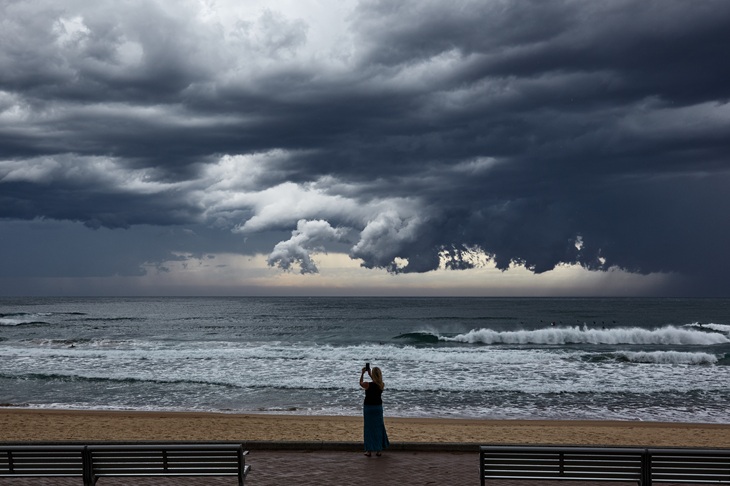
The Bureau of Meteorology was a good starting point. Costing roughly $1 million per day and requiring 1,900 staff, they seldom get the forecast right one day in advance and them getting the five-day forecast right has the same chance of success as a catflap in an elephant farm!
As a ship’s navigator, like most people who earn their living at sea, meteorology has to be well understood. I was taught and comprehended well barometric pressures, temperatures, clouds, occluded fronts, wind, and the very dangerous tropical revolving storms. Without the BOM, we crossed oceans successfully. As a sailor now on small boats, l still don’t have faith in the BOM.
I ended up in a stoush on the Gold Coast some 15 years ago, where BOM kept predicting rain and the local cruise companies, fishing charters, dive charter, dining vessels etc., kept getting cancellations, even when rain didn’t eventuate. As an eternal crusader for the marine industry, I was demanding better forecasts.
The theme parks and TV stations entered the fray. Our local MP was coordinating.
The BOM handed out their two-page forecast, which was issued daily to media outlets. There was the problem. The weather girl or the weather bulletin person was restricted to 15 maybe 20 seconds of airtime, so they would scan the two pages, see the word rain and report ‘rain tomorrow’. After some vigorous debating and a brief rush of logic, BOM agreed to issue a 15-20 second precis of the weather, particularly focusing on whether the rain was late afternoon or evening, when tourists lose interest.
Alas, all bureaucracies have this irresistible urge to grow bigger and demand higher budgets. They like to create new websites, to make themselves look busy and to look indispensable by injecting fear.
Last Saturday evening, we went to our favourite Italian restaurant, only to find the place empty. ‘Gino, where is everyone?’ we asked.
‘BOM is predicting thunderstorms with high winds and damaging hail, and people are wrestling with their new website, so my place was empty last night and again tonight because of the weather forecast,’ he answered. Of course, I had checked the weather radar prior to dinner, as most sensible people do, rather than stay at home hiding under the doona as BOM was advocating.
The quick answer to the unacceptable poor performance of BOM, is four fortune tellers. One on each coast, north, south, east and west, at $100 a day each. This will save taxpayers a bundle and provide much more accurate results.
For the maritime industry’s commercial vessel market, we seem to have endless input from a variety of bureaucratic panels, who spend their lives confirming to all around that common sense isn’t so common. While 90 per cent of our marine accidents and deaths relate to recreational vessels, 90 per cent of the regulations are focused on commercial vessels. Go figure!
Forty-five years ago, in an effort to have all states under one uniform code, we adopted the USL (Uniform Shipping Code) and made the jump points of manning and equipment on a length matrix of 15, 20, 25, 35, 50, and 80 metres, together with a matrix of areas of operations from smooth waters (Class E) to open waters (Class A) and another matrix of passenger vessels Class 1, non-passenger Class 2 and fishing vessel Class 3. The USL threw away any reference to the already obsolete GRT and NRT and the system worked well for 30 years. Mention a Class1C vessel and immediately everyone understood it was a restricted coastal passenger vessel. The USL was so successful that it was adopted by New Zealand, PNG, Fiji and applauded by Denmark, UK, Israel, and Holland as a very sensible and comprehensive code, when they were buying Australian commercial vessel designs.
That was until another team of bureaucrats from the fishing industry decided that the fishing vessel benchmark length of 24 metres should be implemented in the manning limit for Class 5 Master. Why not 25 metres as there were so many 25 metre vessels around? Doh!
Despite a great safety record under the USL Code, the Federal government, for no good reason at all other than keeping bureaucrats busy, decided to form the NMSC, (National Maritime Safety Committee) and create the NSCV (National Standards for Commercial Vessels) gabfest committees to update the USL code and in simple examples of stupidity and over-prescriptiveness, we ended up with a document four times the size of the USL, including 11 pages of definitions on ‘length’ and 130 pages of fire safety. This would delight any lawyer involved in maritime disputes. Not only could they use this conflicting information to suit their client, they could also spend thousands of billable hours trying to understand it themselves. To complicate things even more, they decided to adopt a second set of regulators by forcing vessels over 35 metres to be under Classification Societies such as Lloyds Register, DNV, and ABS.
Queensland, the state with the highest number of commercial vessels at the time (9,333 being a significant 33 per cent of the national total) ran efficiently with a government team of 23, and a statewide number of accredited private surveyors and plan approval naval architects, (including the team I was working with). Despite our loud protests against changing a good and safe system, we were outgunned by the six other Labor-controlled states who didn’t understand the ramifications of complicating our rules and increasing Plan Approval fees and Survey fees by up to 20 times!
This appears to be a standard Labor strategy of building bureaucracies, a good voting base.
I refer you to the article Touched By Class in Ausmarine magazine in May 2010, so don’t say I didn’t warn you.
Now we have the Canberra-based AMSA, the Australian Maritime Safety Authority, with 480 staff looking after the nation’s 36,000 commercial vessels, roughly five times the number of bureaucrats needed before the change. I would estimate 90 per cent of them have never been on or near a ship.
Because most of the commercial vessel activity still is in Queensland, the quick answer to cutting AMSA numbers is to find three talking frogs and a large AI centre somewhere near the centre of action, say the Whitsundays.
I am highlighting just two examples here that I do know a bit about, but my colleagues in other industries tell me about the same regulatory and financial strangulation of their endeavours, by burgeoning bureaucracies, together with ever-expanding regulations, and the ever-increasing fees for such dismal service.
With a Labor government industrial relations passion for larger wages for working from home, sick days used to the max (preferably Mondays and Fridays), and a less-than-optimal attitude, is it any wonder our bureaucracies are out of control, and need to be greatly downsized?
Has anyone noticed that the increase in small and medium businesses deaths, i.e. going broke, is directly proportional to the expanding number of bureaucrats employed nationally?