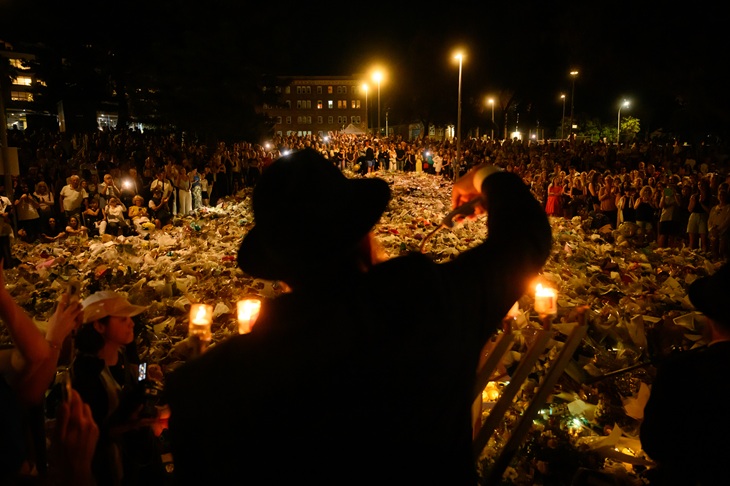
After Sydney’s deadly attacks, we go through the usual motions. Candlelight vigils, official condolences, a spike of moral outrage – then life goes back to normal.
And that’s the problem.
Australia is broadly inclusive. We get along, for the most part, and our laws and institutions protect our freedoms. But inclusion alone isn’t a shield against forces that can pull people apart.
The instinct is to ramp up security: more cameras, tougher laws, sterner talk. Some of that is necessary. None of it is enough. Violence like this doesn’t spring from nowhere. It thrives where social bonds are thin and shared values weak.
For decades, we’ve been told that multiculturalism will take care of itself. Keep everyone separate but polite, and society will hold together. Mostly, it does. But polite tolerance isn’t enough to stop extremists from finding a foothold in the cracks between parallel lives.
The UAE offers a striking counterexample. The Abrahamic Accords created a framework for cooperation between Israel, the UAE, and other nations, but the commitment runs deeper at home. The Abrahamic Family House in Abu Dhabi – a mosque, a church, and a synagogue under one roof – embodies the principle that different faiths can coexist while respecting their traditions. Dialogue, shared space, and mutual recognition are possible – not just in theory, but in everyday public life. For Australia, it’s a reminder that inclusion works best when it’s active and visible, not merely polite or procedural.
This practical cooperation reflects a deeper shared ethical core across the Abrahamic traditions. All three emphasise the sanctity of human life (for example, ‘Thou shalt not kill’ in the Torah, echoed in the New Testament and the Quran 5:32), individual dignity as image-bearers of God (Genesis 1:27, extended in Christian and Islamic teachings), and restraints on power (prophetic critiques of kings, just war limits in Islamic jurisprudence like the Pact of Umar). These overlaps form a ‘common moral vision’ of mercy, justice, and non-aggression – far more than contemporary discourse often acknowledges.
The principle is simple: Muslims, Christians, and Jews worship the same God and share overlapping moral traditions. One God. Many paths. One human family. That recognition undercuts the claim that identities are irreconcilable – and it works better than grant-funded panels or ritual statements after tragedy strikes.
This isn’t about the government telling anyone what to believe. Its role is to set the framework in which beliefs are expressed. Without some shared understanding of what binds people together, diversity can drift into fragmentation.
Australia swings between two extremes. On one side, a secularism so shy it treats faith as something to be hidden. On the other hand, multiculturalism is so anxious about offending that it hesitates to articulate any shared moral ground. Both leave space for extremists.
A confident society doesn’t shy away from naming its values. It protects free speech because it knows what it stands for. Moral confidence isn’t authoritarian. It’s what keeps liberty meaningful.
After tragedies like Sydney’s, the temptation is to chalk it up to madness – isolated individuals detached from society. That’s comforting. And it’s wrong? Violence thrives where identity hardens, belonging things, and moral language collapses into slogans, without ever absolving individual responsibility. The devil preys on division, and in fractured communities, he finds his easiest work.
Doing nothing isn’t neutral. It’s letting imported hatreds settle in, letting suspicion become normal, and leaving the state to referee disputes it barely understands. A society that can’t articulate its core values ends up ruled by those most willing to weaponise identity.
Australia’s choice isn’t between diversity and cohesion. It’s between shared meaning and managed disintegration. We can keep relying on tolerance alone, or we can be frank about what extremists deny: one humanity, a shared moral inheritance, and no divine warrant for murder.
One God. One people. Or endless fragmentation, where the devil will divide and conquer.