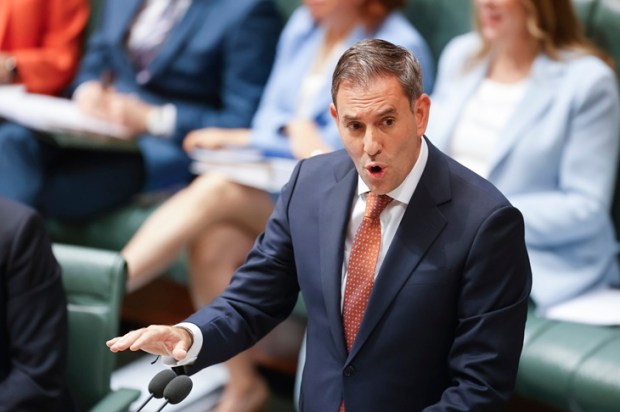
Prime Minister Anthony Albanese’s invocation of ‘international law’ following the liberation of Venezuela was, for me, more than irritating. It was revealing.
Venezuela is a country dear to me, not in the abstract, but through lived experience. I watched its collapse at close range. I knew the people who fled. I housed some of them. I worked with professionals who could no longer return home without fear. When Venezuela finally began to emerge from tyranny, the reflexive reach for procedural language instead of moral clarity felt not neutral, but hostile.
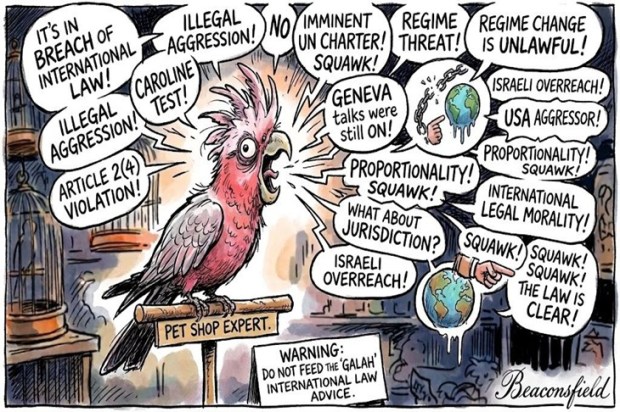
That instinct to retreat into ‘international law’ deserves scrutiny, because it rests on a premise that is rarely examined and almost never challenged. There is no such thing as international law in the sense that the phrase is commonly used.
For law to exist, three conditions are required.
There must be a sovereign authority with final jurisdiction. There must be enforceability, meaning the capacity to compel compliance. And there must be consequences for breach that are not optional. Remove any one of these and what remains may be aspiration, norm, or agreement, but it is no longer law.
At the international level, none of these conditions are met. There is no sovereign above states. There is no compulsory jurisdiction that powerful actors cannot evade. And there is no enforcement mechanism independent of state consent. What exists instead is diplomacy, codified in treaties, conventions, resolutions, and courts that rely entirely on voluntary compliance. This is not law. It is diplomacy with paperwork.
This distinction is not academic. It goes to the heart of how international institutions actually function. When governments invoke international law, they are rarely describing binding constraint. They are signalling preference, disapproval, or alignment. The phrase allows leaders to speak in the language of principle while avoiding the burden of judgment. It offers moral distance without responsibility.
This is not theoretical. International law did not protect Ukraine when it was invaded. It did not protect Venezuela during its descent into tyranny. It did not protect Israel when it was attacked. In each case, statements were plentiful. Enforcement was absent. Outcomes were determined by power, not by paperwork.
The case of Venezuela makes this painfully clear. For decades, international law did nothing to restrain the regime that impoverished, imprisoned, and exiled its people. Concerns were noted. Processes were invoked. None of it altered reality. When change finally came, it did not arrive through resolutions or courts, but through power applied decisively. Only then did international law reappear, not as a tool of liberation, but as a qualifier placed upon it.
This pattern reflects a deeper project that has shaped international institutions since the end of the Cold War, namely the attempt to constrain power itself through juridical means. With the collapse of the Soviet Union, Western elites confronted an uncomfortable reality. Liberal democracies, and particularly the United States, possessed unmatched military and economic dominance. Rather than accept that power as a permanent feature of the world, many sought to civilise it through institutions, rules, and courts. In practice, this project was aimed at constraining the dominant power of the era, which was the United States, though its logic applies to any actor capable of decisive force.
The clearest example of this ambition is the International Criminal Court. The ICC was an explicit attempt to approximate sovereignty above nations, at least for a narrow class of crimes. It sought standing jurisdiction and universal norms that could override national courts.
Yet the Court was never given the one thing that would make it law. Enforcement.
The ICC has no police force, no military arm, and no independent capacity to compel compliance. It relies entirely on states to arrest, extradite, and cooperate. Major powers either never joined, withdrew, or insulated themselves from its reach. Israel and the United States are not parties to the Court, a reminder that participation remains voluntary and that the system binds those willing to be bound, not those able to resist.
This structural weakness produces predictable behaviour. Justice becomes selective. Prosecutions cluster where power is weak or compliance is likely. Democracies, which are visible, accountable, and constrained by public opinion, find themselves scrutinised. Authoritarian regimes, which ignore rulings or reject jurisdiction outright, remain untouched while enjoying the legitimacy of participation.
The recent application by the ICC Prosecutor for arrest warrants against Benjamin Netanyahu illustrates this problem starkly. Israel does not recognise the Court’s jurisdiction. No enforcement action followed. No trial commenced. Nor was any realistic enforcement pathway available. A leader who is never going to visit countries willing to execute such a warrant is not constrained by it.
More importantly, any state that attempted to enforce such a warrant against the leader of a major allied democracy would immediately incur serious geopolitical risk. Alliances would be damaged. Security cooperation would be imperilled. This reality is quietly understood by governments, which is why enforcement is avoided and symbolism substituted for action. What is presented as principle is, in practice, risk avoidance.
This is not law. It is lawfare. And lawfare operates asymmetrically. It constrains those who already restrain themselves and offers procedural cover to those who do not.
Australia’s participation in this system reflects a broader preference for process over judgment. As a middle power, Australia gains insulation and standing by embedding itself in international frameworks. Invoking international law allows leaders to appear principled without choosing sides openly. It substitutes procedural fidelity for moral clarity.
But this comes at a cost. A political class that cannot bring itself to celebrate the fall of a dictatorship abroad is unlikely to defend liberty with confidence at home. In a country with no constitutional bill of rights and weak structural protections against executive overreach, this should concern us.
The attempt to cage the beast of power through international law has failed because it misunderstands the nature of law itself. Bureaucracy cannot tame power. Only power can. Power cannot be abolished by paperwork. It can only be restrained by stronger power, exercised with judgment and responsibility.
Venezuela offers a final lesson. Freedom did not arrive through institutions that spoke endlessly and acted rarely. It arrived when someone was willing to assume responsibility for outcomes. International law, as it is now invoked, offers the comfort of language without the burden of action. That may suit political leaders. It does nothing for people living under tyranny.