The final night of Chanukah always coincided with the Hebrew birthday of my late grandmother, Bubba, and so that was when we celebrated it. Bubba survived six concentration and labour camps and fought alongside my grandfather in the Białystok Ghetto uprising in 1943. She remained a fighter to the very end.
As always, but especially since October 7, 2023, I draw on their strength, resilience, and tenacity in more ways than one.
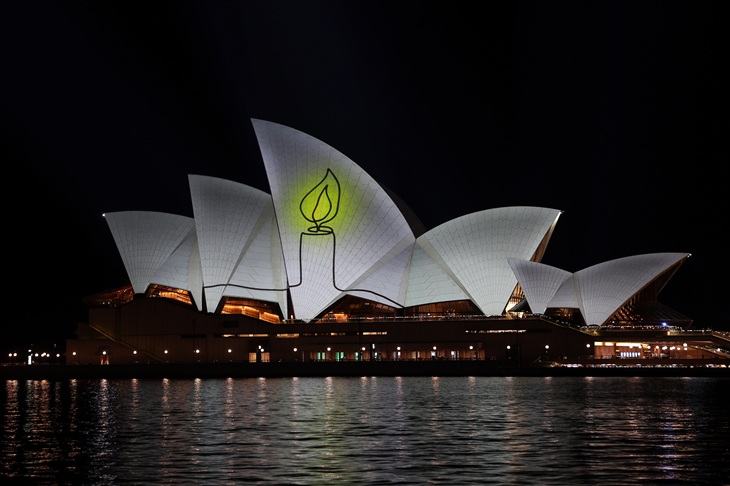
Tonight, as we light the nine candles of Chanukah, eight for the days of the festival, and the ninth, the shamash, for lighting the others, our chanukiah [menorah] will hold eight yellow candles and one blue. The yellow candles honour the victims of the Bondi Chanukah terrorist attack and the blue, the people of Israel.
Light is a symbol of hope amid darkness, a reminder that hate can be overcome. From the Maccabees’ improbable victory over the Seleucid Empire more than 2,000 years ago, when the reclaimed Temple in Jerusalem burned for eight days on a single day’s supply of oil to the pogroms of Europe, the Spanish Inquisition, the Holocaust, and the resurgence of antisemitism over the past two years, light has always shone brighter than darkness.
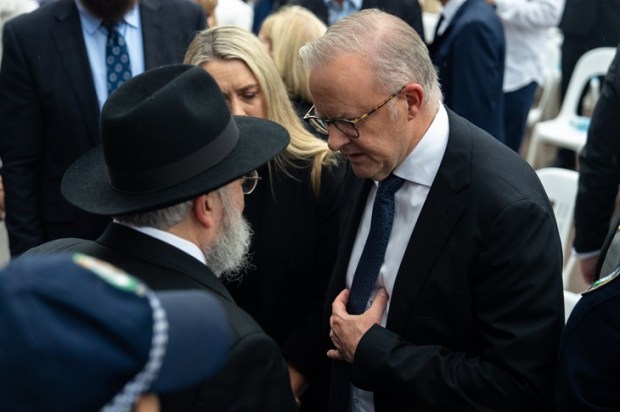
Yet today, that light feels fragile. Many fear that Prime Minister Albanese and his government, alongside their ideological allies, are placing politics above their duty to keep Australians safe. While declaring a National Day of Reflection and moments of silence, the government continues to preside over decisions that leave our communities exposed.
My grandfather once said in his Holocaust testimony:
‘We were lucky to grow up in Australia, free of the antisemitism we grew up with in Poland.’
He arrived alongside Greeks, Italians, Yugoslavs, and other post-war migrants. They shared one goal: leave the past behind, work hard, and build a future. Australian values of mateship, fairness and helping your neighbour remained constant. That is, until Labor came to power in 2022.
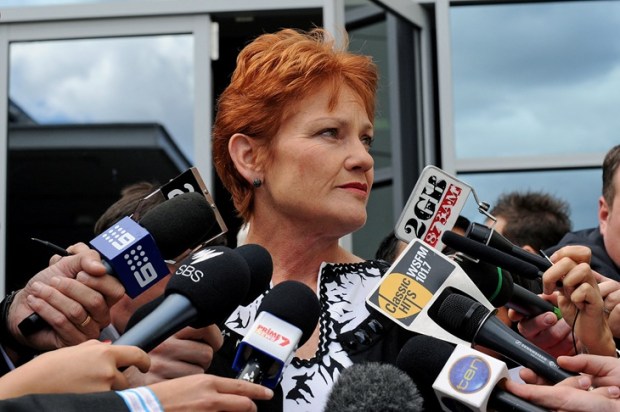
This week, Home Affairs Minister Tony Burke announced plans to lower the threshold for prosecuting hate speech to the constitutional minimum. He spoke of targeting those who operate just below the current legal line, including so-called hate preachers.
This belated recognition rings hollow.
For years, many feel Labor has prioritised political expediency over keeping Australians safe. The result – extremist rhetoric has festered, normalised, and emboldened those who tread just beneath the law.
The same failure extends to broader policy.
The government has imported thousands of Palestinians under humanitarian programs amid genuine concerns over vetting processes, while repatriated ISIS brides, some of whom publicly expressed hostility toward Australia, have entered the country. These decisions have understandably shaken confidence in the government’s ability or willingness to prioritise national security over ideological signalling.
Leadership would have demanded calling out the attacks on Jewish institutions and the hate chanted on our streets. Instead, Labor has pivoted to gun control, as if removing firearms alone could neutralise jihadist intent. It cannot. When chants of ‘by any means necessary’ alongside ‘globalise the intifada’, and ‘from the river to the sea, Palestine will be free’ echo in our streets, history tells us what that rhetoric can become: car rammings, stabbings, and suicide bombings.
We do not need empty gestures. The disgraceful scenes outside the Sydney Opera House on October 9, 2023, when its sails were lit in solidarity with Israeli victims made the stakes clear. On October 7, 1,200 Israelis were slaughtered and 250 taken hostage in Gaza. Chants of ‘Gas the Jews’ and ‘F- the Jews’ rang out. Attempts to sanitise what was said later are unconvincing. Those moments laid the foundation for what would follow, allowed because it allegedly fell short of the legal threshold.
Tony Burke can say what he likes now, but thresholds should have been lowered immediately. Hate preachers who called out Jews for murder in their sermons should never have gone unprosecuted. Changing thresholds now cannot undo years of inaction.
Chris Minns, Premier of New South Wales, announced that he will introduce new laws criminalising the display of symbols associated with terrorist organisations. These laws will give police explicit powers to remove individuals carrying such symbols. He also called for a Royal Commission into what happened at Bondi. Why won’t the Prime Minister be so forthcoming? Minns is taking the lead in Australia following arrests in London this week of those who chanted ‘globalise the intifada’ after the Bondi attacks. One must ask will Jacinta Allan in Victoria not follow suit? After all, Melbourne is the protest capital of Australia where these chants have rung weekly like church bells.
This is about more than Australian Jews. Bob Hawke once warned after visiting Israel: ‘If the bell tolls for Israel, it will not just toll for Israel; it will toll for all mankind.’ Today, those bells are tolling for Australia. Our freedoms are under strain.
First, they come for the Saturday people, then the Sunday people. Israel and the Jews are only the beginning. Al-Qaeda propaganda has long framed attacks on Jews, Christians, and Western citizens as fair game. In Australia, radical organised Islamic groups stoke antisemitism through rhetoric that, ASIO admits, stops short of inciting violence – but this has allowed them to operate freely while being ‘monitored’, unlike in countries such as the UK, Germany, or Saudi Arabia.
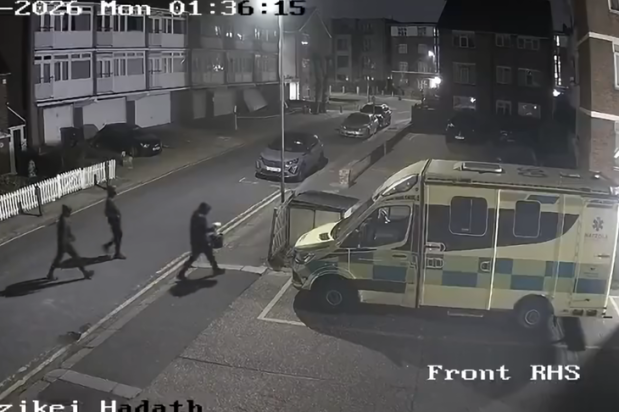
History shows that ignoring warning signs does not prevent violence. It ensures it. From fire bombings to murder, the consequences are real. As Sarit Hadad sang for Israel in the 2002 Eurovision Song Contest:
‘Light a candle, light a candle with me, a thousand candles in the dark will open our hearts.’
Last night, with all the Chanukah candles shining bright across Australia and the world and in the lead-up to Christmas, let us hope that hope is matched by action. We can only hope. Happy Chanukah and Merry Christmas to everyone.