In a characteristically lucid and incisive essay written in the aftermath of the Bondi massacre, Helen Pluckrose argues in Islam, Muslims, and the Refusal to Think Clearly that something which ought to be uncontroversial increasingly eludes public discourse: two things can be true at once. Islam contains ideas that can plausibly justify violence, censorship, and oppression, and many Muslims are decent, peaceful, admirable people who reject those outcomes. The moral and political problem does not lie in holding these two truths together, but in the widespread difficulty many people have in doing so – on both sides of the Muslim-non-Muslim divide, and for different reasons. For some, this difficulty reflects the limits of contemporary multicultural discourse, which has become uncomfortable with nuance, complexity, and moral distinction.
Pluckrose’s argument is clear, principled, and liberal in the best sense of the word. Ideas matter. Bad ideas, when taken seriously, produce bad outcomes. And if an ideology contains doctrines that plausibly motivate atrocity, then those doctrines must be confronted honestly – by insiders most of all – rather than denied, euphemised, or shielded from criticism. To refuse that confrontation is not neutrality; it is complicity.
At first glance, this may seem familiar. Variations of this argument have been made for years, often with far less clarity and far more heat. In the immediate wake of mass violence, many people are understandably focused on concrete measures: policing, intelligence failures, border control, mental health interventions, immigration settings. Compared to those urgent questions, calls for ideological honesty can feel abstract or anodyne. Others react in the opposite direction, turning visceral moral outrage into sweeping generalisations and collective blame – emotionally potent, but ultimately unhelpful.
Yet Pluckrose’s essay repays careful attention precisely because it does something many contributions in this space fail to do: it isolates the deep problem. Not the proximate causes of a particular attack, but the long-run conditions that make certain pathologies persistent, resistant to reform, and endlessly recycled in public debate. The refusal to confront bad ideas, she argues, simultaneously fuels Islamist violence and anti-Muslim backlash. It locks societies into a sterile oscillation between denial and rage.
That diagnosis is correct. But it still leaves an important question unanswered. If the need for reform is so obvious – if the distinction between people and ideas is so basic – why does this refusal persist so stubbornly? Why do appeals for honest internal critique repeatedly meet not engagement, but defensiveness, minimisation, and even rebuke? Why, after each atrocity, do so many mainstream Muslim leaders respond less by confronting the ideological problem than by policing the emotional reactions of the surrounding society?
To answer that question, we need a frame that has been hiding in plain sight, largely excluded from polite discussion by decades of illiberal multicultural dogma. We need to talk seriously about cultural moral systems – specifically, the difference between dignity cultures and honour cultures – and about what happens when they collide.
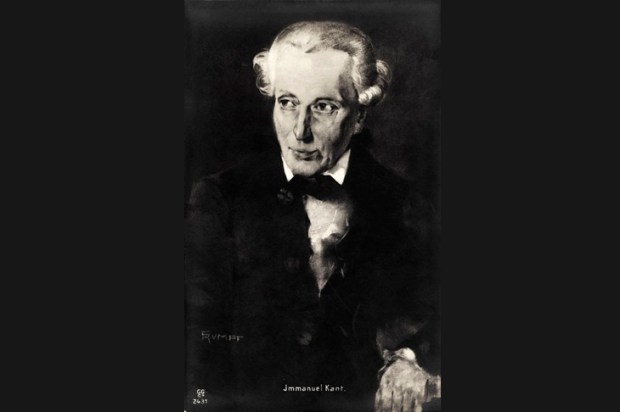
Modern Western liberal societies are, at least in aspiration, dignity cultures. This is an Enlightenment inheritance. In a dignity culture, both individual and collective moral worth are understood to be intrinsic rather than contingent on reputation. Insults do not diminish one’s value. Criticism of ideas is not a personal attack, but a normal – indeed necessary – part of moral and intellectual life. Conflict is mediated by institutions, not personal retaliation, and reform proceeds through argument, dissent, and revision.
This moral ecology underwrites the liberal expectations that frame Pluckrose’s argument, and which her essay implicitly reveals to be under strain. It is why liberal societies expect adherents of an ideology to criticise its worst manifestations. It is why reform is seen as a moral duty rather than a betrayal of a deeply held belief system or one’s tribe. And it is why public condemnation of bad ideas is understood as moral clarification – or even a good-faith appeal to shared values – rather than as humiliation.
Honour cultures operate on a different moral logic.
In honour systems, worth is relational and reputational. It must be defended. Public criticism is not merely disagreement; it is a threat to standing. To concede ground in front of outsiders is not virtue but weakness. Silence can invite further attack; internal dissent can be read as betrayal. The primary moral task is not truth-seeking, but the maintenance and defence of collective reputation. To those shaped by dignity-culture assumptions, this inversion can feel almost unintelligible: the very idea that one might regard the defence of reputation, rather than the pursuit of truth, as a moral obligation strikes outsiders as perverse – yet within honour systems it is precisely how moral seriousness is expressed.
This distinction is not obscure anthropology. Honour cultures have existed across history and persist today in various forms: in clan-based societies, in duelling traditions, in gang and prison cultures, in parts of the Middle East and South Asia, and in historically documented honour subcultures such as the American South or the Scottish border clans. They generate recognisable patterns of behaviour: hypersensitivity to insult, emphasis on collective solidarity, hostility to public shaming, and a strong preference for handling ‘internal’ problems behind closed doors.
Once this frame is brought into view, a great deal of contemporary confusion snaps into focus.
Consider the now-familiar pattern following Islamist terror attacks in Western countries. There are ritual condemnations, often brief and formulaic. There is heavy emphasis on the peaceful majority, on hero figures from within the Muslim community, on the dangers of ‘generalisation’. There is frequent frustration – sometimes outright scolding – directed at the wider public for reacting emotionally or questioning immigration, integration, or ideology. What is conspicuously rare is sustained, explicit engagement with the theological or moral doctrines that plausibly motivate the violence itself.
To a dignity-culture audience, this looks evasive at best and morally inverted at worst. The expectation is straightforward: if an ideology is being used to justify murder, then decent adherents should say so plainly and work, publicly, to discredit those interpretations. Failure to do so appears as denial or bad faith.
But from within an honour-based moral framework, the situation looks different. Public criticism of core beliefs is experienced not as reform but as collective humiliation. External pressure to ‘own’ the problem reads as an attempt to impose shame. Defensive solidarity becomes the default response, because maintaining group honour takes precedence over conceding moral ground to outsiders.
Pluckrose is right that reform requires insiders to confront bad ideas honestly. What her essay does not fully explore is that this expectation itself is culturally specific. It presupposes a moral environment in which beliefs can be detached from identity, and where public criticism does not automatically trigger status threat. When those conditions are absent, calls for reform collide with deep-seated honour dynamics that actively punish the behaviour liberal societies are demanding.
This helps explain why Muslim reformers do exist – but are so rare, marginalised, and vulnerable. Those who openly challenge illiberal doctrines within Islam overwhelmingly do so from a dignity-culture position. They argue, dissent, revise. They are often ex-Muslims, women, or members of the diaspora. And they pay a heavy social price for it: ostracism, intimidation, and in some cases violence. In honour systems, the cost of public dissent is not disagreement; it is loss of standing.
The honour-culture frame also helps explain why liberal multiculturalism has struggled so badly in this domain.
For decades, legitimate discussion of cultural incompatibilities – of differing moral expectations around criticism, authority, gender, sexuality, and speech – has been suppressed under the banner of tolerance. Assimilation was treated as suspect, integration as optional, and selective or slower-paced immigration as morally tainted. The result has not been harmony, but a growing gap between the moral assumptions of host societies and those of some incoming communities.
Western publics sense this gap instinctively, even when they lack the language to articulate it. Their frustration is often expressed crudely and sometimes unjustly. But it is rooted in a real collision of moral systems. When dignity cultures encounter honour-based responses to criticism, the result is mutual incomprehension. Each side interprets the other’s behaviour as bad faith. Each feels morally affronted.
None of this can be addressed by pretending the problem does not exist, or by insisting that criticism itself is the real harm. Liberal societies cannot function on that basis. They depend on the freedom to criticise powerful systems of ideas, and on the expectation that such criticism will be met with argument rather than intimidation.
Liberals should also be candid about their own role in intensifying these dynamics. By retreating from Enlightenment individualism toward a moral language increasingly organised around identity groups and collective status, contemporary progressive discourse has inadvertently amplified the very honour-based sensitivities it claims to oppose. A political culture that insists on seeing people primarily as representatives of groups – rather than as individuals answerable for ideas and actions – predictably increases the salience of group threat, group defence, and group grievance.
Pluckrose is right: the refusal to confront bad ideas fuels both violence and backlash. But the refusal itself is not merely a matter of intellectual confusion or political cowardice. It is also the predictable outcome of a clash between Enlightenment dignity norms and honour-based moral psychology – a clash that liberal societies have been reluctant even to name.
If there is to be a way forward, it will not come from silencing criticism in the name of harmony, nor from indulging collective blame in the name of clarity. It will come from insisting, without apology, that powerful ideas remain open to scrutiny – and from recognising that this insistence is itself a liberal demand, rooted in a particular moral tradition. But it will also require liberals to practise better intellectual housekeeping of their own: to resist the reduction of individuals to group avatars, to lower the ambient temperature of identity-based moralism, and to recommit to judging people by the content of their arguments rather than the status of their category. Only under those conditions can the difficult work of cultural evolution become less threatening, less ubiquitous, and more genuinely reformist.
Matt Brennan is a Sydney-based writer interested in liberal principles and social psychology.