As we wind down to the dawn of a new year, it’s worth recapping how Labor has delivered ‘Net Zero’ on some major energy promises.
At the time of writing, there are still a couple of weeks for Prime Minister Anthony Albanese to see out his pledge (the one repeated about 100 times before the 2022 election) that power prices would fall by $275 in 2025.
Instead, Santa’s Christmas sack contains a message from the Grinch – Treasurer Jim Chalmers is ending federal rebates. At the same time, inflation is on the rise and indications are that interest rates are also likely to rise again, delivering another hit to Aussies struggling with mortgages, rising rents, food and fuel prices. All of this can be linked back to energy bills.
The reality is that average household power prices in some states have increased by about $1,200 – and much more than that for businesses struggling to stay afloat. Many have already pulled the plug or departed our shores.
No worries, though, if you are a major energy consumer such as the Tomago aluminium smelter or the struggling Whyalla steel works. Our government has found wads of cash stuffed in the Santa Sack to subsidise ‘affordable’ power despite a national debt about to soar past the trillion-dollar mark.
In this case, ‘affordable’ does not necessarily equate to ‘reliable’.
With the increasing rush to adopt intermittent, unreliable, and costly renewables, the years ahead should prove interesting.
For those Green Dream Believers who still think an almost total reliance on renewables is the answer, the Australian Energy Market Operator (AEMO) has warned that coal generators will have to remain part of the Australian landscape until 2049 – which will leave only a year to deliver on Albanese and Energy Minister Chris Bowen’s fabled ‘Net Zero by 2050’.
Good luck with that, and with reaching their promised ‘82 per cent renewables’ by 2030, seeing the current level is around 40 per cent.
Australia is hell-bent on destroying the environment by clearing native forests, flattening mountain tops, and ruining arable farmland to establish largely Chinese-sourced eyesores that will need to be replaced in another 15 to 20 years. This is expected to create huge disposal problems. In addition, we now know some wind turbines contain traces of asbestos in their braking components.
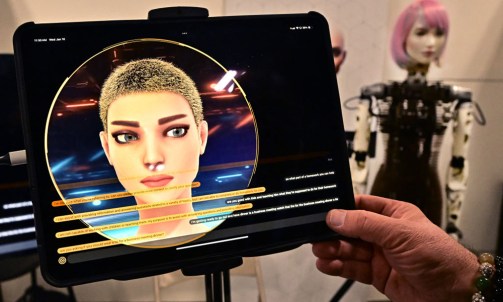
Meanwhile, China is building a new coal-fired power plant about every other week along with expanding renewables and nuclear energy. According to Google’s AI, China exceeds our annual CO2 emissions every 12 days. Australia remains the only OECD nation with a crazy ideological ban on nuclear energy. Close allies, such as the US and the UK, are embracing the latest technology including small modular reactors, or repowering old plants such as Three Mile Island to meet the huge energy demand of AI data centres.
Albanese and Bowen appear to think we can run new data centres that will consume more power than a New York skyscraper with ‘The Windmills of their Minds’ and back-up batteries which won’t see them through the day when the sun doesn’t shine and the wind doesn’t blow.
Will they manage to get just one ‘green hydrogen’ energy project off the ground and running to meet another pledge to make Australia a ‘green hydrogen superpower’ backed by billions in subsidies? Oops, quoting Google’s AI overview again:
‘Reports indicate that dozens of green hydrogen projects in Australia have been mothballed, cancelled, or significantly delayed. One analysis from early 2025 noted nearly 100 proposals, of which 61 individual projects had been “archived”.’
Australia produces just one per cent of world global CO2 emissions. Despite Albanese and Bowen’s dire predictions, if we cut all our emissions to absolute zero, at further huge cost to our economy, it would have practically zero effect on world climate. A former chief scientist admitted as much to a Senate hearing several years ago before trying to walk it back after copping flak from climate catastrophists, of which there are many.
Currently, CO2 makes up a tiny 0.04 per cent of the world’s atmosphere which is at the lower end of the geological time scale. Past eras have shown levels more than 10 times higher, when plants and coral reefs thrived, such as during the Ordovician period.
It is an essential trace gas for all plants and animals so be careful what you wish for – if levels drop below 0.02 per cent, life as we know it would cease to exist.
The belief that anthropogenic CO2 emissions are the main driver of climate change is an unproven hypothesis based on computer modelling, and is said to ignore or downplay natural influences such as cyclical changes in the Earth’s orbit around the sun, gradual movement of the magnetic poles, huge emissions of gasses and water vapour from under-sea and above ground volcanoes, along with changes in ocean currents and increased sun spot activity, to name a few.
Even NASA admits that higher CO2 levels have contributed to higher crop yields and a greening of the planet. Google’s AI bot again:
‘NASA studies and a large body of scientific research confirm that elevated atmospheric carbon dioxide (CO₂) levels have contributed to the “greening” of Earth and, in some cases, increased short-term crop yields. This is known as the CO₂ fertilisation effect.’
Ancient ice cores have also shown that raised CO2 levels have always followed temperature increases by hundreds or even thousands of years.
Meanwhile, water vapour is a much more prevalent and effective greenhouse gas, but not even Albanese and Bowen have enough hubris to tax the clouds.
John Mikkelsen is a former editor of three Queensland regional newspapers, columnist, freelance writer and author of the Amazon Books Memoir, Don’t Call Me Nev.