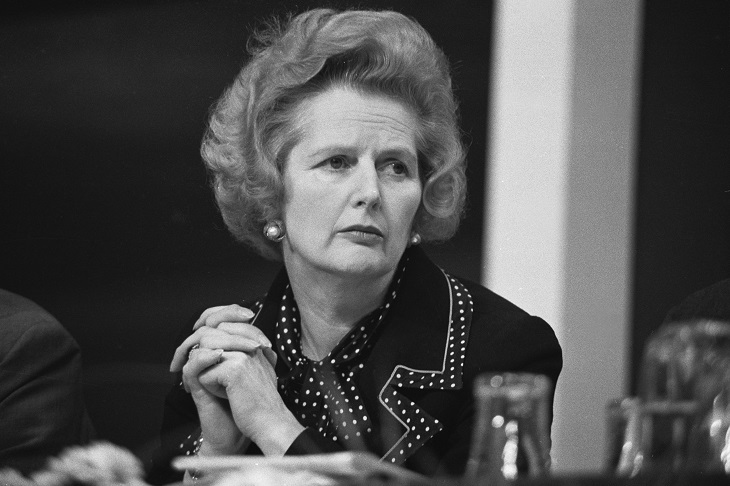
This week (on 13 October) marks the 100th anniversary of the birth of Margaret Thatcher. Arguably, no Prime Minister since the second world war sought to change Britain and its place in the world as much as she did. Lady Thatcher led the Conservative Party for fifteen years and held the keys to 10 Downing Street for eleven and a half years, the longest of any Prime Minister of the modern era. Her funeral was attended by Her late Majesty the Queen, one of only two funerals the monarch attended in her 70 years on the throne (the other was Winston Churchill’s).
Centre-right parties in the Anglosphere (excluding the Republicans in the United States of America) are struggling to understand, or have simply forgotten, what they stand for… Lady Thatcher, the Grantham grocer’s daughter, stands out as a conviction politician whose government, as she pointed out in the first volume of her memoirs, The Downing Street Years, was about the application of a philosophy, not the implementation of an administrative program. Indeed, it was Thatcher who told the Tory party conference in 1981 that ‘the lady’s not for turning’, and pointed out that socialists will eventually run out of other people’s money.
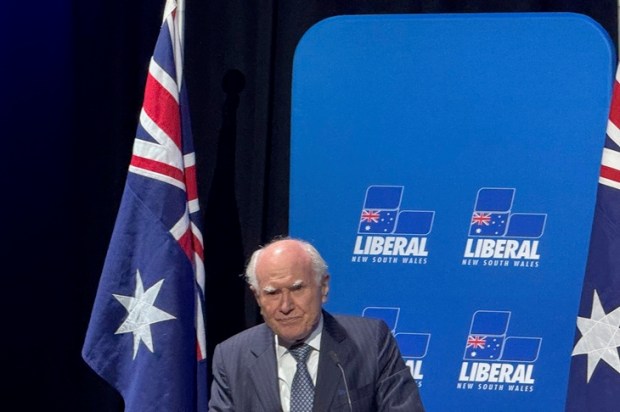
John Howard during his first stint as Opposition Leader in the 1980s told a gathering of Young Liberals that it is better to be right than popular (today’s Young Liberals, especially in New South Wales, would do well to recall this). In saying that, Mr Howard may well have been inspired by Lady Thatcher, who stated in her memoirs that ‘what is morally right often turns out to be politically expedient’.
No doubt it was this belief and conviction that drove her to take on Arthur Scargill and the mining unions, indeed, the British trade unions generally, whose extortionate demands and restrictive trade practices made many industries uneconomic, not to mention chaos and power cuts, especially during the 1970s. To Lady Thatcher we owe secret ballots before strikes, putting an end to union militancy that hitherto had held a country to ransom. It was at the height of the miners’ strike that Thatcher defined so clearly what was at stake, that the rule of the mob cannot take the place of the rule of law.
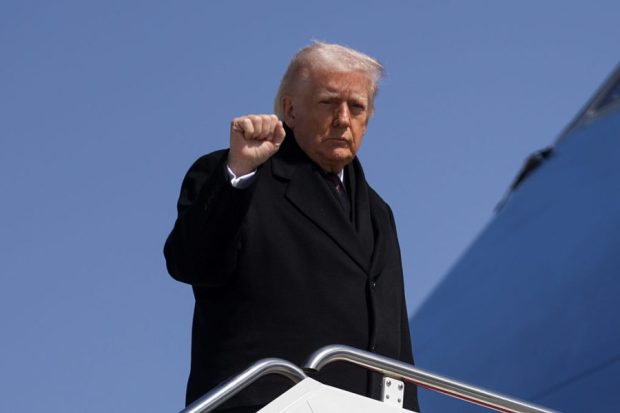
Margaret Thatcher, along with Ronald Reagan and Pope St John Paul II, brought an end to the Cold War – as she called it in her memoirs, ‘the world turned right side up’. One is tempted to think of what she would have made of the ceasefire Donald Trump has brokered between Israel and Hamas, it being a deal no other political leader has managed until now, maybe because, as she declared in relation to diplomacy, ‘the twin opposing temptations of statesmen are hubris and timidity’.
It may have been the fall of the Berlin Wall that hardened her philosophy against the EU, known in her time as the European Economic Community (EEC), or simply the Common Market. While an enthusiastic supporter of economic and trade liberalisation within the member states (we have her to thank for signing the agreement with then French President Francois Mitterrand to build the Channel Tunnel) it was the drive toward political union, underlined by her famous ‘No, No, No’ speech in response to then EEC President Jacques Delors’ proposals to make the European Parliament the democratic body of the EEC, the Commission the executive, and the Council of Ministers the Senate, that she opposed so vehemently and was one reason her parliamentary colleagues (men in lifeboats as she called them) removed her from office.
The old Eastern Bloc was collapsing, as was the old Soviet Union, because it was a large, multinational, amorphous mass of a wide range of nationalities and countries wanting autonomy, which is exactly what the EEC wanted. Why should Brussels make decisions in place of Westminster which had governed Britain for hundreds of years? Her love of her country meant that Lady Thatcher saw political union as harmful to Britain, and she would never have done anything to harm the country she loved. Moreover, Lady Thatcher was all about removing regulation, not imposing it, which is what the EU has done. Having a drink in a London pub after 5:30pm? You can thank Lady Thatcher for that due to her government’s reform of licensing laws. Watching a Premier League match on pay-tv? That happens because Thatcher deregulated TV licensing laws.
Arguably, Lady Thatcher did more than any other political leader to make Britain a classless society with her ‘right to buy’ scheme, allowing tenants in council houses to buy their homes. It encouraged people to be responsible for themselves, be self-reliant instead of reliant on government. In fact, many were appreciative of the hand up at that time and it changed their lives for the better.
Lady Thatcher came to office when big government was the name of the game, which had turned Britain into a basket case – it was known as the sick man of Europe at the time. However, she had the vision, the willpower, and the ability to turn around a failing economy into a prosperous enterprise economy where personal responsibility was the key. And when she declared ‘there is no such thing as society’ it was because she fervently believed ‘society’ was becoming an excuse for problems. So often taken out of context, the quote in full is:
There are individual men and women, and there are families. And no government can do anything except through the people, and people must look to themselves first. It’s our duty to look after ourselves and then to look after our neighbour.
Whether you agreed with her or not, Lady Thatcher meant what she said and said what she meant – a rare quality in politicians and absent (with a few notable exceptions) in today’s talentless and intellectually and morally bankrupt political class.