Manchester and Melbourne sit on opposite ends of the globe, but for their Jewish communities, they have begun to feel like the same place. The same fear. The same silence. The same antisemitism rising, unchallenged, and emboldened.
Since the October 7 Hamas massacre, in which 1,200 Israelis were slaughtered and 250 more kidnapped into Gaza, antisemitic incidents have exploded in both cities, reaching levels disturbingly reminiscent of pre-second world war Europe.
Synagogues defaced with swastikas. Jewish children told to remove school uniforms to avoid being identified. Orthodox Jews taunted in the streets. Jewish businesses targeted. Jews hiding their Star of David around their neck. Threats. Graffiti. Intimidation.
In Manchester, faeces were smeared on a synagogue in Golders Green. A glass bottle was thrown at a Hasidic girl. In Melbourne, a Jewish man was told he couldn’t board a tram because ‘Jews aren’t allowed’.
What began as mass murder in Israel has metastasised into global hatred and the responses from political leaders have been paralysed by fear or calculation.
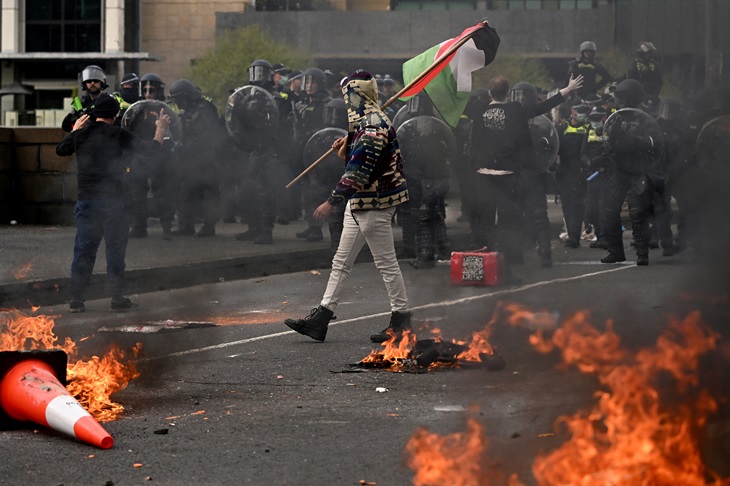
On university campuses, Jewish students now face the brunt of radicalised activism. In both Manchester and Melbourne, ‘encampments’ claimed to be peaceful protests morphed into zones of exclusion, where chants like ‘From the river to the sea’, ‘globalise the intifada’, and ‘Death to the IDF’ are treated as free speech rather than threats and calls for violence.
After all, Intifada is Arabic for violent uprising. Two intifadas in Israel saw years of suicide bombings on buses, restaurants, and shopping centres. Jewish students are doxxed, harassed, and targeted while university leaders waffle between cowardice and complicity.
Political leadership has fared no better. UK Prime Minister Keir Starmer and Australia’s Anthony Albanese appear more concerned with protecting their political coalitions than defending the core values of liberal democracy. Both have hesitated to name antisemitism plainly, to confront it forcefully, or to call out those within their own ideological circles who excuse or enable it.
Nowhere was this failure more stark than on October 9, just two days after the Hamas atrocities when pro-Palestinian protesters gathered outside the Sydney Opera House, where its sails were lit blue and white in solidarity with Israel. The rally descended into chants of ‘Gas the Jews’ and ‘F*** the Jews’.
Israeli flags were burned. No one was arrested. No consequences followed. The images travelled globally, and Australia’s shame was broadcast to the world.
Many believe Australia lost its soul that night.
Jewish community leaders across both countries have warned, clearly and consistently, that unchecked antisemitism will not remain rhetorical. And in Manchester, it didn’t.
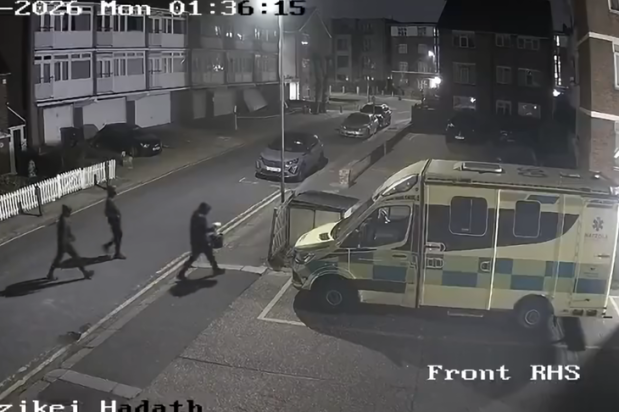
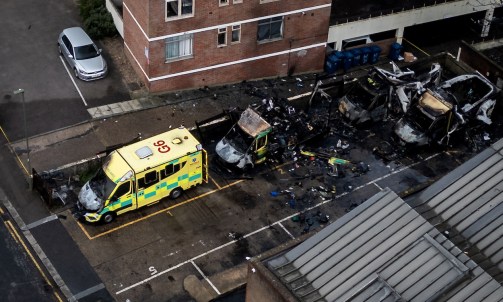
On Yom Kippur, the holiest day of the Jewish year, a man reportedly drove his car into congregants at a synagogue near Heaton Park, then began stabbing worshippers. Three were killed, including one who died from a police bullet in the chaos, and four others were injured. The attacker was later identified as Jihad Al-Shamie, a British citizen of Syrian descent reportedly out on bail following suspicion of rape. This wasn’t random. It was symbolic. It was timed. It was a message.
Such attacks do not occur in a vacuum. They are the predictable result of a culture where terrorism is glorified by radical religious leaders, where Jews are routinely vilified under the guise of ‘anti-Zionism’ and where authorities apply standards to Jews that would be unthinkable for any other minority group.
And yet, in that same climate, Australia is now welcoming Gazan refugees, when many Gazans have grown up chanting ‘Death to America’ and ‘Death to Israel,’ and taught that martyrdom is the highest honour. Meanwhile, ISIS brides and their children, those who once pledged themselves to the destruction of the West are quietly being resettled in Australia.
In this atmosphere, the question is no longer if tragedy will strike again, but when.
We are constantly told these protests are ‘peaceful,’ that this is just ‘free speech’. But when the speech includes open incitement to violence and the authorities respond with silence, the message is clear: this is not neutrality. It is appeasement and complicity.
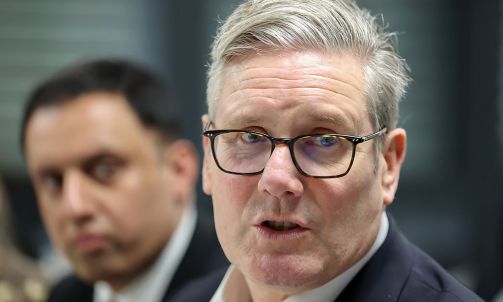
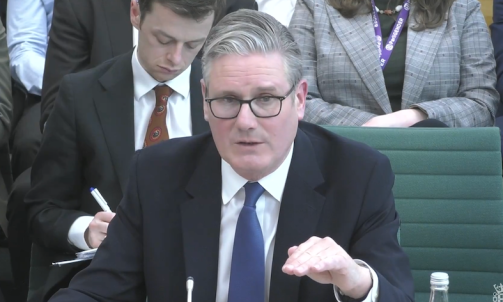
Starmer has offered consoling words. He pledged ‘to do everything in my power to guarantee you the security that you deserve’ and acknowledged the fear now felt by British Jews. ‘I express my solidarity,’ he said, ‘but also my sadness that you still have to live with these fears.’ He spoke of Britain’s proud history of offering refuge to Jewish families fleeing persecution, saying hatred must be confronted, not accommodated.
Albanese, too, has pointed to Australia’s past: ‘Australia proudly welcomed so many survivors of the horrors of the Holocaust, offering refuge and hope,’ he said on Holocaust Remembrance Day. ‘We embraced the Jewish community then, and we embrace you now.’
But words without action are hollow. Band-aids over bullet wounds. The reality Jewish Australians and Britons face today contradicts those words entirely.
And why, really, should these leaders act? In Australia, Jewish voters number approximately 100,000. Muslim voters exceed a million. In the cold arithmetic of identity politics, moral clarity rarely outweighs electoral calculus.
The warning signs are flashing, and they are not subtle. The Holocaust did not begin with Auschwitz. It began with boycotts, slurs, street violence, institutional exclusion, and most of all, silence.
Holocaust survivors, now in their final years, say what they see today mirrors their childhood memories of 1930s Europe. My own grandfather survived. He gave his testimony to the Shoah Foundation in 1996, and ended it with a message for future generations:
‘You are lucky to grow up in a country like Australia, free of the antisemitism we knew in Poland. Don’t let anyone make you feel second-class. Always be kind to all mankind. But above all, always be a proud Jew.’
It’s a value Jews hold tightly, in Melbourne and Manchester, New York and Paris, Tel Aviv and Toronto. We are not taught to hate in our synagogues, homes, or schools. We are taught to love thy neighbour. We are taught tikkun olam – to repair the world.
But the world cannot be repaired when leaders refuse to see what is broken. Silence in the face of hatred is not virtue. It is complicity.
Above a barrack at Auschwitz, the chilling phrase is inscribed: ‘Those who fail to learn from the past are doomed to repeat it.’ Both Starmer and Albanese are failing to learn. That failure is why history is repeating itself now.
And history, if it teaches anything, does not forgive those who look away.