‘Australia faces significant climate-related risks regardless of future emissions reductions.’
This is the most important sentence in a recent report by the Productivity Commission about Australia’s Net Zero policy. It is also the most important sentence written about Net Zero in Australia this year.
In that one sentence, the PC has acknowledged that Australia’s carbon emissions can go up, down, or sideways, but they will have no impact on the global climate.
The report, Investing in cheaper, cleaner energy and the Net Zero transformation, makes this admission on the first page. A rational analyst may wonder if the remainder of the report, then, is not just an exercise in trying to work out how to most efficiently do something that should not be done.
The participants at the Albanese government’s recent Economic Reform Roundtable, for whose benefit the report was prepared, should have dwelt on that sentence. It would have helped them enormously in working out how to improve Australia’s productivity performance.
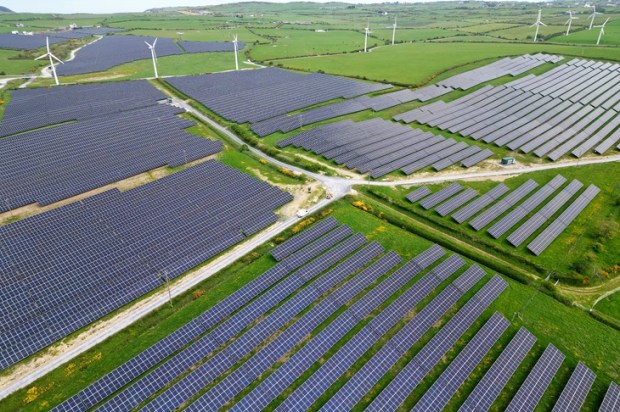
If improving ‘productivity’ is making more from less, then Net Zero is anti-productivity. It requires taking something that previously existed and produced a given level of energy – our power system – tearing it up, literally, then installing swaths of solar panels and wind towers and connecting infrastructure across prime agricultural land (harming productivity in that sector along the way), with many ticket-clippers along the way, all to produce the same electricity we were generating from the old system.
It’s like the old ‘broken window’ fallacy: it would have been more productive to leave the window as it was and focused your time, labour, and investment on things other than breaking and replacing it.
Australia currently produces about 1 per cent of global carbon emissions. To put that into context, Australia’s total yearly carbon emissions are matched by China every 12 days. For some time, certain analysts and commentators have made the point that if Australia’s emissions are so low as to be almost statistically irrelevant, why should Australians be forced to pay the substantial costs of reducing carbon emissions while other countries continue to pollute without care?
This is not a fringe concern, nor is it an unreasonable question, particularly in light of the higher costs of everyday essentials like electricity, gas, fuel, and groceries, not to mention higher costs of manufacturing and construction materials, all of which will only become more expensive with the pursuit of a Net Zero goal.
‘So even if we became climate-neutral overnight, it would not prevent a single extreme weather event.’
This was not the claim of a radical climate denier, but the rational assessment of Germany’s centrist chancellor Friedrich Merz. It is interesting that the PC’s admission comes shortly after Merz’s statement. Germany is responsible for double the annual emissions of Australia.
In a recent research note, the Institute of Public Affairs found that the Albanese government has increased federal government outlays on climate-related spending to some $9 billion. This puts climate spending collectively in the top 20-line items of the federal budget.
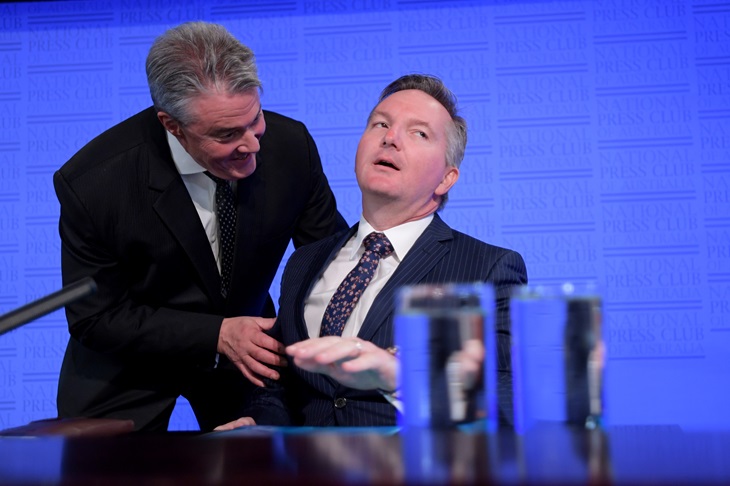
The amount is only set to increase in the coming years as new initiatives and subsidies continue to be announced. Minister for Energy and Climate Change Chris Bowen recently announced an expansion of the Capacity Investment Scheme, whereby the Albanese government has guaranteed to provide renewable energy companies (many of which are foreign-owned) with a profit courtesy of the Australian taxpayer. Significantly, they have not disclosed what the total cost of this policy will be to Australians, or what kinds of profits are being provided to companies under the scheme.
Many claim that there is a high level of support for Net Zero amongst the Australian electorate. Writing in The Sydney Morning Herald, Shaun Carney claimed:
‘Despite the considerable array of difficulties with the transition to a system of renewable energy, including the cost, a solid majority of the Australian public wants to keep going with it.’
Carney does not offer any evidence to back this claim up, but survey data does indicate that when you ask people if they care about the environment and support policies to improve it, they will say yes. But of course, they will; no one is opposed to a clean environment, and if the costs are not transparently stated and they think that someone else is footing the bill then why not support Net Zero.
But as soon as voters realise it is them who are required to pay, support for Net Zero disappears. When the Institute of Public Affairs asked Australians recently how much they were willing to personally pay for net zero, 48 per cent said precisely $0. Anyone who lives in the real world knows that this is true. Qantas reports that its carbon offset program has about a 10 per cent uptake rate. When you provide a specific cost to reduce emissions for a specific action, Australians think it is too high. And just think of how much of that 10 per cent is woke board members or public servants travelling on someone else’s dime who are ticking that feel-good offset box.
Indeed, back in punterland, a 2022 analysis of 64,000 European flight bookings found that the median amount passengers were willing to pay for a Net Zero emissions flight was €0. The weak Australian dollar notwithstanding, that’s still $0.
If Australians do not want to pay for Net Zero, and if reaching Net Zero would make no difference anyway, then why do our political class insist on maintaining their commitment to it?
‘Australia faces significant climate-related risks regardless of future emissions reductions.’ It’s a sentence worth referring to, often. It’s a sentence worth sending to the members of the parliamentary Liberal Party. It’s a sentence that reveals that if we want to improve our productivity, we should stop doing things that do not need to be done and devote our time and resources elsewhere.
Cian Hussey is a Research Fellow at the Institute of Public Affairs and writes No Permanent Solutions on Substack.