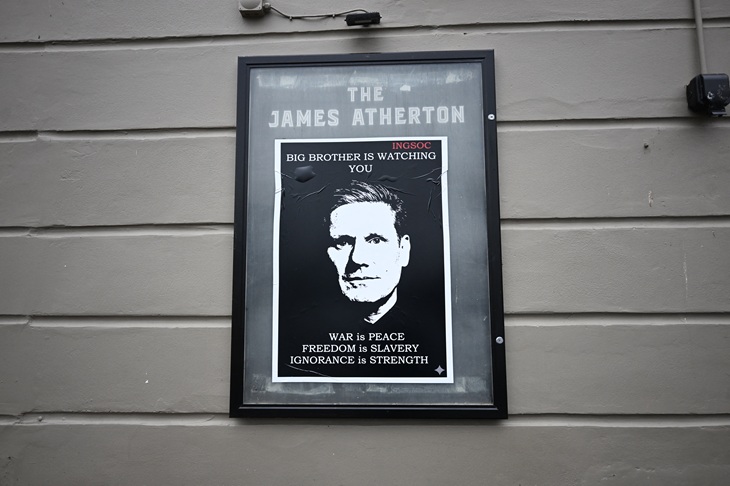
Amidst the variety of current political challenges in the UK, there seems to be a focus on the controlling and monitoring of its citizens.
In response to the growing concerns of governing the uncertain political climate in the UK, Prime Minister Keir Starmer has announced plans to introduce a Digital ID that will be mandatory for all adults wanting to work in the UK.
The Digital ID employment scheme has been coined as the ‘Brit Card’ and it will include the worker’s name, date-of-birth, nationality/residency, and a photo for identification purposes.
The ‘Brit Card’ and what it compels
On the surface, the Brit Card appears to be a sensible response to the growing concerns of illegal workers flooding the UK market.
However, problems arise due to the fact that those without the Brit Card will be unable to work and will be left without the ability to earn a living for their families via exercising their right to work.
Although there are valid concerns regarding the working rights of UK citizens, there are greater concerns, at least in my opinion, with the risks associated of having sensitive information stored on a government database that could be accessed or exploited by bad actors.
If the government database that stores the information to maintain the functionality of the Brit Card is hacked, the information could then be taken and used to commit identity theft and result in catastrophic consequences for its victims. This would then result in huge ramifications for privacy rights within the UK.
The right to privacy and the information economy
The right to privacy can be found in several international treaties and is a core component of international human rights law.
In essence, Article 17 of the International Covenant on Civil and Political Rights protects unlawful interference with privacy and compels lawful protections against such interferences. As we continue to see an expansion of the digital age, AI, and an over-reliance on technology, the right to privacy is seemingly being ignored in lieu of corporate profits.
This concept was highlighted in 2017 by the Economist, as it shared an edition with the title, The world’s most valuable resource is no longer oil, but data. Subsequently, the term ‘information economy’ has been popularised as data continues to play such an important role within modern society as there is profit to be made from processing, selling, or extorting data.
What is most concerning is that users are often unaware of how their data is being processed and used against them when they agree to the terms and conditions of many platforms.
Australia’s ‘social media ban’ and the impacts of digital identification
Australia is soon to be subject to similar, although less restrictive, Digital ID requirements in the upcoming ‘social media ban’.
Although Australia’s version doesn’t relate to halting illegal workers, it does seek to halt online anonymity.
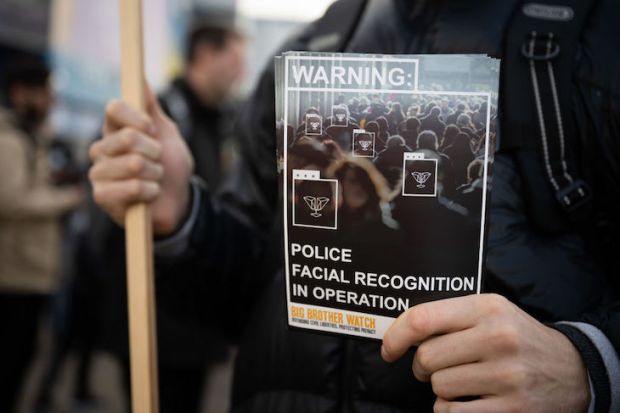
The Online Safety Amendment (Social Media Minimum Age) Act 2024 (social media ban) will come into effect on 10 December 2025 and will rely on facial recognition technology, as well as AI analysis of online activity, to determine whether Australian residents are over the age of 16 and able to use social media.
Initially, social media companies will not be allowed to require government ID-related documents, like a passport or driver’s licence, but there are concerns that more stringent requirements will be needed in the future as experts suggest that the current technology is not sufficient to achieve the objectives of the social media ban (to prohibit users under 16 using social media).
Although social media platforms are legislatively prohibited from storing data collected from their users, per Section 63F, there will be no governmental program that will oversee this requirement.
Inevitably, the only way of finding out whether there was a data breach or your information was compromised will be when legal action is taken against companies, which does not reflect a preventative stance by the government against the protection of the sensitive user data of Australians.
The are already infamous data breach examples in Australia, in one case relating to roughly 9.5 million customers. The breach involved government ID documents and required these documents to be re-issued, as such documents could potentially be used to successfully assume an identity.
Although social media companies will not handle government IDs, this does not mean that there are no threats to the sensitive data of millions of Australians.
A recent example related to a US app resulted in an alleged data leak of over 70,000 users, where the data was meant to be immediately deleted by the company upon verification of the user’s identity. Thus, it is more important than ever to ensure that the sensitive information linked with social media accounts remains private to maintain the right to privacy, and even maintain the safety, of Australian residents.
Moving forward
As Australia marches toward its ‘social media ban’, we are beginning to see a global movement toward the utilisation of Digital ID as a means to hold citizens accountable for the inadequacies of their governments. As more of these Digital ID schemes get implemented around the world, it is inevitable that the right to privacy will slowly start to fade away in the information economy that prioritises the value of data over the rights of individuals.
With the utilisation of AI to enhance the vulnerabilities in places that store sensitive data, we could see a rapid increase in data breaches that could lead to widespread inability to accurately, or safely, identify someone without risking fraud or identity theft in the process.
Of course, this is just a theory of where we could end up.
Although the inability to own anything due to a failure to secure data may just further increase the predictions of the World Economic Forum, which famously said once, ‘You’ll own nothing. And you’ll be happy.’
The implementation of Digital ID schemes in Australia and the UK set a dangerous precedent for governments around the world to rely upon as a means to justify the implementation of similar legislation that harms fundamental human rights recognised under international law.
If we continue to take our human rights for granted, it won’t be long until they are legislated away from us altogether. As John F. Kennedy famously stated, ‘The rights of every man are diminished when the rights of one man are threatened.’