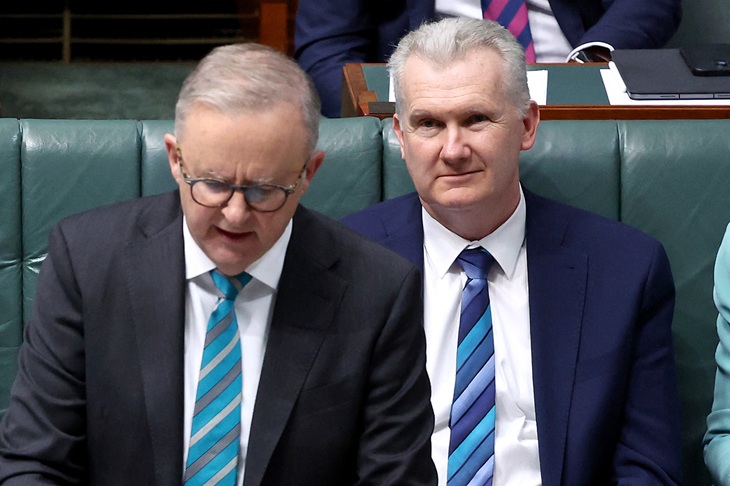
Australia’s Home Affairs Minister Tony Burke banned Israeli MP Simcha Rothman from entering the country this week, citing ‘community’ safety. As The ABC reported, Burke’s rationale was sharp: Rothman, a firebrand MP advocating West Bank annexation, was deemed too offensive for Australia’s Palestinian and Muslim communities. Though his publicly expressed views of labeling Palestinian children as the enemy are inflammatory, they fall short of Australia’s threshold for incitement.
Burke said, ‘I am going to not have a lower bar for the protection of views that are bigoted views against the Palestinian people.’
Words, in Burke’s world, are blunt weapons, ignoring the skilled politician’s ability to wield speech like a scalpel – carving arguments to be countered rather than silenced. There’s the rub: the Labor government may exercise governance, but what type? Is it that of a strong liberal democracy, or the soft despotism of a state deciding which truths are too dangerous to be heard?
Australia fancies itself a bastion of pluralism, a rugged democracy where ideas slug it out in the open. Yet the Rothman decision exposes this as a hollow boast. This visa ban reveals a nation retreating from the hard work of liberty, choosing instead the coward’s path of censorship dressed as compassion.
Concerns persist that visa vetting has been lax, with Coalition MPs like Hastie warning of extremists slipping through, while Rothman, a democratically elected member of Israel’s Knesset, faces the boot, deemed too toxic for Sydney’s shores.
This is Australia’s betrayal: the principle of pluralism bending with political fashions, derailing before our eyes.
Pluralism is not a polite tea party. It is the gritty arena where irreconcilable views clash without the state playing referee. It demands courage, the courage to hear what offends, to argue without silencing, and to trust that truth emerges from combat, not control. Israel, for all its flaws, lives this principle. Its Knesset is a cauldron of discord – Zionists, Arabs, secularists, and ultra-Orthodox shouting past one another in a democracy under siege. That chaos is pluralism’s heartbeat. Australia, by contrast, offers a sanitised version, where debate is welcome only if it soothes the right sensibilities. When dissent is labeled ‘harm’, pluralism becomes a museum piece. Admired, but lifeless.
Labor’s logic is a siren song for would-be censors: ‘Words can be bullets.’ It is a seductive phrase, but it masks a dangerous leap. If speech is violence, then the state becomes the judge of which words wound too deeply to be uttered. It is my view that Rothman’s visa was denied for his politics. The state is picking winners in the marketplace of ideas, deciding whose voice deserves a megaphone and whose must be muzzled.
Today it is Rothman. Tomorrow it could be anyone whose views fail the minister’s test of ‘safety’. In a free society, no one should have that power. Labor might argue Rothman’s words risk unrest, but Australia’s laws already punish incitement with precision. Banning speech for fear of feelings stretches ‘harm’ beyond reason, inviting censors to roam free.
Pluralism does not die in a single blow. It erodes in increments, each restriction justified by safety, cohesion, or feelings. Australia has walked this path before, from Cold War bans on leftists to recent rejections of provocateurs. The Rothman case marks a darker turn: censorship cloaked in therapy, where protecting identities trumps defending liberty. This is not just an Australian problem. Across the West, democracies are surrendering to the same impulse, from Canada’s hate speech laws to Europe’s crackdowns on ‘offensive’ speech. Each step narrows the space for dissent.
Both sides of our government, Burke and Hastie, agree that the Rothman case is not about endorsing his politics. Yet neither seems to grasp that it is about the principle he represents: the right to speak, to offend, to be heard. Pluralism. It is the absent guest in Australia’s debate, drowned out by talk of ‘social cohesion’ and ‘respect’.
Cohesion without disagreement is conformity. Respect without friction is servitude. Krauthammer once wrote that freedom’s price is eternal vigilance – though most would rather have a barbecue with mates. Australia is forgetting that lesson, trading the messy vitality of pluralism for the sterile calm of control. The Rothman ban is a symptom of a deeper irony: a democracy that no longer trusts the process of democracy.
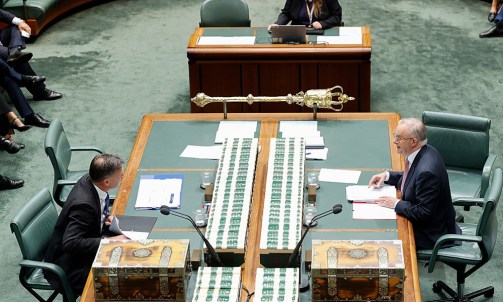
Australia is not yet a closed society. Its Parliament roars, its media spars, its people argue on X with unfiltered gusto. But each act of selective censorship – each visa denied, each voice deemed too dangerous – chips away at that vitality. The Rothman decision is a warning: a democracy that cannot tolerate discomfort is a democracy on borrowed time.
While Australia’s ties with Israel continue to sour, the ban sends a chilling signal to Jerusalem’s democrats about Australia’s soul as a free nation. If pluralism is subject to a government’s whim, it is no pluralism at all – a fragile facade, ready to crack under the next political storm. The irony is sharp: Israel, under scrutiny, shows more democratic grit than Australia, trembling at the thought of offense.