Whether we believe it will bring about a utopian future or a world ruled by Skynet, there is no denying that AI is having a profound impact on society.
AI has been immensely useful to many of us. It has made it far easier for us to track down data and uncover insights that would have taken hours (or even days) to find using traditional search engines.
That’s not to say that we should blindly accept whatever an AI tells us; we should always verify information. This is something that we should do regardless of how we initially come across information.
But even with this caveat, the productivity boost is tremendous.
The economic potential of the AI revolution cannot be overstated. Five years ago, Nvidia was a graphics card company basically unknown to anyone aside from gamers and computer graphics artists. Today, it is a leader in AI computing and the largest company in the world with a market capitalisation of over $4 trillion USD, which is larger than the GDP of most countries.
This kind of rapid growth is no accident. There is a growing recognition that AI is not a novelty, but a transformative tool with immense potential. From drug development to logistics, AI’s presence is being felt across the world.
There is just one problem: energy.
The data centres that physically house AI require enormous amounts of power. Microsoft recently signed a deal to restart one of Three Mile Island’s nuclear reactors to power its AI data centres. The largest AI data centre in the world is currently being constructed in the UAE and will eventually have 5 gigawatts worth of capacity.
Electricity demands are only going to increase as AI becomes more advanced and commonplace. Running these facilities requires affordable power, and a grid that isn’t prone to blackouts.
Without data centres of our own, we would be dependent on either the US or China for our AI needs. The latter would likely come with significant disadvantages, as the Chinese government would ensure that any AI model developed in the PRC is heavily censored. US-based AI, while a better option, also comes with disadvantages and risks. In a time of crisis, the US may decide to throttle foreign access to is AI platforms to prioritise domestic needs.
As Hon. Andrew Hastie MP recently explained, energy reliability and affordability are essential to ensuring our sovereignty. So too, AI sovereignty is important for our future.
So what is the Federal government doing to ensure that we have affordable, reliable power?
Well, Labor is committed to shutting down our coal-fired power stations as fast as politically possible, even though coal currently accounts for over 50 per cent of our electrical grid. Even through it is safe, reliable and incredibly energy-dense, the Federal Labor government remains totally opposed to the idea of lifting the moratorium on nuclear energy.
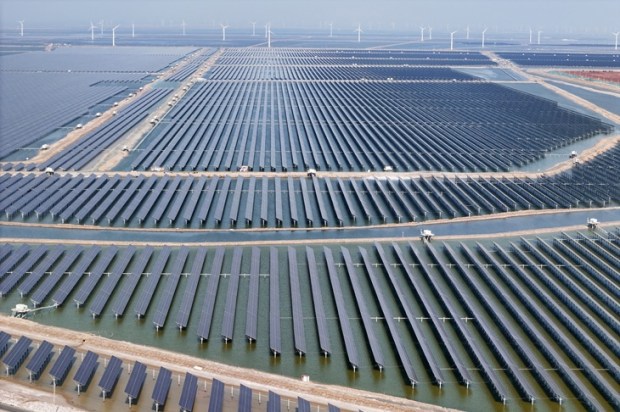
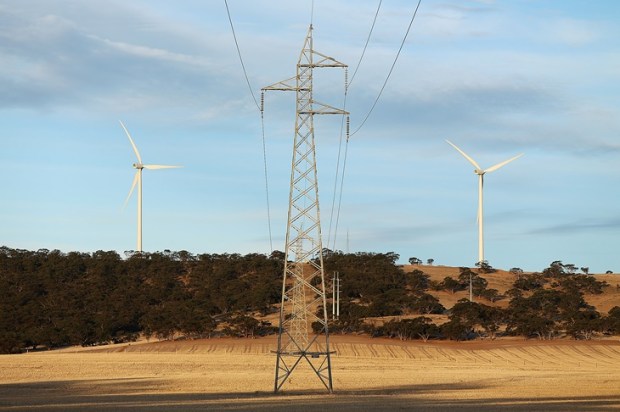
Labor’s current plan is to go all-in on renewable energy (i.e. wind and solar), which it claims is the cheapest and most reliable form of energy there is. This is despite the fact that many renewables projects around Australia are heavily subsidised by the government, and recent reports indicate that the transmission costs for renewable energy could be double or triple what was originally estimated. This doesn’t even account for the fact that renewable energy sources, by nature, are not available 24/7.
I have already written about what happens to a country when it doesn’t have reliable power. It’s not a pretty picture.
In addition to all the adverse effects I described in that piece, having an unreliable power grid with expensive energy means that we will miss out on the opportunity to host data centres here in Australia. No business or investor in their right mind is going to want to build a data centre in Australia if power is prohibitively expensive and/or unreliable.
The level of cognitive dissonance in our government is truly something to behold. They are currently hosting roundtable discussions on how to improve our productivity and boost business investment into Australia. It’s an important initiative, as people are increasingly feeling the effects of a stagnant economy that has gradually become less sophisticated. At the same time as these productivity discussions are taking place, the Federal government continues to pursue policies (Net Zero and the ban on nuclear energy being just two) that actively make it harder for us to innovate and attract investment.
The Labor Party has (so far) been happy to stand by the AUKUS security pact, including the acquisition of nuclear-powered submarines, but they remain vehemently opposed to lifting the moratorium on civil nuclear energy.
If nothing changes, Australia will be the only country in the world to have nuclear-powered vessels in its navy with no civil nuclear industry. Not even Monty Python could come up with something so farcical.
‘Opportunity cost’ is a term that economists use to describe the potential benefit that is lost when one decision is made rather than the alternative. For example, the opportunity cost of studying to be a lawyer is missing out on the potential benefits of becoming a doctor. In the case of energy policy, the opportunity cost of continuing to prohibit a civil nuclear industry is that we will be unable to take full advantage of the AI revolution, as our energy costs will be far too high to host any large-scale data centres.
This will make it harder for us to innovate, and our productivity will continue to stagnate.
Ther tragedy is that the opportunity cost in this scenario is completely one-sided. We have absolutely nothing to lose and everything to gain by pursuing policies that bring down energy costs and allow us to host our own AI capabilities.
The only people who will experience any kind of benefit from energy that is expensive and unreliable are the eco-salvationist ideologues and neo-Luddites.
If we miss out on the incredible benefits of this new technological breakthrough, it will be because our lawmakers decided to prioritise ideology over the prosperity of our nation.
John Ogilvie is a writer and the policy advisor for Mannwest Group