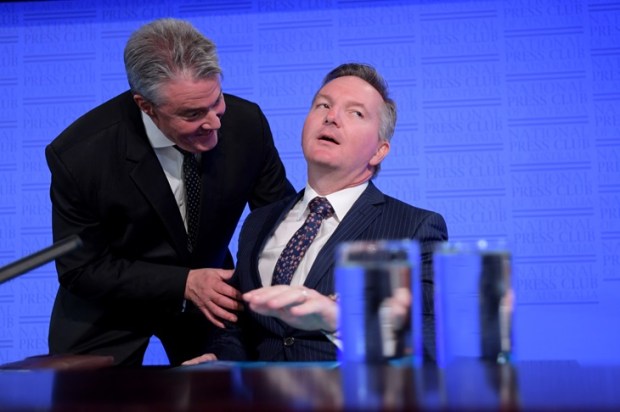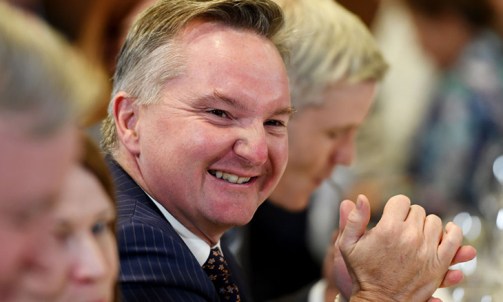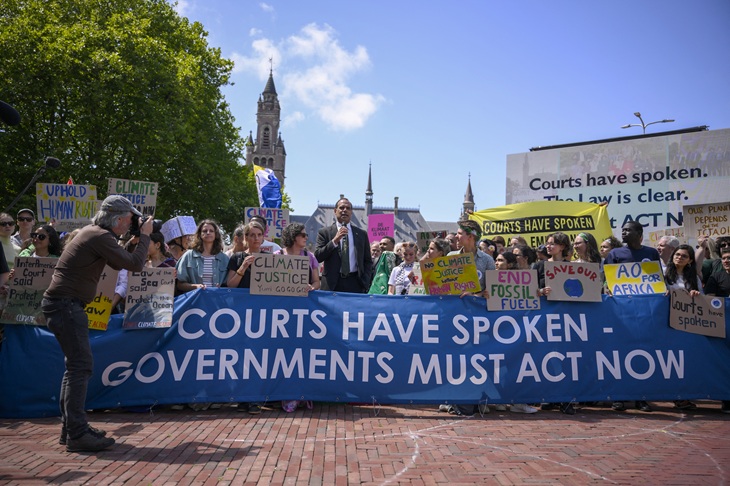
Climate Change and Energy Minister Chris Bowen may soon request Attorney General Michelle Rowland to brief the government’s legal team to draw up charges against China. Australia will accuse China of being in violation of international law by failing to take measures to protect the planet from climate change. The action would follow the 500-page ruling by the 15 judges of the International Court of Justice which found, ‘Failure of a state to take appropriate action to protect the climate system … may constitute an internationally wrongful act,’ court as President Yuji Iwasawa said.
A ‘clean, healthy and sustainable environment’ is a human right the Court claims, without elaborating how these qualities are to be assessed.
Nations harmed by climate change could be entitled to reparations, the UN’s top court said in a non-binding advisory opinion, without detailing what harm and what reparations. He called the climate crisis ‘an existential problem of planetary proportions that imperils all forms of life and the very health of our planet’. He did not quote UN Secretary General Guterres’ description of the current status of warming as ‘boiling’.
Such a claim would really challenge Australia’s government in the wake of the Prime Minister’s extensive, friendly, panda-admiring visit to China where the friendship reached a new peak of bro-hood. Bowen would have had to convince Anthony Albanese that unless Australia took such action, his massive plans chasing Net Zero would be exposed as massively hypocritical. (Not just economically destructive…)
The case was led by the Pacific Island nation of Vanuatu and backed by more than 130 countries. (A study of 27 islands over the last 60 years suggests that most of the Pacific Islands have remained stable, while some have actually grown.) ‘The agreements being made at an international level between states are not moving fast enough,’ Ralph Regenvanu, Vanuatu’s Minister for Climate Change, told the Associated Press. This makes it almost impossible for those nations – especially Vanuatu – to refuse to join in Australia’s legal action against China.
But, of course, Australia may itself be reluctant to take China to court in the wake of this laughable and vague judgement. Many who attended the announcement are reported to have emerged laughing and hugging…
The laughs continue: a panel of 15 judges was tasked with answering two questions: What are countries obliged to do under international law to protect the climate and environment from human-caused greenhouse gas emissions? Second, what are the legal consequences for governments when their acts, or lack of action, have significantly harmed the climate and environment?
Given that there is no good evidence to support the claims and no clear way to assess any of the allegations as to acts or lack of, the charade is exposed as a pointless waste of time and money. But what with all the loud clamouring, we may not hear the hand grenade explode until the shrapnel hits us when the political ramifications surface.
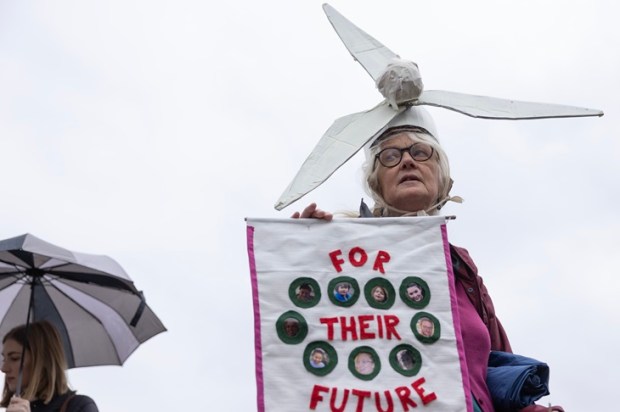
For the sake of argument, let’s take the UN (via the IPPC) determination that the global temperature has increased by 1.3C since pre-industrial times; which countries could now be required to pay reparations to which countries and how much? How will claimant countries establish the harm for which they want reparations? The ICJ left those issues blowing in the wind farms.
Never have so many judges made such meaningless decisions in such a fake cause for the benefit of such self-serving political activists.
Andrew L. Urban is the author of Climate Alarm Reality Check (Wilkinson Pubishing).