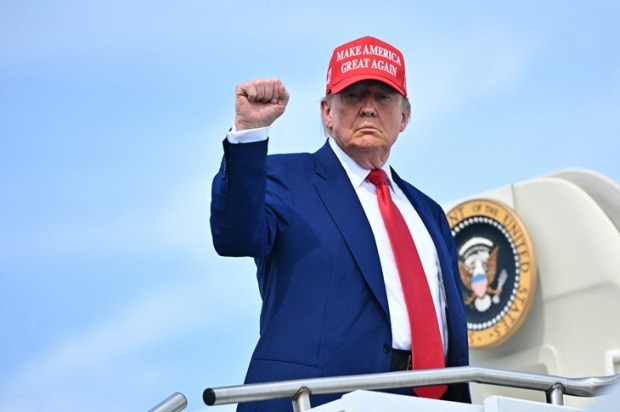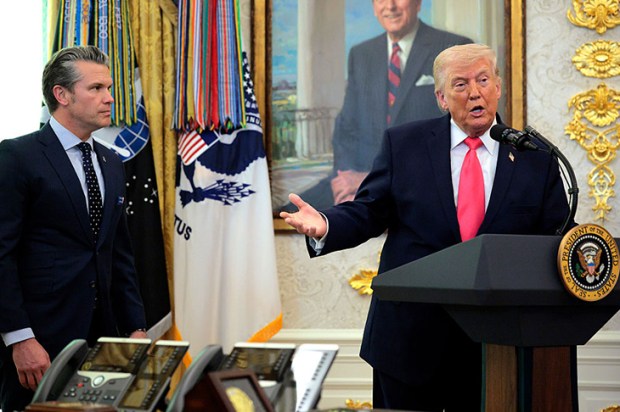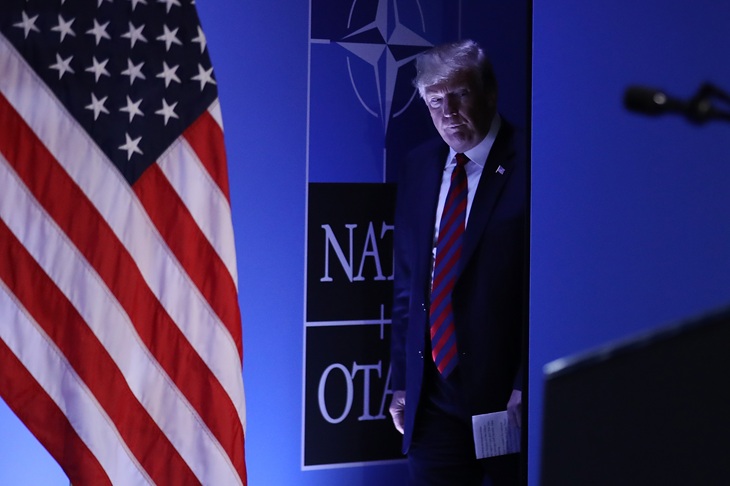
President Trump’s intentions to strike a peace deal in Ukraine without security guarantees for Kyiv and his possible relinquishing of America’s role as supreme allied commander of Nato have sparked concern among allies. US partners are wondering if Washington is abandoning its 80+ year global military commitments and many are asking what measures they need to take to secure themselves.
In short, many are worried that the vacuum created by President Trump’s withdrawal will generate new economic and geopolitical realignments, making them less secure.
Few should be surprised at where things appear to be heading. Mr Trump has long expressed doubt about the utility of Nato and America’s defence of others.
Trump’s unorthodox views towards America’s military alliances goes back to at least 1987 at which time the then 41-year-old real estate developer bought newspaper ads criticising Japan and Europe for not paying their proper share for common defence.
During the 2024 presidential campaign, candidate Trump famously stated he would not defend Nato-member countries that do not meet defence spending targets.
Additionally, on different occasions, Mr Trump has cast doubts about his willingness to defend Taiwan, suggesting that efforts to ward off a Chinese invasion are impractical given the island state’s proximity to mainland China.
Amid these dynamics, America’s allies will need to come to terms with this new uncertainty and act.
This change to the global security framework must compel US partners in Asia and Europe to address this question: In addition to forming new geopolitical relationships, what economic and hard power military measures can be taken to protect ourselves from Putin and Xi?
For starters, vulnerable European states – the Baltics, Georgia, Moldova, and the Western Balkans – should consider engaging in economic treatises with Washington. Similar to the proposed US-Ukraine minerals deal, the idea is for such partnerships to create a sustained American financial commitment to the development of the threatened countries’ economies and to generate the economic growth needed to purchase US-made weapons.
Additionally, the presence of American businesses on local soil could help deter attacks by outside powers who do not want to become crosswise with Washington.
Yet, economic treatises for Ukraine and Europe are not enough. In a Trump 2.0 world, Europe will need to assume more responsibility for its own security as Washington exits the stage. This means EU and Nato member countries negotiating a new security construct for the continent, spending more on defence and devising new coalitions.
A rethink of nuclear deterrence in Europe will be required.
Specifically, the United Kingdom and France will need to boost their nuclear weapons capabilities and place fellow Europe partners under a new protective nuclear umbrella. While both countries’ at-sea nuclear-powered ballistic missile submarines are vital, they are insufficient.
Paris will need to re-establish its land-based medium-range nuclear ballistic missiles and London must reinvest in air-delivered nuclear weapons using either F-35s or Typhoon fighter aircraft.
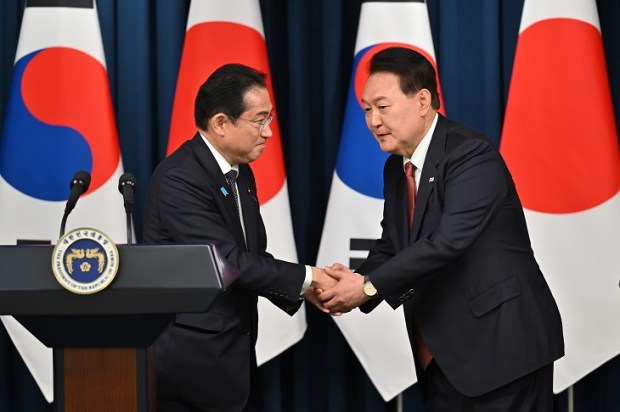
In the Indo-Pacific, Japan, South Korea, Taiwan, the Philippines, Australia and New Zealand will also need to rearm. This will require build-outs of naval, coast guard and missile defence capabilities.
Additionally, investments will be needed in drone technology, sea mines, long-range anti-ship missiles, and cruise missiles.
Increases in defence spending, replete with American weapons systems purchases, could ingratiate Asian states into the good graces of Mr Trump.
South Korea, Japan, and Australia will need to enter into discussions with Washington to reconfirm that they will be covered by the US nuclear umbrella during this time of change.
Deliberate efforts need to be made for local countries to emulate Beijing and build their own anti-access/aerial denial (A2/AD) strategies to defend territory, protect against aerial and maritime incursions, and deter Chinese aggression.
Regional states should continue ongoing efforts to deepen information sharing and defence ties such as recent partnerships among the Philippines, Japan, India, Vietnam, Australia, and Indonesia. This same approach should be pursued with Pacific Island states, Canada and willing European partners.
The Quad diplomatic partnership between Australia, Japan, India, and the United States will need to deepen economic and security engagement to keep the Pacific open and stable.
Likewise, the Australia-United Kingdom-United States security and technology partnership (Aukus) must receive the investments it requires for stepped-up nuclear-powered submarine production and nuclear deterrence.
During a time when the US adopts a narrow pursuit of its own national interests and cedes its role as the security provider for the rules-based order, the world will need to adjust to the resulting ambiguity and instability.
To address these new realities, US partners will need to engage in long-term efforts to rebuild their own capabilities, construct new alliances, and reinvest in the resilience of their nations.
Ted Gover, Ph.D., is Associate Clinical Faculty at Claremont Graduate University in Los Angeles.