The attempts of the Commonwealth and South Australian governments to rescue the Whyalla steelworks is the latest ad hoc measure to paper over the cracks being created by Commonwealth and state energy policy disasters.
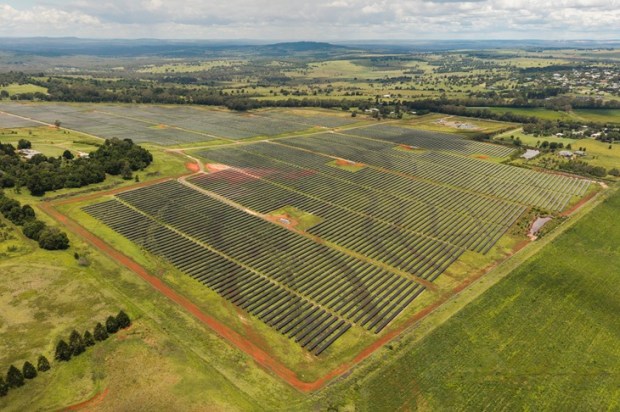
The promised spending of $2.4 billion is to save 1,000 jobs involved. Moreover, the assistance is conditional on ensuring much of the money is allocated to replacing coal and gas fuels by intrinsically high-cost and unreliable wind and solar – and prospectively by hydrogen from water, a solution rightly ridiculed when Queensland Premier Joh Bjelke-Petersen promoted it in the 1980s.
This follows subsidies already in place to coal electricity generators in Victoria and New South Wales, to lower the energy costs of aluminium smelters. Without those subsidies, the smelters would be forced out of business. This is due to subsidies to renewable energy raising higher electricity prices by forcing some coal generators out of business. Unfortunately, for the remaining coal generators, these higher prices are more than offset by lower volumes and stop-start costs due to them having to back off whenever wind/solar are available. The irony is that governments are subsidising coal-fired generators for the higher costs imposed upon them by the subsidies provided to renewable supplies.
The costs of the various subsidies to renewables comes to an estimated $16 billion a year ($132 billion in 2023 dollars since 2006). But the $750 per adult annual tax, which the $16 billion represents, is only part of the picture. In addition, costs include the:
- higher prices for all electricity caused by the forced closure of coal plants
- policy-induced increased costs of gas bought directly by firms and households
The additional costs of electricity result from the higher wholesale price brought about by the forced closure of coal generators. The wholesale price of the annual 273 million MWhs of electricity generated now averages $125 per MWh. It was $50 per megawatt hour before the forced closure of coal generators started to bite. In aggregate, the wholesale market would be valued at $16 billion if the price were to have simply increased in line with inflation, say to $60 per MWh; at $125 per MWh, it is valued at $34 billion. That price effect amounts to an additional cost to the electricity customer of $18 billion a year.
Annual domestic demand for gas (excluding gas for electricity generation) is 500 million gigajoules. Today this wholesales at $17.30 per gigajoule, represents a premium of over $13 per gigajoule more than the price prevailing 10 years ago (and $12 per gigajoule over the current US price).
Had governments in New South Wales, Victoria, and South Australia permitted exploration and production (and had the Commonwealth regulations been less restrictive) today’s prices would have been at least $10 per gigajoule cheaper than those now prevailing. Regulatory restraints on gas have therefore brought a cost of some $5 billion a year (500 million gigajoules x $10/gigaoule) to industrial and household consumers.
So, policies covering gas and electricity, bring costs to the taxpayer and energy consumers of at least $39 billion a year – or $1,900 per adult. And, unlike spending on hospitals, aged care, roads or housing, there are no offsetting benefits.
The industrial econocide resulting from renewable energy subsidies is evident with the closure of Australian nickel smelting as well as aluminium and steel. Germany, the UK, and some other high-income countries that have moved even further along the path of substituting high-cost energy for low-cost energy.
Developed countries’ losses have been gains for China, India, and other countries (now being joined by the US) that have rejected decarbonisation policies and have pushed ahead with lower cost coal, gas and nuclear energy.
The successful developing countries have made such choices in spite of international agencies like the World Bank refusing to make loans for coal and gas developments. They have also done so, as we are learning, in spite of the considerable resources of USAID similarly being directed towards renewable energy. USAID’s path is also followed by Australia which requires 15 per cent of all our overseas aid funds ($619 million last year) to be allocated to renewable energy.
Developing countries rejecting such blandishments have gained considerable competitive advantage in building lower cost coal and gas (and nuclear) facilities and are benefitting from a migration to them of manufacturing and processing industries. Not only is that at the expense of nations, like Australia, rejecting low-cost energy but that migration of enterprises totally negates any conceivable benefits from greenhouse gas mitigation undertaken in the so-called developed world.