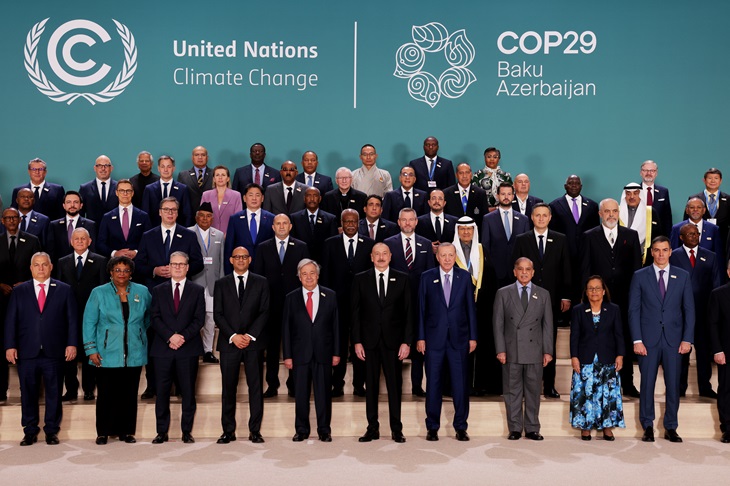
The latest COP talkfest, with 66,778 participants, is producing much hot air and hand-wringing as it looks to upgrade the climate crisis. The outcome of the previous meetings is that annual CO2 emissions have increased from 35 billion tonnes in 2015 to 37.4 billion tonnes in 2023.
As scare-mongering fatigue sets in, new tactics are required to maintain the stress levels of the younger generation of activists. Their parents are becoming increasingly aware of the economic reality attached to the transition from fossil fuels to renewables including the squeeze of budgets and loss of manufacturing jobs disappear.
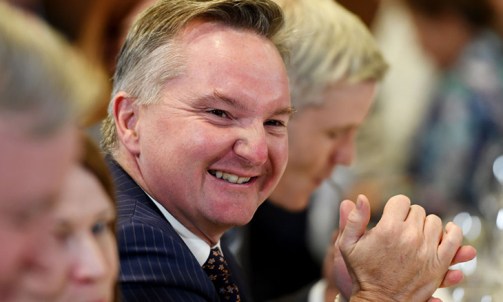
During COP27, the main threat was listed as climate-related disease spread which some may see as a feeble attempt to discourage meat-eating (upon reading the strange detail). The sentiment carried through to COP28. What crisis-stricken rabbit will be pulled out of the climate rabbit hole this time to maintain the climate rage? Or will Climate Change and Energy Minister Chris Bowen save the best for Australia’s COP31 event – if there is one?
Enthusiasm for COP conferences is declining amongst developed countries, which are bearing the exorbitant cost of renewables while developing countries increase their CO2 output and demand trillions of dollars of reparations. The latest suggested target was $1.8 trillion annually!
This time, the event has been overshadowed by the election of Trump and the prospect that the US, the only major emitter actually reducing its CO2 output, (China and India are exempt due to identifying as developing countries), will pull out of the Paris Agreement. As China is the main contributor to rising CO2, perhaps a more appropriate administrative action would be to change China’s status from developing to developed…
The reality of the giant climate scam is becoming clear, even to the enthusiasts. This might explain the fall in registered participants (by roughly 18,000) from the previous COP event in Dubai. Not even Taliban attending could bolster the numbers! Apart from the US being a no-show, many other high-ranking leaders are failing to attend, including those of the EU, China, France, Japan, and Russia. The UK Prime Minister has bravely fronted up and, despite the country not being on track to meet its 2035 68 per cent emissions reduction target, he has increased the target to 81 per cent!
The non-appearance of the EU leader, Ursula von der Leyen, is particularly noteworthy, as she has attended many former COP gatherings and would have been expected to rally the troops after the US withdrawal.
There is plenty to debate when it comes to power sources going forward, and active arguments continue about what is suitable for Europe. The reclassification of wood as carbon neutral has resulted in a massive expense with minimal effect on CO2 production. Changing the definition of biomass, in combination with biogas and biofuels entering the market, means the EU energy mix uses burning wood to boost its renewable percentage.
One power station founded in the 70s was designed to utilise the abundant coal which lay beneath it. It produced roughly 7 per cent of the country’s electricity and enough to power 6 million homes and was estimated to be Europe’s largest industrial source of CO2.
Converting this power station, and others, to burn biomass has cost hundreds of millions of pounds (more than a billion Australian dollars). Allowing Europe to burn wood has led to further costs where a plant has been built in the US to convert wood to pellets along with upgrading ports at both ends to cope with 50,000 tonne cargo ships. 6.5 million tonnes of biomass pellets are used at one plant in the UK every year. The UK is not required to include these emissions in its total due to carbon accounting rules which allow it to be treated as carbon free.
In theory, the pelletized wood comes from non-useable forest waste timber, in practice there are concerns from environmental groups that this is not always the case, especially when it comes to concerns about forests in Canada. Despite this, biomass plants are still eligible for subsidies.
In 2019, the residents of six countries launched a lawsuit against what they saw as ‘a fake green energy fiasco’, demanding the biomass legislation be annulled. The British High Court dismissed the claim in 2020. This year, more than 40 green groups have called on the new UK government to scrap subsidies which would make electricity generation nonviable.
Having shut down coal and failed to explore new gas fields, along with off-shore wind proving too expensive to develop and the planned new nuclear plants being years away, there could be electricity supply problems if biomass plants are closed. There are echoes of Australia’s precarious energy situation.
The European plan was to phase out all coal-fired power stations between 2025-30, but the vulnerability of energy supply has been recognised following the Russian invasion of Ukraine. The plan had been supported by 8 countries, but many in Eastern Europe (such as Poland, Czech Republic, and the Balkans), were unwilling to comply, and are building new coal-fired plants.
In Australia, renewable energy regulations have distorted energy supplies and increased costs. Their ongoing attempts at shutting down our coal and gas production threatens the economy, all to no purpose, as CO2 levels continue to rise. Amongst the many supposed solutions to the so-called climate crisis was the use of biomass electricity generation but – like wave-power, hot rocks, and hydrogen – it has failed to deliver. Following the same sleight-of-hand as the EU, there had been plans for Queensland coal power stations to convert to burning woodchip. In 2022, new Australian regulations banned its use as renewable energy, the first developed country to do so.
The European biomass lesson has been learned here, but we still need to learn other renewable lessons from European mistakes, as Russia pulls the plug on gas supplies, and supplies of enriched uranium necessary for nuclear plants. After a week of talks, there are no new scenarios to save the world, just increasing demands for more ‘reparations’ money. Will COP29 will make our future any clearer, or will we have to wait until Brazil in 2025?
Should COP31 eventuate, it will be in Australia, apparently with South Australia volunteering as host. Chris Bowen may then be centre stage – but the stage is shrinking, and the lights are dimming.