The film VICE traces the rise of Dick Cheney to the position of US Vice President under the administration of the second George Bush (2001-09). Cheney, uniquely for Vice Presidents, negotiated virtual control over US foreign policy.
His career started as a Congressional intern in 1973 during the Nixon administration at a time when interns were assigned to Democrats or Republicans rather than deciding for themselves. But, having attended an initiation in which Donald Rumsfeld (later Secretary of Defense) gave a rumbustious but apolitical address, Cheney was pleased to be placed with the Republicans, indeed, to the staff of Rumsfeld himself.
Absent from politics in America at the time were strong ideological differences between the parties.
Even in the aftermath of the November 2001 al-Qaeda attack, the disastrous invasion of Iraq (which Cheney and Rumsfeld engineered), had cross-party support. Hillary Clinton was an enthusiastic advocate – as was Britain’s Tony Blair. In Australia, the ALP Opposition opposed, perhaps along with Israel, recognising that forcing a regime change on Iraq would open up a hornet’s nest.
American consensus politics never characterised Australia. Undoubtedly, the ALP’s strictly policed party discipline is a factor in this.
All that said, notwithstanding many countries having ostensibly socialist political parties, in the broadly defined ‘Western’ nations, policy differences were conducted within wide areas of agreement on matters as diverse as defence, health and welfare, industrial relations, and trade. Until recently…
Sharp ruptures have emerged in two areas:
- energy/industry policy; and
- identity politics (black, female, transgender preferences and, recently, Jew hatred).
An early foreshadowing of what would become a schism in energy policy was provided by Jimmy Carter (1977-81) who ostentatiously placed solar panels on the White House roof. This was followed by their symbolic removal under Ronald Reagan (1981-89).
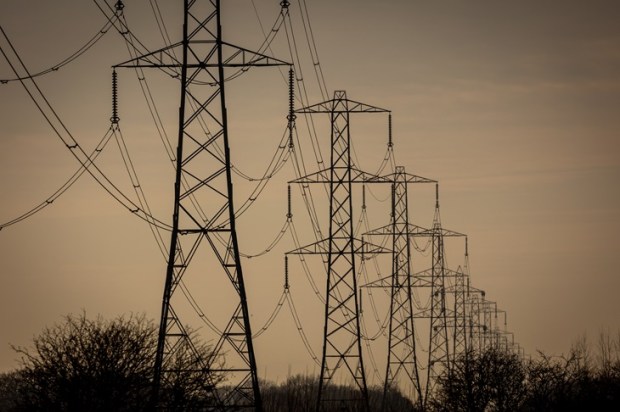
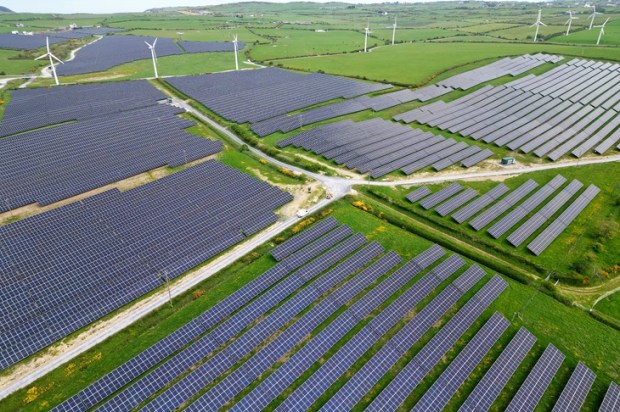
Resting upon the illogicality of increased carbon dioxide emissions driving a climate disaster, nascent differences on energy policy first seen in the early 1980s have become quintessential to defining politics in all ‘Western’ nations.
The political dominance has been with those calling for Net Zero emissions. This has embraced all those of the traditional left and their fellow travellers seeking political control over economic decision-making.
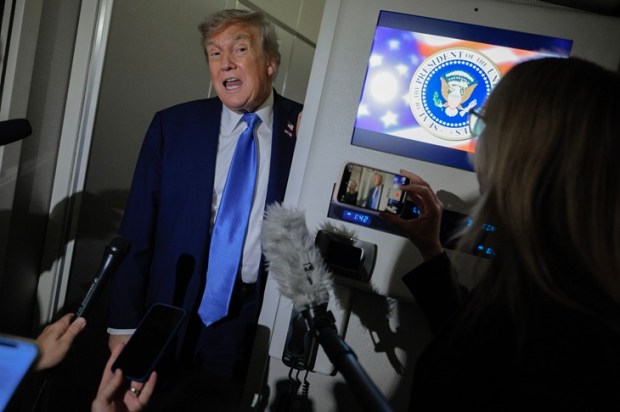
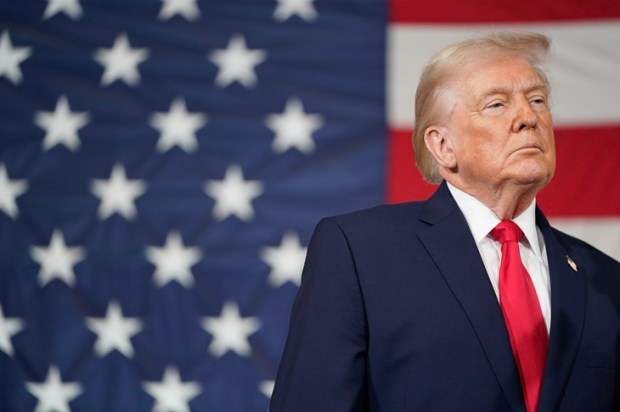
But there is a turning first observable in the Trump 2016 Administration (with the 2013 Abbott government being an early harbinger). The American clarion call (Drill baby drill!) popularised in Trump’s current election campaign, though first heard in 2008, is now shorthand for overturning green programs including the many embossed within the absurdly monikered Inflation Reduction Act. Although there are some Republican politicians favouring Net Zero, they are sidelined. Even with the Democrats, the vogue of Net Zero is being rivalled by nuclear power as a means to emission reductions.
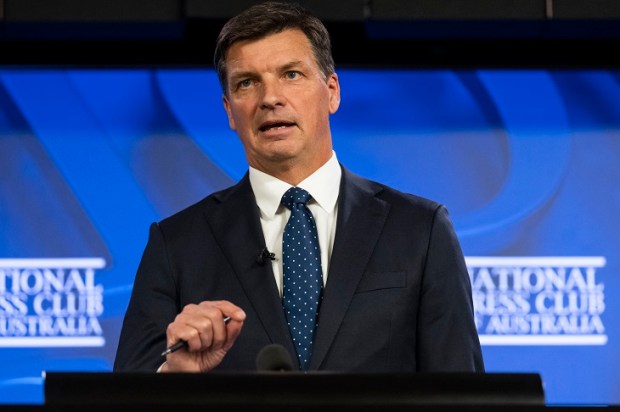
The rest of the world is different. In Germany, the pro-green Rainbow government Coalition includes the Free Democrats who were, until recently, regarded as a low-tax, anti-regulation party. And of the 344 British Conservative sitting MPs in June of this year (almost two-thirds lost their seats), barely a dozen rejected Net Zero. As for Australia, we have Labor, the Teals, and the Greens largely defining themselves by opposing CO2 emissions. Of the 86 Coalition MPs, those openly opposed to Net Zero would number less than a dozen (though a majority would support a diminished role for renewable energy).
Identity politics has manifested diversity hires. This topic has risen to prominence following the Trump assassination attempt where the policy of increasing female Secret Service agents was demonstrated as fallacious and, indeed, potentially lethal for those being guarded. Even before this, Republicans have been vocal about their intent to unwind this hiring practice.
Preferences for hiring minorities and females has become common policy across the political divide in Australia, though not without differences of emphasis. And even though the Voice saw a schism develop, there remain plenty on the right who support the insertion of racial prejudice into the legal framework.
Praise of diversity hiring is alive and well in Australia. In the energy sector, two of the three national energy regulatory agencies are headed by females and the other, the Australian Energy Market Operator, has females in six of its ten most senior positions. This staffing, in an industry where female participation was rare 20 years, ago, owes much to the efforts of the long-standing Victorian Energy Minister.
Any rationale diversity hiring practices once may have had in terms of correcting a bias has long since disappeared.
Elections in the EU and UK saw the right or ‘politically incorrect’ making massive voting gains but losses in terms of actual representation. But, the near certainty of a Trump triumph in November will have massive repercussions across the globe in many policy areas.
It will mean the end of any (confected) fears that Australia will suffer adverse consequences unless it adopts whatever definition of Net Zero is in vogue. And it will start the dismantling of S and G parts of Environment, Social and Governance parts of the agenda.