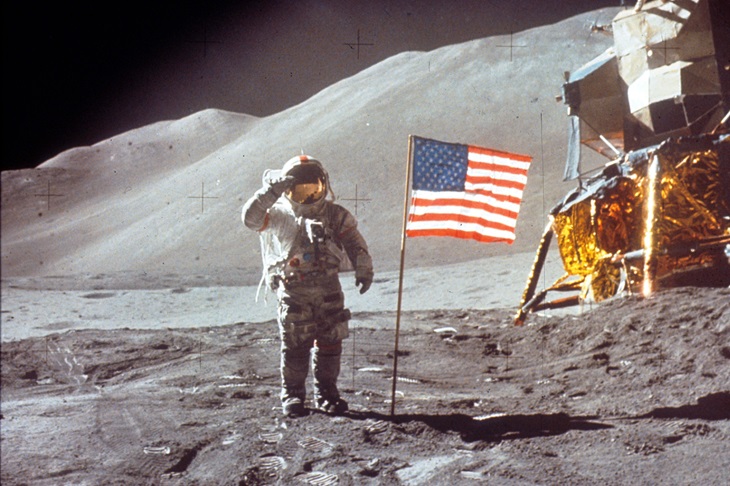
China’s recent moon landing, and its return with lunar rocks, is the first since the 1960s, when America and Russia competed in the space race. After planting the American flag on the moon, and returning five times, they lost interest.
BREAKING: China's Chang'e-6 probe lands on far side of Moon! Spacecraft successfully touches down on lunar surface, set to collect & return samples from South Pole-Aitken basin. Major milestone in China's space exploration program! #ChangE6 #MoonLanding #SpaceRace pic.twitter.com/0aIkK5FX1N
— Daily Sherlock ?? ?? (@dailysherlock0) June 3, 2024
After a gap of 50 years, landing on the moon is still a spectacular feat for a supposedly ‘developing’ nation, but one which, inevitably, has a potential threat attached. Japan and India have also joined the moon-landing club. It seems the industrialisation of space is the next frontier. In 2020, NASA developed, the Artemis Accords, hoping to promote peaceful cooperation in space.
On planet Earth, China has demonstrated its ruthless expansionism, starting with its takeover of Tibet which the communist party reclaimed as part of the country. Tibet had been independent for a hundred years, but was taken over in 1949. The invasion, by Chairman Mao’s PLA in 1950, resulted in the loss of thousands of lives, with no meaningful response from the United Nations. Subsequent importation of Chinese citizens and restriction of the local language and customs have resulted in its forced integration into Greater China. This expansion has led to further activity along the disputed Tibet border with India. Small-scale wars took place in 1962 and 1967 and further skirmishes in 2021-22.
Future Chinese intentions were revealed following the UK’s hand-back of Hong Kong in 1997. Despite its promise to maintain the HK government under the ‘one country, two systems’ until the agreed 2047 under Treaty, democratic institutions have rapidly been removed and authoritarian law instituted.
Meanwhile, the threat to Taiwan increases by the day. Now a thriving, independent democracy, the island’s history is of brief Chinese possession before being ceded to the Japanese in 1895. Its re-involvement with China occurred only in 1949, with the KMT forces escaping the communists and fleeing there. The mainland’s claim for re-possession is becoming increasingly menacing, as its military rapidly increases in size. It freely admits that, as in Hong Kong, it will use force if necessary and will no longer accept democracy. Again, the UN fails to comment.
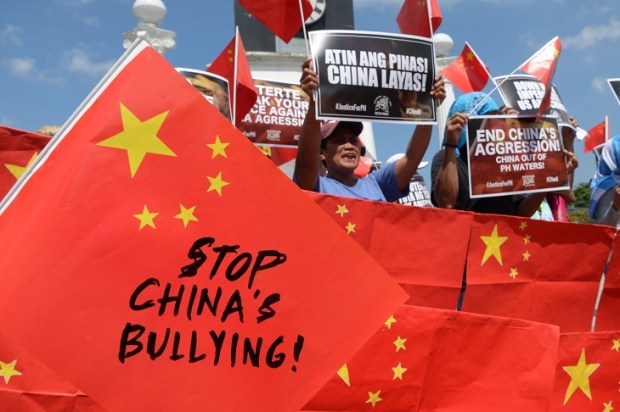
Aggression has occurred, not only on land, but at sea. China’s claim to the historical ownership of the South China Sea, the route of 20 per cent of the world’s trade, as well as fishing and oil and gas resources, has been rejected by the UN Convention on The Laws of the Sea; the disputed area also involves Vietnam, the Philippines, and Malaysia. Despite rejection of its claim, China, which now has the largest navy in the world, has built military bases on coral islands in the sea and has attacked other nations’ vessels. Again, the world authority fails to respond to these actions.
Still on planet Earth, the next unauthorised activity is taking place in Antarctica. China has opened a fifth ‘research station’ on Australia’s doorstep which has significant strategic and surveillance implications. A dual-purpose satellite tracking system has already established. These bases provide access to the Atlantic, Pacific, and Indian Oceans.
The Antarctic Treaty, originally signed by only 12 countries, is now recognised by 57 countries, including China. It prohibits militarisation inside the Antarctica area, but Chinese military personnel have already been involved. Increased Chinese fishing activity is threatening stocks of krill. China already has a history of over-fishing. A plan by Chile and Argentina, in partnership with the 27-member Commission for Conservation of Antarctic Marine Living Resources, was proposed to establish marine conservation areas. This has been boycotted by China and Russia. Mining may be next.
There is also an undersea mining rush is on, with 168 countries signing up to a treaty dividing up the seabed for mineral resources exploration, again under The Law of the Sea Convention, with China planning to dominate. China already has a stranglehold on mineral exploitation and this move could increase its dominance. America has not signed up to the plan, believing deep sea mining is not an economically viable option.
At the other extreme, the Outer Space Treaty was first established in 1967, under the auspices of the UN, spurred on by the development of intercontinental ballistic missiles and orbiting satellites, in the 1950s. It had been preceded, in 1963, by the UN prohibition of weapons of mass destruction in outer space. The ban prohibits the placement of nuclear weapons and installation of military bases in space or on the moon. It does not extend to conventional weapons or newer technology. Russia and China are signatories.
In 1979, the Moon Treaty was an attempt to formulate rules for space exploration but it was never formally ratified. The debate became heated with Ronald Regan’s Strategic Defence Initiative, the Star Wars program, planning to destroy missiles from space. The technology was not ready at the time, but laser and other researches continued and the option re-emerged in 2019. As technology improves, what was once referred to as Star Wars may become a reality.
The latest stage, the Artemis Accords, are a series of non-binding agreements, initiated by NASA in 2020. As of June 2024, they had been signed by 43 countries, not including Russia, China, Iran, or North Korea. Their purpose relates to plans to put a man back on the moon, send a man to Mars, and more significantly, the agreement covers mining and commercial activity. There are four stages of the Artemis plan. In 2022, an unmanned lunar flight took place. Stage 2 is a manned launch in 2025. Stage 3 a return of humans to the moon, although there is no clear date for this. Stage 4 is the establishment of a lunar base. NASA is faltering with its own plans. Four astronauts have completed a year in isolation to simulate life on Mars, but there is no date set for Mars or the Moon.
Russia has finally admitted that the US reached the moon in 1969. Russia’s unmanned flight was a failure, crashing on the moon in 2023. Russia also has plans for a similar moon base to be started around 2031. China plans to be on the moon by 2030. India was the fourth country to reach the moon in 2023. Japan came in fifth in 2024. The race is on once more. The International Space Station, in use since 1998, is in its final years and will be gone by 2030, replaced by a private international venture. In 2021, China started building its own Tiangong station, with subsequent launches to extend its operation and completion by 2027. It is not open to any international involvement in contrast to the joint mission of the International Space Station.
In Greek mythology, Artemis was the goddess of the hunt, connected with nature and fertility, her name has been connected to several plants; Artemesia annua, Chinese wormwood, is traditionally used to treat malaria and several modern medicines have been developed from it, Artemesia absinthium, Common wormwood, is used to make the green liqueur absinth.
The Accord is named after Artemis, the twin sister of Apollo, the god of the sun, already popularised by the early lunar launches of the 1960s. With increasing political correctness, a female is now reaching for the stars. Will she prevent Chinese intimidation, which has progressively increased from local, to regional, to international levels? The potential militarisation of space could move conflict to an interplanetary level.