US President Franklin D Roosevelt, in 1941, pronounced the four fundamental freedoms necessary for life: freedom of speech, freedom to worship, freedom from want, and freedom from fear.
Law, Parliament, and a free press are the fundamentals of a functioning democracy.
The Australian government’s introduction of the Australian Communication and Media Authority (ACMA) and the creation of the Misinformation and Disinformation Bill are looming over these freedoms. Those who complain about misinformation or hate speech are essentially saying they want different opinions to be suppressed by domestic censorship, even if those opinions are true.
The Misinformation and Disinformation Bill will empower an unelected organisation to fine those who post information it considers incorrect or ‘reasonably likely to do harm’ with no true ability to appeal their decisions. Disturbingly, the government’s pronouncements will not be subject to the same scrutiny. The legislation has, so far, been delayed following a stream of concerns from legal experts, faith groups, and MPs. Even the Greens believe that the government should not be exempt.
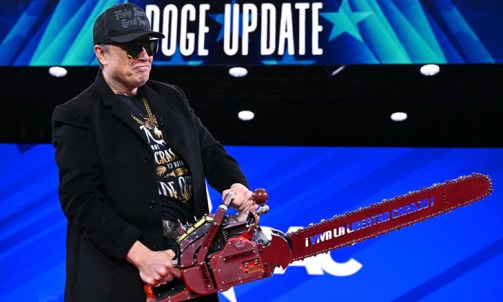
Elon Musk’s takeover of Twitter revealed the under-belly of a supposed bastion of free speech. Revelations of in-house censorship under its former management, political censorship regarding elections, and even the FBI meddling in the public forum have all brought home the vulnerability of modern media. This censorship has spread from the political to social topics (transgender activism), medical events (Covid lockdowns and vaccines), environmental concerns (climate change), religion (homosexuality), in fact, all aspects of life. Adding a further layer to the dysfunction, the e-Safety Commissioner (who was introduced primarily for child safety concerns), has spread her wings and is using these powers to demand the removal of information she thinks inappropriate.
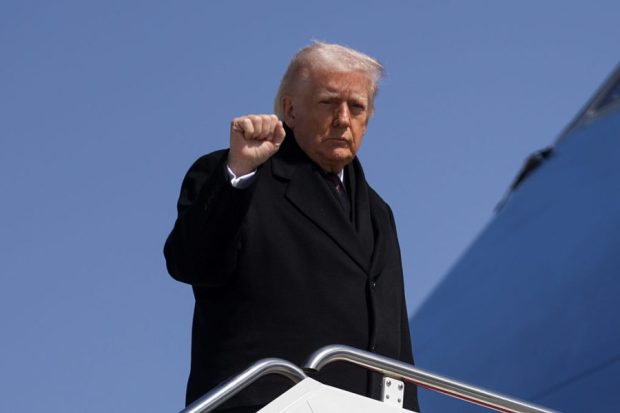
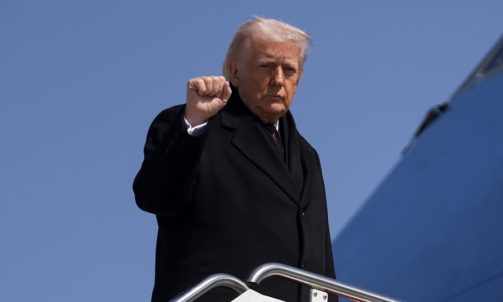
During the last American election period, the then-President Donald Trump was removed from social media sites because it was alleged that he encouraged a protest. Whilst many will decry his use of these social media sites, is it inappropriate to arbitrarily censor an elected official, and on whose opinion? Donald Trump’s use of social media related to his inability to have his views promulgated by standard media, which ignored him. There is already an increasing danger from websites removing content if it offends in-house preferences. At least on Twitter there may be, once more, some balance. Compare this with the protests of the Black Lives Matter movement, which resulted in more incitement to, as well as actual, violence without the same level of censorship.
Take another example. As evidence accumulated regarding the origin of the Covid pandemic, it appeared that the media discounted the possibility of the Wuhan virus lab theory because it was supported by Donald Trump … a person they hated. With Joe Biden in charge, the Wuhan theory has become increasingly likely and now circulates without censorship.
Surveys in the US have confirmed an ever-increasing left-wing pressure, not only in academia but in the media, with few opportunities for those on the right to air an opinion. The survey (based on political contributions) showed some disturbing imbalance: the film and stage production industry showed a left/right ratio of 93 to 7, publishing industry 92 to 8, academia 90 to 10. Other surveys showed a 4 to 1 bias in journalists. This bias has been revealed with clarity, by events in the Middle East where several US universities consider promoting genocide against the Jewish people to be acceptable, but the misuse of gender pronouns as unacceptable. Once the pinnacle of academia, Harvard, came last in a survey of free speech with only 3 per cent of its students identifying as right wing.
We have also seen the progressive radicalisation of professional organisations, such as law and medicine, where an activist minority is dictating to the majority on social issues. The most recent Australian example being The Voice to Parliament debate where right-wing commentary was labelled disinformation. The role of ‘impartial’ fact checkers has also been brought into question, with evidence of partiality.
There have always been some limits to freedom which include criminal activity, incitement to violence, paedophilia, and terrorism as examples. National security and military conflicts have always provided exemptions. Freedom of information legislation is supposed to make politics and business more transparent and reduce corruption, but whistle-blowers are even more necessary to reveal abuses of power.
Other areas which have traditionally provided limitations include defamation, contempt of court, incitement to hatred and violence, and the increasingly problematic area of offense. Although there is no federal legislation, Victoria, ACT, and Queensland have adopted their own Human Rights legislation, opening the door to the potentially enormous problem of judicial activism, (as in the US), redefining the borders of free speech.
The advent of the internet was predicted to provide an unlimited exposure to information and freedom of speech, and that was how it started out. However, as one problem was resolved, new controversies were created. Online bullying, hacking, and identity fraud have undermined good intentions. The spread of social media now seems to provoke controversy where online outrage has become the norm, much of it based on misinformation and emotion. Fake news rapidly acquires authenticity as it spreads.
State-sponsored misinformation and dis-information is now widespread. Russia has led the way, but others are catching on, with China, Middle-Eastern countries, and North Korea using increasingly sophisticated techniques to disrupt society in other countries. In 2017 researchers found evidence of 28 countries practising online disinformation. By 2020 this figure had risen to 70. The current differing opinions of factual events in the Israeli/Palestinian conflict, confirm the scale of the problem. As intelligent technology develops it will become increasingly difficult to differentiate fact from fiction, the future has been labelled by Nina Schick as the ‘infocalypse’.
Our media world has become an arena for instant news, exaggeration and misrepresentation, orthodox news is increasingly provided by wire services and public relations releases. The loss of advertising revenue to online providers means fewer journalists are employed by newspapers, with little time to check the ‘facts’ provided. By 2006, advertising revenue on the internet surpassed that of national newspapers. Between 1986 and 2000, the number of newspaper journalists in UK was halved. As many as 40 per cent of Australians now read their news on Facebook, giving the company significant control.
The modern newspaper has been described as a hasty, incomplete, flawed, and inaccurate rendering of the day’s events. Journalists are forced to pump out stories without checking them. If truth was the objective, and checking the function, then the primary asset of journalists used to be time. An analysis of quality papers in the UK found that 60 to 80 per cent of stories were provided by PR and wire services, with as little as 10 per cent generated by reporters themselves. When facts were stated, only 12 per cent of those facts had been checked.
The problem has been worsened by journalist group think; there are increasing examples of ‘community outrage’ if opinions posted are outside their politically correct view. Deviants are being labelled, without evidence, as racist, misogynist, homophobic, transphobic, and fired from their jobs. This sort of ‘market failure’ is increasingly practiced by ‘our’ ABC.
Is it only fear of the racism label, or fear of physical retribution, that deters protest? Recent examples are Salman Rushdie, author of The Satanic Verses, and apostate writer Ayaan Hirsi Ali. Both live under protection because of death threats. For Rushdie only recently survived an assassination attempt. To lose your life for printing a cartoon, as in the Charlie Hebdo case in France, is the ultimate inhibition of press freedom. It was a terrifying situation of betrayal reinforced by the beheading of a French school teacher who dared to show the same cartoons in his class.
Meanwhile, any attempt to prevent abuse of Christian beliefs is ignored and almost encouraged. The ongoing dilemma about hiring teachers and orientation of pupils at religious schools (section 38 of the Religious Discrimination Act) remains unaddressed for fear of causing backlash from other, non-Christian faiths.
This increasingly woke view of the world, results in those who fail the test being subjected to abuse, loss of job, as well as threat to life. The ‘trailblazer’ was perhaps internationally-renowned Australian historian, Geoffrey Blainey, who was in 1984, lost his position at the university for dissenting about the value of multiculturalism. The date was perhaps apocryphal. There are many others.
An Institute of Public Affairs audit, in 2023, of 47 Australian Universities, found only 10 per cent had policies supporting free speech. A student survey revealed a high of 87 per cent at Bond believing there was freedom of expression, and a low of 63 per cent at Melbourne University. A more recent survey from UK showed a mere 37 per cent of those with conservative views felt able to express them. A US University survey showed 60 per cent believed it was appropriate to shout down those with alternative views, disturbingly 20 per cent also believed the use of violence was acceptable – is this the Orwellian future, a future increasingly likely as Artificial Intelligence takes over?
Confidence in the media is falling; a global survey showed over 70 per cent no longer trust social media, and 50 per cent distrust traditional media. A US Gallup poll in 2023 rated journalists near the bottom in honesty, even below lawyers!
In 1964, 82 per cent of US Universities had courses in Western Civilisation, by 2010 only 10 per cent still did. Whilst traditional democracy is derided by academia, the only alternatives on offer are communism, religious extremism, or dictatorship. For the moment, we do not punish alternative opinion by burning at the stake, but retribution is coming; the prospective new government bill may be the start.
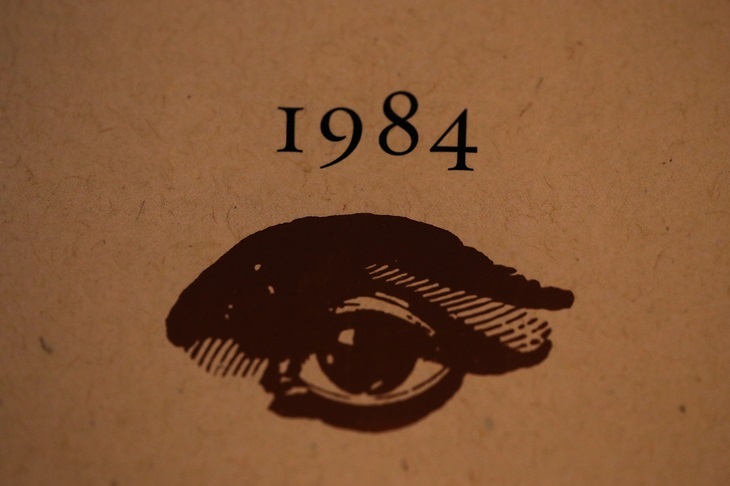
The phrase, often mis-attributed to French philosopher Voltaire, ‘I disapprove of what you say but will defend to the death your right to say it,’ seems, in modern times, to have little meaning. Former US President, Ronald Reagan, prophetically reminded us that ‘freedom is never more than one generation away from extinction’. The book, 1984, did not end well, will the disinformation bill take us there?