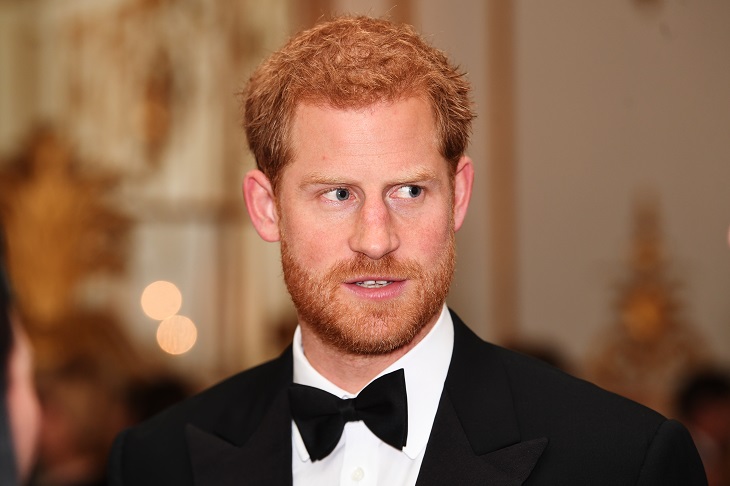
The Duke of Sussex’s memoir caused a media frenzy in the weeks leading up to its official publication, with commentators keen to get their hands on an advance copy. Luckily – I might add in a rather cynical tone – a planned PR exercise and breach of the ‘launch protocol’ meant customers in Spain got hold of it five days early. Spanish readers were in for a shock. Or not, if you had invested more than a minute of your life in the company of ‘the moaner from Montecito’.
From recreational drug use to bragging about his Taliban kill count, Spare contains all manner of lurid and sordid details about the Prince’s personal life, including a cringe-inducing story about losing his virginity at 17 to an older woman. I’m not sure if Harry has adopted a vegan diet, but he appears to be an animal lover with a particular penchant for cougars.
Harry constantly reminds us that he wants to be left alone, berates the media for prying into his private life, and wants his privacy respected, yet he releases an intimate memoir revealing the most awkward details of his private life. I guess sincerity goes out the window when someone dangles a $20 million cheque in front of your face! With a hefty price tag dictating your morals, I can only assume it’s natural for someone who values privacy to expose the most personal details of their own family. Other than salacious gossip and confected half-truths, this 400-page whinge-a-thon reveals little other than to document the Duke’s transformation into a Californian Prince.
The book was written by J.R. Moehringer, one of the best ghost writers in the literary world. His most famous work, Open, by tennis legend Andre Agassi, is one of the greatest sporting memoirs of all time. Where Agassi’s memoir was about combating his internal demons of self-loathing and shame, Harry’s focuses on the externals – what’s been done to him. Bereft of free will, he presents himself as a passive recipient of all the world’s ills. We are told he was encouraged to wear that Nazi uniform by Will and Kate. You see, he is never at fault, and even when he is, he’s not really.
One thing is clear: Being a professional victim is lucrative. As of writing, Spare has sold an estimated 1.5 million copies worldwide and has become the UK’s fastest selling nonfiction book ever. Which begs the question: why do we have such a lurid obsession with the private lives of celebrities?
Since the last generation, there’s been a radical transformation in how and what we share. My parents taught me not to be greedy and to consider others; to treat others the way you want to be treated. This traditional concept of sharing was outward-looking, directed at external reality. The dictionary definition described the verb ‘to share’ as ‘to give some of (what one has) to someone else.’ In recent years, it has taken on a more inward-looking meaning. Merriam-Webster defines the concept thus: ‘To talk about one’s thoughts, feelings, or experiences with others.’ This very 21st century definition of sharing corresponds with Harry’s nauseating neologism ‘lived experience.’
This desire to share, or ‘open-up,’ is one that fits neatly with the secular confessional world we now inhabit. But it wasn’t always this way.
There was a time when celebrities were a lot less accessible than they are today. Fifty years ago, the media was very different. On the rare occasion you heard from a celebrity, it was when you opened a glamorous A-list celebrity magazine. A literal and figurative wall was in place to keep the general public separate from the celebrity. Little was known about their private lives or, worse, their political opinions.
The Harry Windsor example shows there’s nothing particularly special about fame anymore. Being famous once meant aspiration – something to strive for. Now it is more likely to be sought after as an end in itself. Could anything else possibly explain our unhealthy infatuation with fame?
The political scientist Robert Putnam has documented a vast amount of data that appears to show a growing level of narcissism across the western world. In his book The Upswing, Putnam argues that during the last century, America has drifted from a ‘we’ society towards an ‘I’ one. When he asked his students to respond to the statement, ‘I am a very important person,’ only 12 per cent agreed with this in 1950. By 1990, this had risen to 80 per cent. The figure continues to rise.
Consider photography. We once took photos to capture precious memories of events, of other people, or of vistas of snow-covered mountains. Now, with the rise of selfies, no scene is considered special unless your own face appears in every picture. This digitally disconnected self takes us further and further away from empirical reality. We live in an age of curated ‘profilicity’ – a false and inauthentic digital identity: an avatar that lives vicariously through online interaction and the praise of strangers.
This desire for recognition mixed with our growing self-obsession offers a potential reason as to why we actively seek fame. When you factor in a social media generation that has been socially engineered to crave instant gratification, it’s easy to see why it appeals to so many young and impressionable people.
Nothing highlights the transient nature of fame more than Love Island. The show, in which perfect-looking people compete for the chance to win a large cash prize, is one of the most popular on television. In 2020, the reality TV show received twice as many applicants as students applying to Oxford and Cambridge. But the show’s popularity only highlights the short-lived reality of fame. As one anonymous casting director said bluntly, ‘There’s a one-year shelf life…next year is the new batch of people and no one’s really going to want to know about you next year.’ A study of all 259 alumni from eight previous seasons confirms this. Over half have returned to former jobs, with only 11 per cent landing a six-figure brand contract. Some have turned to stripping and flirting on OnlyFans. Sexual neoliberalism is one thing; reality is quite another.
The cult of celebrity is now dying in a world where anyone with a smartphone and an internet connection can become famous. Yet paradoxically, the internet can be your best friend or your biggest enemy. Entering the public realm means you are open to praise but also ridicule. So sign this Faustian bargain at your own discretion. Just don’t end up like Harry.