After spending several years at sea on passenger-cargo vessels my career was interrupted by ‘winning’ the National Service lottery in Australia
Finding myself unemployable for a few months awaiting the next military service intake, I was offered a job with a dredging company. A passenger ship navigator on a dredge? It sounded dreadful, and my perception of this industry was a combination of noise, dirt, and void of any social status. The prospect of being employed in digging up and transferring mud and sand had no appeal at all, but poverty is a great leveller and I accepted the job.
Moving quickly from skipper of small hopper barges to the chief officer of a larger trailer suction dredger, this experience opened a fascinating section of the marine industry to me. This trailer suction hopper dredge, with its space-age-wide bridge, could load 3,500 tonnes in 15 minutes through its 30” suction pipe and 1,100hp dredge motor. Dumping it in the spoil ground area took only 10 seconds with a physical ‘lifting’ of the ship as the load dropped quickly through the bottom doors.
I gained some valuable ship-handling experience, which no one except pilots, could obtain on larger ships. At the time we were working with laser fixing, well ahead of any other segments of the marine industry. I also worked in the hydrographic survey boats, and learnt a great deal about channel toes, over dredging for expansion, spot dredging, and draghead types for the handling of sands, clays, and aggregates.
Of great interest to me were the fishermen who followed the dredge with remarkable success. Apparently, the removal of the seabed upper layer allowed the fish to access a whole smorgasbord of food. While one would think that the turbidity would deter any self-respecting fish, this was not the case.
After my first round of National Service, I went back for more dredge experience and worked on projects in Melbourne, Weipa, Cilacap Indonesia, and Tauranga New Zealand. I was amazed how quickly, efficiently and with the minimum of fuss, one trailer suction hopper dredge alone could open up a port to larger ships.
The dredging of a small canal in 1850 in Suez was such great foresight that still saves trillions of tonnes of carbon emissions per year for shipping that doesn’t have to go around the Cape. Fifty years ago, its depth was only 10 metres. I traversed it recently and it is now 18.6 metres in depth and has 79 kilometres of dual canal. It requires 12 of the world’s largest dredgers just to maintain its depth. The Suez and the neo-Panamax canal expansion are key ingredients setting the pace for ship dimensions for any sensible port that wishes to stay globally competitive.
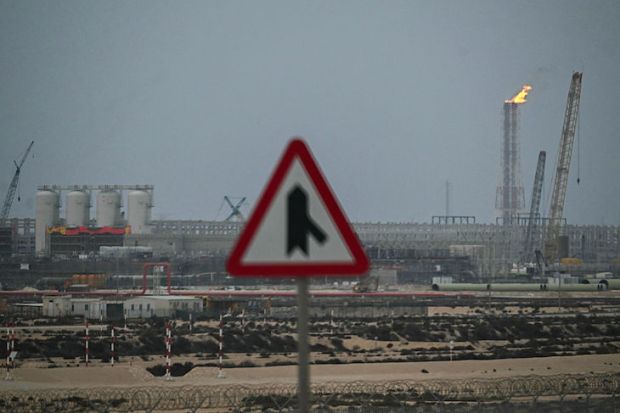
Recently in Abu Dhabi (Dubai) and Salalah (Oman), I witnessed serious port developments by these aggressive commercial centres with a variety of huge Dutch dredgers. These countries know that they live or die by the capability of their ports. Salalah was a diminutive secondary port 25 years ago, and now has 19 container cranes and harbour depth for the 16,285 TEU giant container ships, putting most Australian ports to shame that are struggling to handle 11,000 TEU ships.
Yet here in Australia, dredging has become demonised in the last 30 years largely by Green policies. The obstructive cost and time of permitting alone is driving the main Dutch dredging companies in the space from tendering according to Captain Kasper Kuiper, a Brisbane based dredging veteran of 50 years.
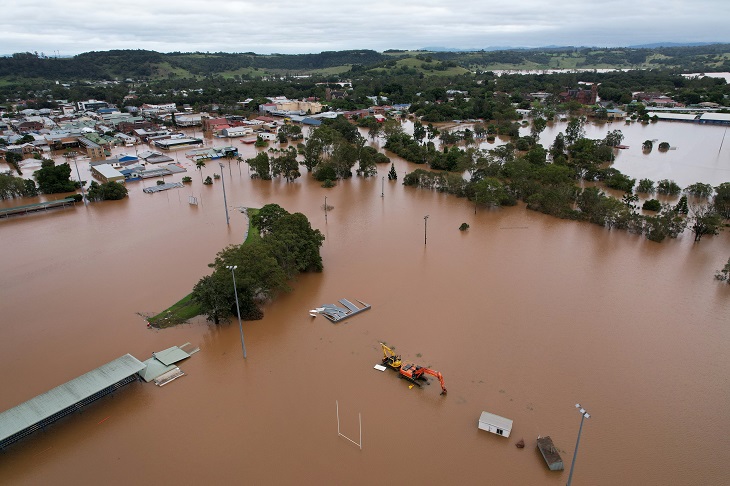
In 1996 the dredging of the Brisbane river was halted by the Green/Labor government, ending a 100-year cheap supply of aggregate which for bricks, cement, and tiles that had made Brisbane the cheapest place in the country to build a house. Warnings at the time that this halting of the dredging would shallow the river and exacerbate flooding were ignored, which 15 years later in 2011 it did, costing 38 lives. The green fools promoting this anti-dredging policy were hoping for a crystal clear blue river which will never happen in any river around the country. The river is no longer navigable above Newstead, and thwarted the national plans of joining the inland rail container terminal at Acacia Ridge to the Port using barges down the river.
There are over 120 small towns around this nation that were established by a fleet of coastal ships and trade, and yes, were dredged regularly. The old wharves are now the habitat of the cappuccino set that occasionally post black and white fotos of ‘the old port’ around the walls. Our nation is sadly lacking in port facilities not for just commercial activities but for Defence, particularly in our whole northern border.
Look at the port history video you-tube of Lismore and the ‘Marine Highway’ used for 100 years to establish and consolidate the city. You will see a 1906 photograph of the ‘Dictys’ a dredge around 60 metres in length with a discharge pipe of approximately 900mm (3 feet). Basic engineering shows that a deeper river mitigates flood risk and keeps the channels navigable as it did in the Richmond river and many other rivers in the nation at that time.
Dredging, for no sensible reason at all, has become a voodoo word for environmental lobbyists. Regional towns around the nation such as Lismore, Innisfail, Port Macquarie, Batemens Bay, and Goolwa would be energised if the rivers and river mouths were once again safely navigable.
Watch this video to see the 120 locations around the nation that can become safe and prosperous if the shackles of dredging permits can be removed.
I would urge all persons considering objecting to dredging proposals, before they write or turn up to a meeting, to actually do some field trips with dredging companies. It will be a pleasant eye-opener. Strict requirements for turbidity control, dredge and dump boundaries, noise levels, etc., are adhered to by all experienced dredging companies. Newer dredgers incorporate data logging of all operational aspects that can be monitored on board and ashore simultaneously.
Failure to address a forward-thinking policy on dredging can stagnate or lose a town or city of its commercial impetus. Don’t believe me? Those who know Ephesus in Turkey, home of the biblical Ephesians, would be aware that it once was a thriving port and regional commercial centre.
Wander through Ephesus these days, and you will note that the sea is 15 kilometres away! The whole place just silted up. There is no commercial centre there anymore, just tourists interested in the historic town it used to be.
The dredging industry and dredging policies should be encouraged, otherwise your city may just end up becoming a historic tour town.