The Spectator Australia’s article The Curse Of Conservatism considered the knee-jerk opposition to Giorgia Meloni and her Brothers of Italy party as a larger problem of right-wing/centre-right leaders’ reluctance to advocate for conservative values.
The issue the article identifies of conservatism being immediately dismissed as ‘far-right’, ‘fascist’, and ‘populists’ is one that extends into social and cultural perceptions of the conservative ethos.
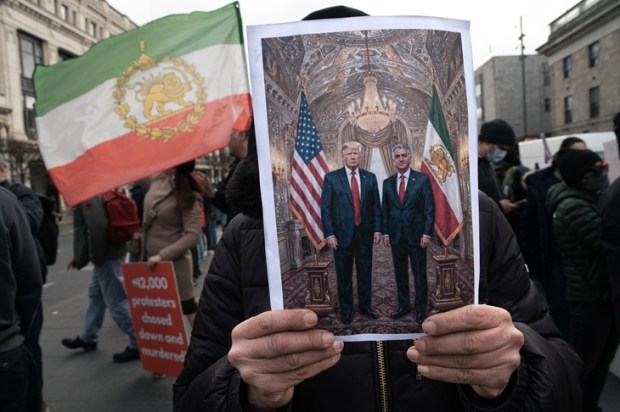
There might be a psychological explanation behind conservative politicians’ timidity: the unfavourable perceptions of publicly visible leaders who proclaim support for conservative values (e.g., Donald Trump, Boris Johnson) increase their wariness about associating with the movement.
Rather than simply being the outcome of bad branding however, the difficulty in promoting conservatism may lie in its historically and philosophically fractured nature.
Ed West’s Tory Boy, a memoir infused with English political history, notes a logical reason for variability among conservatives: conservatism centres on the preservation of cultural and national traditions but these vastly differ across countries.
There is also a plethora of subtypes within the conservative movement: paleoconservative, neoconservative, minority/multicultural conservatives, and free-market conservatives (‘libertarians’/’neoliberals’).
Each of these terms has different meanings for different people and some (e.g., libertarians) no longer want to count in the conservative category. We have yet to evaluate conservatism’s link to contemporary pro-democracy movements in countries like Hong Kong and Vietnam that combine revolutionary sentiment with a desire to preserve their traditions from communist erasure.
The only defining feature across the conservative political narrative is the ability for factions to compromise on specific issues (e.g., sexual permissiveness, immigration) in order to tackle more urgent existential threats.
The key unifying historical event among conservatives was the fight against the Soviet Union.
For a more contemporary example, the pro-vape lobby at this year’s ALS Friedman conference described the persuasion tactics they used to gain conservative support: although conservatives perceived vaping as ‘degenerate’, their opposition to the sudden closure of a vape supplies store was based on the incident’s framing as an overreach of state intervention.
Perhaps one could scoff at this as a gullible reaction to a marketing tactic. It nevertheless illustrates a capacity for conservatives to park their personal disgust to uphold fundamental rights. All that said, ‘compromise and conquer’ is not an inspiring political campaign…
While conservatism may be a fragmented political entity, it is still possible to glean personal and social meaning from examining its historical transformations.
Part of my fascination with the evolution of conservative thought is in its reflection of the conflict between my and my father’s values, both of which embody different aspects of the conservative perspective.
My father’s insularity stemmed from his struggles during the Vietnam War. The communist government seized their family’s paper mill: rumour goes that my paternal grandfather had volunteered the property out of pro-communist fervour. Households closed their curtains during mealtimes to avoid the jealous eyes of starving neighbours who might then try to break in. They lost their life savings to a smuggler scam. My father dismisses political activism and advocacy with phrases like ‘charity starts in the home’ and ‘it’s just ideology’. He values the economic advantages of bilingualism but views traditional Vietnamese customs and any kind of spiritual ritual with contempt and suspicion.
In contrast, my experiences drew me to outward-looking aspects of the conservative ethos. Rituals that serve to maintain higher philosophical principles, such as collective harmony and benevolence, are necessary protections against the deification of crude notions like money or blood relations.
My father had no friends, despite frequent contact with medical colleagues. He primarily socialised with his brothers who themselves were prepared to fleece anyone (including each other) for their and their offspring’s gain. The spiritual desert led to contradictory social expectations. For example, we daughters were tasked with showing subservience to their fathers but street smartness when dealing with men outside the family, as though our capacity to judge prospective boyfriends developed separately from familial interactions. I saw the importance of adult role models outside the blood-related clan and trusting communities that offered comfort and wisdom amid the vacuous grind for social status and wealth.
Like most children and parents, my father and I reached a breaking point that drove my interstate relocation. The move relied on an exercise of financial and personal caution characteristic of the conservative mindset. I did not want rebellion to end in unwanted pregnancy, bankruptcy, and life-threatening living arrangements like some of my progressive friends’ retaliation attempts had. I dreaded a desperate return to my parents that would prove I was their naive, dependent, Australian-born daughter. A life built in pursuit of my own goals and values needed to last.
The way to combat my father’s conservatism was with a version of my own which had filtered out two core principles through conservatism’s tumultuous history: 1) benevolence towards others based on their human dignity and claim to equal citizen rights and 2) the use of just means, rather than a rabid pursuit, to reach desirable ends.
Ironically, acting upon ‘conservative sympathies’ increased my activism in social justice issues typically associated with the progressive Left. The embrace of minorities through an expansion of ‘acceptable society’s boundaries, rather than celebration of diversity for diversity’s sake, features in conservativism’s political history. I would not have attended Heterodox Academy East Asia’s (HxEast Asia) discussion of LGBT-Christian relations in South Korean universities if I was still immersed in progressive spheres. The purity politics and one-upping about superior ally-ship would have intimidated me into observing from the sidelines.
Quiet listening has value, especially in complex discussions about topics one is uninformed about. But that is not activism, which was what the problems discussed at the HxEast Asia panel needed: LGBT professors were unable to seek spousal visa status like their heterosexual counterparts; they could be openly fired on the basis of their sexual preferences (if discovered); political parties ignored discrimination for fear of angering homophobic megachurches who could threaten their withdrawal of electoral support.
The HxEast Asia panel discussed the importance of international partnerships and gay-straight alliances in lending respectability and legitimacy to the LGBT plight in South Korea. Thus, an approach of ‘staying in your lane’ to avoid backlash from purity-centred social justice ‘allies’ is a recipe social stagnation. A desire for recognition that transcends demographic characteristics goes, ‘I pay taxes, completed military service, and produce economic and social value. Yet why does the state treat me like a second-class citizen on the basis of an arbitrary personal characteristic?’
The urge for national solidarity based on equal citizen rights exists outside the conservative perspective. A committed liberal and political scientist Mark Lilla made it the crux of his book The Once And Future Liberal, which argued that Trump’s 2016 victory resulted from liberals’ abandonment of middle America and obsession with narcissistic identity politics. However, conservatism may be best placed to support equal citizen rights as a unifying basis due to its focus on the protection of individual dignity as part of nationhood.
While I sympathise with The Curse Of Conservatism’s lamentation of conservatism’s tarnished reputation, I disagree with the article’s call to ‘passionately fight for conservative convictions’.
Conservatism’s history warns against a stubborn attachment to the ‘nuclear family, white picket fence’ fantasy that may obscure fundamental rights like equality before the law. Its factions’ interests and goals may be too disparate to be conflated into a unified agenda. In its most intellectually and historically aware form, conservatism’s balance between social change and preservation of fundamental values informs us of the logical premises needed to achieve harmony and cooperation in heterogenous environments.