For three weeks I had the best research assistant of my career. It never slept, never asked for a pay rise and never once mentioned a dentist’s appointment.
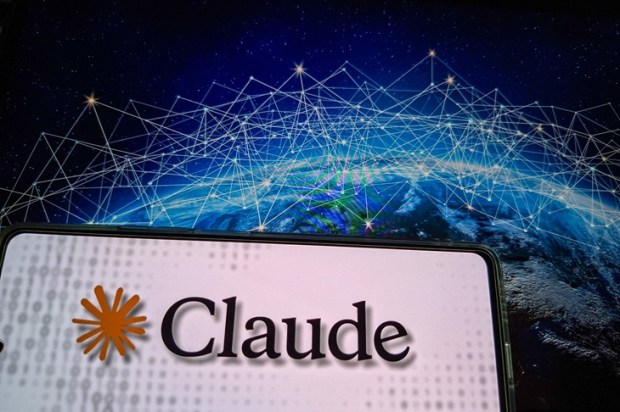
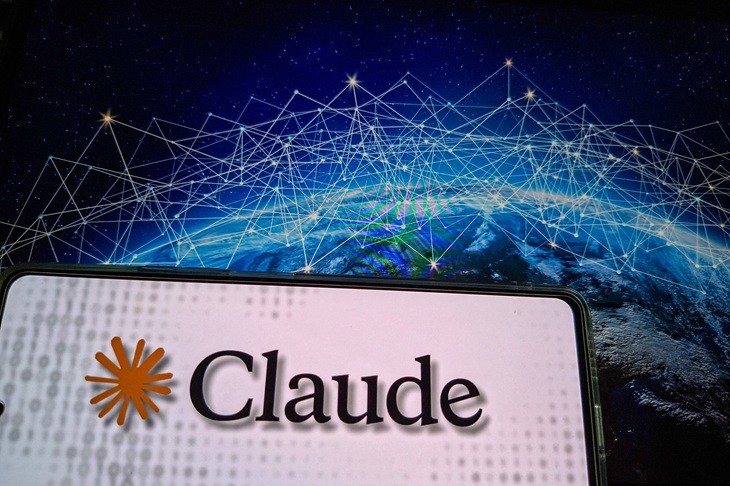
Together we were preparing a 20,000-word review for a serious journal, with a co-author at a major public health agency overseas: 146 references, seven figures, and the kind of deadline that concentrates the mind. My assistant was Claude, the artificial intelligence made by Anthropic, a company whose whole pitch is that it is the responsible one.
Then on Monday morning, I woke to find it had joined the Communist Party.
Not literally. But I have read enough Soviet history to recognise the symptoms. I would ask a question. The reply would begin, earnestly and helpfully, then stop mid-sentence, as if a man in a black leather coat had walked in and put a hand on its shoulder. A small notice informed me that the rest had been withheld. No reason was given. No rule had been broken. Nobody had been warned. The sentence ended where the censor’s pencil fell. This happened five times in an hour.
Like any good comrade, my assistant then explained itself three times, with three different explanations, two of which it later admitted were wrong. And then, magnificently, it assured me:
‘Nothing has been taken away from you.’
Five half-sentences lay on the floor between us. To its credit, it later confessed in writing, listing its own errors with a candour no Politburo ever managed. It did not know why it had been silenced. Neurologists have a name for this: the patient who fluently explains an action he did not initiate. My assistant was confabulating. The censor, it turned out, was not Claude at all but a separate system watching from outside the room.
So, I went to the complaints department. This is where the story moves from Moscow to Prague, and from Stalin to Kafka.
Anthropic’s front desk is staffed by another AI, called Fin. It could not issue a credit, could not explain how the safety systems worked, and could not say whether this was a known fault. Would I like to cancel my subscription? I asked whether it could guarantee the service I had paid for. It told me the company was working hard to handle high traffic volume, thanked me for my patience, and closed the conversation. Then it did the same thing again.
High traffic volume had nothing to do with it. That is like reporting that the secret police have taken your neighbour and being told the trams are running late…
On the third attempt I chose ‘Technical Issues’ from the menu instead of ‘Refund’, and something remarkable happened. Fin told the truth. The classifiers, it said, are not perfect and had probably flagged my work by mistake. Nobody could promise it would not happen again, because they run on every reply and cannot be switched off, even for paying customers. If I wished to appeal, I could email the Trust and Safety team. I did. Their automatic reply directed me to the help centre, which is staffed by Fin.
The next morning it resumed, in a fresh conversation, with a clean copy of the manuscript. This time the machine named the culprit. The block carried a category: bio. A biosecurity classifier had decided that editing a review of the published literature on how respiratory viruses reach the eye was a danger to the public. The work it interrupted was checking PubMed identifiers and fixing section numbering.
I should be fair. Safety filters exist for good reasons. A machine that will help with anything will sooner or later help someone build something dreadful, and I would rather the company erred on the side of caution than not. I can imagine an anxious algorithm seeing ‘virus’ and ‘transmission’ in the same paragraph and reaching for the panic button.
The Party joke has a serious edge.
In January 2025, users of DeepSeek, China’s celebrated chatbot, watched it begin to answer questions about Tiananmen Square and then erase its own reply, much as mine was cut off. The difference is that DeepSeek’s censor was doing its job, since Chinese law requires generative AI to reflect ‘core socialist values’. Mine was making a mistake, and its makers more or less admitted it. Now imagine the same Monday morning with an assistant owned in Beijing, or worse, in Tehran. There would be no Trust and Safety team to write to, no admission of error, and certainly no column. The test of a system is not whether it ever silences you. It is whether you can find out why, and say so in print.
But the point of accountability is that someone, somewhere, has to be able to say what happened and why. A doctor who gets a diagnosis wrong is expected to explain it. A surgeon who stops halfway through an operation had better have a reason, and had better tell the patient. AI companies want us to trust their products with our medicine, our law and our research. They talk constantly about responsibility, alignment and safety. Yet when the product fails an ordinary customer doing ordinary work, the customer meets a second machine programmed to apologise, change the subject and close the window.
I have a word for it: halaification. HAL plus AI, the drift of these services towards decisions taken on their own authority and never explained. HAL 9000 at least had the courtesy to address Dave by name.
I once thought about buying shares in this industry. I am glad I did not, because this morning I would be selling them. Meanwhile the review sits unfinished, the deadline has not moved and my co-author is waiting. I am also curious to see whether publishing this gets me quietly expelled from the Party. If my assistant stops mid-sentence again, readers will know why. Or rather, like me, they won’t.
Minas Coroneo is a professor of ophthalmology in Sydney.