Confusion about the boundary between childhood and adulthood continues to grow. One day, we’re told 16-year-olds are old enough to vote; the next, we learn they cannot be trusted to choose their own sexual partners. One day we’re all focused on getting young people into work; the next we learn they shouldn’t be left alone with an adult colleague if the office door is closed. Make it make sense, as the kids say.
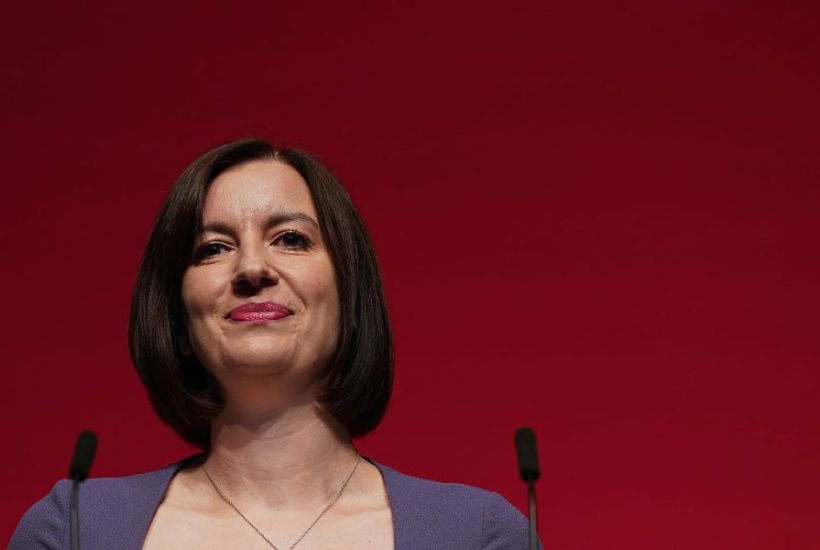
Labour’s Bridget Phillipson has triggered the latest round of hand-wringing about the status of young women. Her comments come after Russell Brand’s conviction for rape and allegations that David Walliams sexually assaulted a 15-year-old girl triggered a national conversation on teenagers, sex and consent. The Prime Minister has promised tougher rules around the use of non-disclosure agreements and, possibly, a staggered age of consent. Phillipson has argued that cultural change is needed too.
Few would disagree. But the question is: what kind of cultural change? And how do we strike a balance between protecting teenagers and giving young adults the freedom to grow up and make their own mistakes? Phillipson, it seems, is very much on the protection side of the scales.
This is not just infantilising but hugely sexist, too
Yesterday, the minister for women and equalities was out on the media round, expressing her concern about the risks young women face in the workplace. Speaking to Sky News, Phillipson said:
It cannot be acceptable, for example, to have young women in a closed room with an adult without supervision in a workplace environment. That is just completely counter to any kind of safeguarding or wellbeing practice you would expect.
This is an astonishing statement with vast repercussions.
For a start, it positions young women in the workplace not as adult employees but as children in need of ‘supervision’ and ‘safeguarding’. At a stroke, Phillipson infantilises young women, presumably proud to have a job and keen to enter the world of work complete with responsibilities and a pay packet. Phillipson did not specify an age at which the chaperoning should end, nor did she suggest that her comments applied only to 15-year-olds on a Saturday job. She has since said that she was:
Referring to recent reports of powerful men taking actual children into their dressing rooms. Adult women employees should, of course, be free to meet with their male colleagues as they see fit – that is not a safeguarding breach.
The language of ‘safeguarding’ and ‘wellbeing’ is normally associated with school, not the workplace. Despite her clarification, Phillipson’s original words still send a clear message to all young female employees: you might have donned a suit, but you are still a child. You cannot be trusted to meet with a client, make a tough decision or assume responsibility for anything. You may be at work, but other people have to look after you.
Of course, this is not just infantilising but hugely sexist, too. Phillipson explicitly stated that it should not be acceptable to have ‘young women in a closed room with an adult’. Lucky young men can be treated like adults and trusted to meet with older colleagues on their own. Only women need special protection.
Worse still, while Phillipson’s comments focussed on young women, the whole workplace would need to change if she were to achieve the ‘cultural change’ she envisages. Any boss looking to hire a young woman would need to consider introducing safeguarding protocols, training existing staff to meet them, paying workers to chaperone each other, and perhaps even moving towards open-plan rooms. Who could blame a business owner for deciding to recruit only men?
Once, the left got irate about exactly this kind of thing. I’m old enough to remember the furore back in 2017 when it was revealed that then-American vice president Mike Pence refused to dine alone with any woman other than his wife. Feminists went mental. They branded Pence a misogynist and an ‘old-school sexist’ and complained that this meant women would not be invited to attend business dinners or receive ‘mentorship over a meal’. Guardian columnist Jessica Valenti explained:
The underlying message of a rule like Pence’s is the same one that’s taught to teens in abstinence-only education classes: men can’t control themselves when alone with women.
Much as it pains me to admit it, she was right. But why is it now okay for Bridget Phillipson to say much the same as the Republican Pence was rightly criticised for almost a decade ago?
Labour cannot have it both ways. If young women are old enough to be employed, then they deserve to be taken seriously and treated like adults, not infantilised and treated like children. Of course, this does not mean they are fair game for sexual harassment. Such behaviour is already, very definitely, illegal. But they should be held to the same standards and expectations as male colleagues. To suggest otherwise is nothing other than old-school sexism.