This week, The Spectator exposed how the British Muslim Trust (BMT), paid millions of pounds by the Government as its official monitor of anti-Muslim hatred, has made multiple claims about attacks on mosques which are not true, and others for which it refuses to provide evidence.
They were either not attacks, or were not directed against mosques, or both
On Thursday, the BMT chose to double down. Probably because of our piece on Tuesday, they finally, six weeks after promising it, published a report purporting to prove their claim that “one mosque [was] attacked every five days” between July 2025 and July 2026. That is indeed the title of the report. But what it actually proves is that the BMT is even shoddier and more dishonest than we feared.
An attack every five days equates to about 73 attacks on mosques over the year, and the BMT duly claims a figure of 78. But the report only lists about 40 or so supposed attacks – including when you count multiple supposed attacks on the same day against the same target. Even of those 40, we can now say that about a third are clearly false. They were either not attacks, or were not directed against mosques, or both.
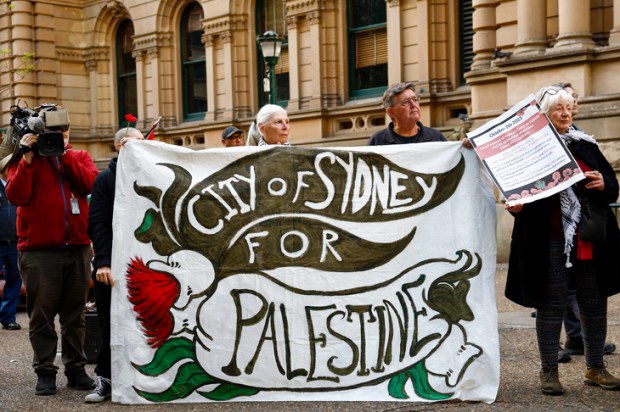
The BMT’s tally of 78 “attacks” includes, for instance, a series of protests outside the Al-Mahdi Islamic Centre in Glasgow. The BMT describes these as “anti-Muslim targeting” while unfortunately neglecting to mention that many of the demonstrators were themselves Muslim, anti-regime Iranians protesting against the slaughter of protestors by the Tehran government outside a mosque described as Scotland’s unofficial base for the regime. (After Iran’s supreme leader, Ayatollah Ali Khamenei, was killed in American airstrikes this year, the mosque’s imam, Aoun Ali Jarvi, was filmed at his funeral, weeping and paying respects before his coffin.)
The 78 figure also includes a mostly peaceful protest in March 2026 against the building of a new mosque in Dalton, Cumbria, and a leafleting campaign by residents in Harefield, Middlesex, against a huge new Islamic complex, on a site of 6.3 acres, in their rural village. Is the BMT saying that nobody is allowed to object to this sort of project, and that to do so constitutes an attack? Nor is either of these sites yet in operation as a mosque, and worship will only be a small part of the Harefield project.
Three more of the 78 were when “a scholar affiliated with a local mosque was subjected to a sustained campaign of…abuse online,” an imam in High Wycombe “received an abusive letter” and a Facebook post wrongly claimed that an imam in Belfast was linked to Isis. None of these, of course, is an attack on a mosque. The most serious anti-Muslim attack of the period, the stabbings of five people in Edinburgh in June, is included as an attack on a mosque even though no mosque was targeted (the attacker started in Sighthill Park, which is about a quarter of a mile from the nearest mosque, then targeted shops, takeaways and a petrol station.)
As we said on Tuesday, another of the BMT’s claimed attacks on a “mosque” was actually an attack on a building clearly labelled as a synagogue. Another, in Worcester, was on an outbuilding of a community centre some distance from the mosque and is described by police as not racially or religiously-motivated. Another BMT-claimed attack, in Blackburn, was on a derelict building next to a mosque and yet another, in Batley, involved someone setting fire to some rubbish outside a building site near a mosque. Two more of the 78 were alleged “mass-casualty plots” against mosques. But a plot, of course, is not an attack. A plot is an attack that was foiled.
The BMT’s report certainly tells an appalling story, but in a quite different way to the one it thinks
The BMT report attempts to deal with these difficulties by saying that its definition of a mosque includes “people and communities connected to it.” On this basis, literally any attack on any Muslim can be claimed as an attack on a mosque. But even that’s not all – the BMT’s definition of an attack “includes alleged plots, incidents reported to BMT’s helpline, and incidents self-reported by victims who perceived them to be a hate incident.” On that basis, literally any “incident” self-perceived by any Muslim can be an attack on a mosque. The BMT sometimes talks of 78 “attacks and incidents” but also simply of “attacks,” making no distinction between the two.
I think we know what’s happening here. The British Muslim Trust has realised that the thing most likely to anger and frighten Muslims is the notion of attacks on their sacred places. So it has decided it needs as many of those as possible, even if some have to be heavily massaged. It is the sort of behaviour we have grown used to from delinquent organisations such as Muslim Engagement and Development (Mend). But in a publicly-funded body such as the British Muslim Trust, it is simply unacceptable.
The BMT’s report certainly tells an appalling story, but in a quite different way to the one it thinks.