In a recent review of Kate Grenville’s latest book, Jane Albert refers to ‘her sense of guilt and shame at what her ancestors had done’ when her great-great-great-grandfather, Solomon Wiseman, ‘took up land’ along the Hawkesbury River (‘True Detective’, Weekend Australian, 3 September). While I am sure that Ms Grenville’s sense of guilt and shame is sincerely held, I am equally sure that it is unnecessary and possibly unhelpful.
Solomon Wiseman, was sentenced to death in 1805 in England for stealing timber. The sentence was commuted to transportation to Australia and Solomon’s subsequent history formed the basis of his great-great-great-granddaughter’s magnificent novel, The Secret River. It presents us with one of the most honest and painful accounts of the dispossession of the Aborigines who lived along the banks of the Hawkesbury River which began as early as 1805 when ex-‘criminals’ moved out of Sydney and became settlers.
The question then is, how many subsequent generations of Solomon’s descendants must share Ms Grenville’s sense of guilt and shame? Did Solomon feel guilty about taking over land that had been the home of Aboriginal people for thousands of years? My guess is that he, and the other convicts transported to this wild colony, couldn’t believe their luck and, until around the middle of the last century there wasn’t all that much ‘guilt and shame’ in the Australian collective consciousness.
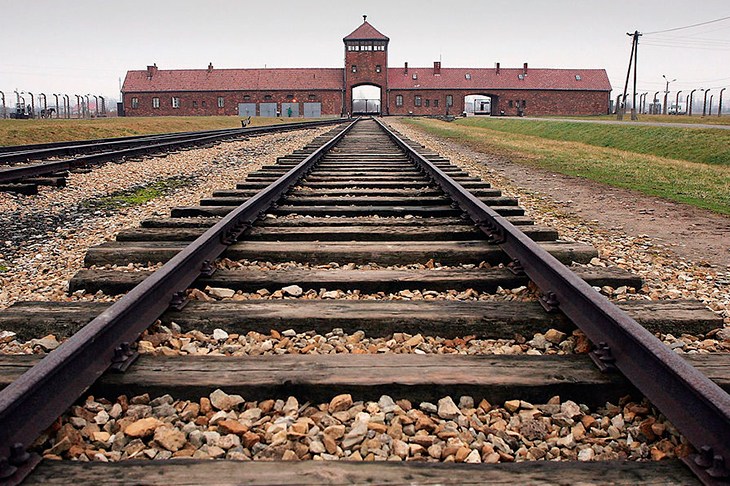
The wider question is, how do nations and their citizens process the more shameful parts of their history? After world war two, the Germans wrestled with the issue of ‘collective guilt’ and developed the concept of Vergangenheitsbewältigung or struggle of overcoming the past. In addition to murdering more than six million Jews, the Germans killed 26 million citizens of Russia and other Eastern European nations and have honestly tried to ensure subsequent generations are made aware of the atrocities committed by their grandparents. But with each subsequent generation, the connection to that dark time is weakening.
The Japanese do not seem to have been excessively burdened by a sense of guilt and shame because of the atrocities they conducted during the same era. While the schoolkids in Germany are taken around Holocaust sites and are given accurate accounts of the second world war, the Japanese school curricula gloss over such events as the Nanjing Massacre.
The Chinese are even more cavalier with historical truth. In The People’s Republic of Amnesia, Louisa Lim has described the way that the Chinese government has removed any detailed account of the Tiananmen Square massacre from public records. She notes that school textbooks were altered to ‘change the prism through which the past and present were viewed’. She shows ‘how memories could be reformatted and how China’s population had become complicit in an act of mass amnesia’.
This is the opposite of what is now happening here. For the first 170 years of modern Australian history, we followed the Japanese model of historical remembrance and ignored the plight of the first Australians. Today, we wallow in remorse for the past injustices which had a fatal impact on Aboriginal culture. The recognition of those injustices became prominent following the ABC broadcast in 1968 of a series of lectures by the anthropologist, Bill Stanner. In the lectures he wrote of ‘the great Australian silence’ and ‘a cult of forgetfulness practiced on a national scale’.
The ‘silence’ and ‘forgetfulness’ have now been replaced, on the political left, by guilt and repentance and the further the left goes on the political spectrum, the more extreme is the guilt. The Greens routinely make shrill claims about ‘genocide’ and, while the Labor party doesn’t go that far, it willingly endorses something like the German notion of collective guilt.
But while the Germans of today no longer feel responsible for the atrocities committed by their forebears, we are expected to routinely scourge ourselves because of past injustices experienced by people to whom we have no connection. This is largely because, while the consequences of past German atrocities have little visible connection with modern Germany, the consequences of dispossession are still with us and will be for generations to come.
If anything, the guilt and shame mob are becoming shriller and more strident. Australia is one of the most prosperous, stable democracies in world history and, the richer we become, the greater the gap between the people living in remote Aboriginal communities and the rest of the population. The ever-widening gap is proof, according to some, that mainstream Australia is still oppressing the Aboriginal population. But are we?
The Closing the Gap project provides a set of basic criteria which can be used to measure how successfully social inequality is being removed and it is now recognised that the majority of relevant targets are not being achieved. The explanations for the repeated failures are invariably attributed to government or to racial prejudice. Thus, failure in the academic area is because the curriculum is not relevant to indigenous communities. The disproportionately high rate of indigenous incarceration is because the police are prejudiced and the criminal justice system works against Aboriginal people. The incidence of sexual abuse and domestic violence is due to the failure of government to provide adequate accommodation. The high unemployment rate is due to discrimination by employers and so on.
There is some truth in these explanations for the repeated failures of the Closing the Gap project. But only some. Australia’s history has a dark side, a very dark side. But neither you nor I had anything to do with that. We are undoubtedly beneficiaries of the actions of our forebears and should accept that government at every level must continue trying to close the gap in living standards.
But, at some point, we have to determine which model of our collective interpretation of the past, and its relation to the present, we can accept. The gross distortion of the Chinese tyrants won’t do. The Japanese preference for pushing everything under the carpet will never work and thus we cannot return to the ‘great Australian silence’. Germany’s honest examination of the Nazi era has enabled it to separate its past from its present. We should be able to separate similarly, our past from our present. There will always be left/right divisions in historical interpretation but the current ideological chasm over Aboriginal issues is unhelpful. At some point, the Aboriginal leaders must focus on the future rather than the past and Ms Grenville should assuage her guilt.
Got something to add? Join the discussion and comment below.
You might disagree with half of it, but you’ll enjoy reading all of it. Try your first month for free, then just $2 a week for the remainder of your first year.