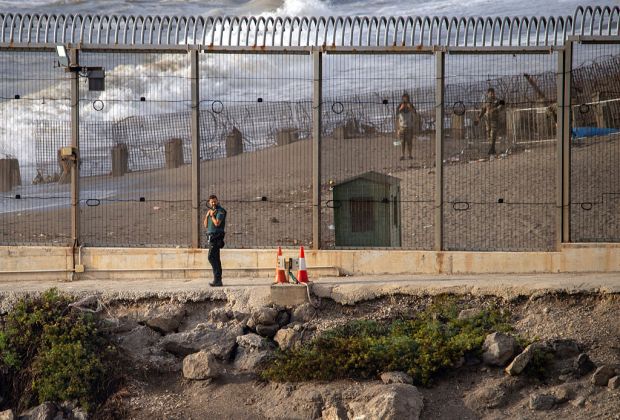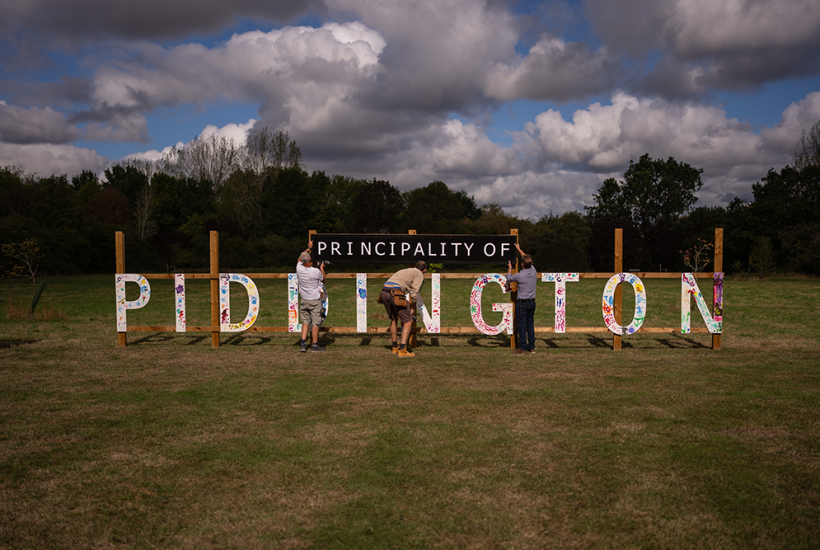
While last week’s majority vote by the inhabitants of Piddington in Oxfordshire to seek independence from Britain was a stunt – albeit one making a serious point about plans to house more than 1,000 asylum seekers in an army base near the village – further afield there are more concerted attempts to establish real micronations. Prominent among these is the self-proclaimed autonomous territory of Liberland, which lies on a stretch of land on the Danube separating Croatia and Serbia. Unlike microstates, such as Monaco or the Vatican City, which are recognised internationally, micronations aren’t. Perhaps the best-known of its type today is the majority Russian-speaking rogue nation of Transnistria, a sliver of land which broke away from Moldova in 1991.
Although Liberland, occupying a 6.5 square mile, densely wooded region officially known as Gornja Siga, is on the western side of the river, it isn’t claimed by Croatia – or Serbia. The new state on which it sits is also recognised by neither. What with the barren area having lain in limbo ever since Croatia seceded from Yugoslavia in the 1990s, and with the subsequent emergence of a breed of muscular, libertarian, super-rich buccaneer in the new millennium, it was perhaps inevitable that a visionary would take advantage of its indeterminate status.
It was a Czech national and former financial analyst called Vit Jedlicka who spotted an opportunity to establish an idyll here which would be light on taxation and government. In 2015 he claimed the uninhabited peninsula and declared it the site of a new country founded not on race or ethnicity, but on solid libertarian, meritocratic principles. As Jedlicka told the Telegraph last week, it had always been his ambition ‘to create a European state free from over-regulation’.
As of 2024, Liberland claims to have 1,200 ‘citizens’, with citizenship costing around $10,000. Although it has a constitution and a cabinet, it has not been recognised by any international state. Undeterred, Jedlicka staged a festival last month to celebrate Liberland, showcasing it, he said, as a place ‘for people who want to create a different kind of reality’. Many sympathisers, freedom-lovers, computer scientists and crypto enthusiasts answered his call.
It is moot whether Jedlicka’s dream will ever be realised, but one shouldn’t underestimate the power wielded by crypto millionaires. These types are helping to advance similar initiatives, albeit sometimes with the co-operation of nation-stations proper. A ‘Crypto City’ is in its initial stages on the Venezuelan island of Margarita; Norway’s first private city, Liberstad, was pronounced in 2019; and in Honduras, the PayPal co-founder Peter Thiel has helped to finance the creation of the private city of Prospero.
No one seriously expects Piddington to throw up border fences, but let’s not forget we still have a micronation off our shores: Sealand. Established in 1967 on a disused North Sea fort seven miles off the Suffolk coast, it promised hope for a previous generation of utopians who believed they could break free from the dead hand of the past.
While media fascination with that aspirant state faded when the hippy dream withered, it still exists today – just about. As of 2024 one person lives there. Yet if the persistence of micronations teaches us one thing, it is utopian dreamers will always be with us.
Got something to add? Join the discussion and comment below.
You might disagree with half of it, but you’ll enjoy reading all of it. Try your first month for free, then just $2 a week for the remainder of your first year.