Donald Trump’s bloviation about Greenland has been near-constant since he became president elect in November 2024. In the intervening period, the demands for the territory’s acquisition have varied in tone and substance, from menacing statements to social media memes that are best thought of as bizarre. The response from both elected governments of Denmark and Greenland has been a consistent rejection of Trump’s demands. Meanwhile, European Nato allies have rallied around the Danish Prime Minister, Mette Frederiksen, who came through a hard-fought election in March this year.
Frederiksen used last month’s Nato summit in Ankara to reiterate that Copenhagen was ready and willing to defend the territorial integrity of the Kingdom of Denmark. This was a direct riposte to President Trump, who reiterated his quest to acquire the world’s largest island at the same meeting.
Denmark has been scarred by Trump’s repeated quest for Greenland. Apart from the near-constant and exhausting rebuffing of the US President, the country has also had to acknowledge the worsening security dynamics in and around the Baltic Sea and Arctic region. Russia remains the primary threat. The Danish defence minister Jeppe Bruus noted recently that:
In Greenland, negotiations continue over what a US military presence might entail
Denmark is facing a new reality where the threats to our security are more changing and complex than ever before… That is why conscription is being expanded and strengthened in recent years.
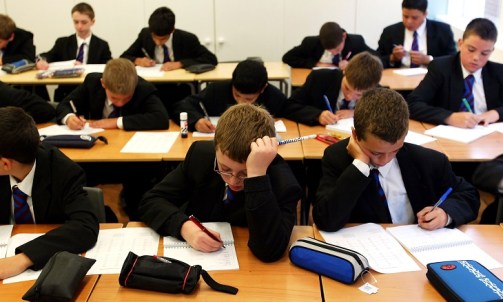
The decision to revisit national conscription was taken in March 2024, some months before President Trump won the presidential election in November of that year. But the US President’s obsession with Greenland has added further complexity to Denmark’s geopolitical environment. In July last year, a new approach to conscription was introduced: young people now embark on 11 months of service rather than four months. It was opened to women for the first time.
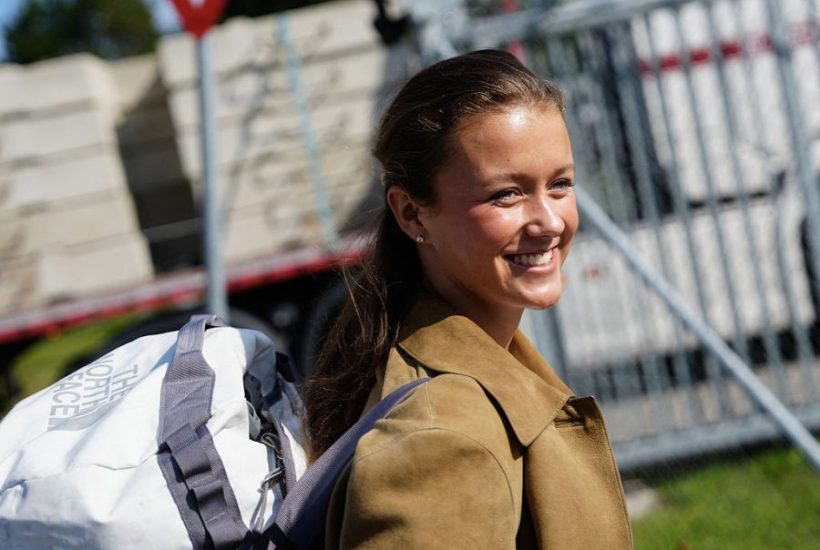
This month, the daughter of the King and Queen of Denmark, Princess Isabella, joined other young adults in this refreshed and extended conscription programme. Conscripts can and will be sent to Greenland for the first time, and it is expected that around 100 will have travelled north this summer to undertake tasks hitherto carried out by regular armed forced personnel.
Princess Isabella’s cohort will undergo five months of basic training and then six months of operational service. Like her contemporaries, she will have been required to register for potential service when she turned 18 and attend a so-called ‘Defence day’. After a series of assessments, potential recruits are then selected via volunteers and a lottery system if the annual military quota (4,700 to 5,000 recruits per year) is not reached. The princess has declined the salary paid to her fellow conscripts.
Princess Isabella’s voluntary conscription to the Guard Hussar Regiment in the Royal Danish Army mirrors a sustained record of military service by the Danish royal family. Her brother served with the same regiment and her father, King Federik, has had an extensive experience with the Danish armed forces, including a stint as a diver with naval special forces. Princess Isabella is nonetheless the first female member of the Danish royal family to serve in the Danish armed forces and is clearly a publicity coup for the current government.
What might be even more significant is the likely proposition that Princess Isabella is sent to Greenland as part of that conscription service. A notable feature of the Danish royal family is their summer tours to both Greenland and Faroe Islands, where they are received warmly by residents.
Princess Isabella travelled with her family on board the royal yacht Dannebrog to Greenland in 2014 and the Faroe Islands in 2018. At the time of the Greenland visit, she was seven years old and the family posed for photographs wearing traditional Greenlandic dress. These royal tours have been very powerful in cementing a shared sense of the Danish identity and mutual affection for members of the royal family. Danish opinion polls routinely show very strong support for the royal family and that includes Greenland, where it is common for residents to wave both the Danish and Greenlandic flags during official visits.
King Frederik X’s most recent official visit to Greenland was in February of this year, and as with King Charles’ visit to Bermuda in May, it came against a backdrop of an American President determined to pursue western hemispheric dominance and territorial acquisition. Both Denmark and the UK have recognised that their respective royal families can and do play an important role in binding overseas territories closer to their metropolitan territories. While Greenland’s population is slightly smaller than Bermuda’s 64,000-strong community, the former’s territory is considerably larger than the latter. Both have experienced the presence of US military personnel: US troops departed Bermuda in 1995 and have not returned.
In Greenland, however, negotiations continue over what a US military presence might entail. A joint tripartite working group, established in January this year, is tasked with producing a framework for negotiation. The US wants to expand its strategic footprint in direct response to what it argues is a growing threat posed by Russia and China. Denmark insists that the US respects its territorial integrity while President Trump publicly ridicules Copenhagen’s inability to defend Greenland. Alongside Denmark, it has rejected any proposal involving purchase. The Danish foreign minister, Lars Løkke Rasmussen, announced in June that they expect an agreement will be announced before the end of the year. But the details of those discussions have been deliberately shielded from public scrutiny.
Whatever Trump’s posturing, the reality is that the 1951 defence agreement between Denmark and the United States offers any American administration plenty of latitude to expand the military footprint on the island, albeit with the consent of the Kingdom of Denmark. Princess Isabella’s likely tour of Greenland as a conscript in the Danish armed forces will take on added salience as the end of the year draws closer.