In the sea off eastern Japan one of the largest earthquakes ever recorded erupted in March 2011 and created a tsunami of up to 40 metres high that killed more than 24,000 people when it struck land.
The biggest danger was that seawater swamped the Fukushima Daiichi Nuclear Power Plant. Three reactors suffered meltdowns, radioactive water escaped into the surrounding area and everyone worried about a nuclear Armageddon.
The tsunami inflicted economic damage estimated at US$200 billion. Japan’s economy plunged into recession and Japanese stocks slumped. But the yen soared to a record high when, for seemingly emotional reasons, Japanese repatriated capital. To help Japan’s export sector stay competitive, the US sold yen, which was then trading around 80 to the US dollar.
Go back to 1998 when Asia was embroiled in a financial crisis. Amid global efforts to stabilise Asian economies, the US purchased yen to arrest a slide that took Japan’s currency close to 148 to the US dollar.
While Japanese authorities have regularly intervened in yen trading, especially of late, these episodes are the only times the US has sought to influence the yen’s value since the currency was floated in 1973, by Reuters reckoning.
Two US yen interventions in 53 years is the context to place news on Monday 3 August that the US, the Friday before, had unexpectedly supported the yen, which had fallen to a 40-year low of 163.99 on 23 July – unexpectedly except that photographers at a US media conference that Friday snapped the to-do list of US Treasury Secretary Scott Bessent that included: ‘Buy Japanese yen (JPY) $5-10 bil’.
Just think that of all the crises since the early-1970s, only the tsunami of 2011 and the Asian financial crisis prompted Washington to help manipulate the yen. As in, not the stagflation of the 1970s, nor the bursting of Japan’s asset bubble in the early-1990s, neither the global financial crisis nor the pandemic.
What’s the emergency now? The problem is Tokyo’s debt, which stands at around 204 per cent of Japan’s GDP, a record for an advanced country. Investors are worried Japanese interest rates are rising to levels that might break Tokyo’s budget. That’s undermining the yen to the extent Tokyo has sold US assets to support the currency. The US is intervening because Tokyo’s selling threatens Washington’s finances.
The back story to the Japanese-US efforts to support the yen – and promises of more aid if needed – is that Japan’s economic stagnation of recent decades prompted Tokyo to run endless budget deficits. At the same time, to suppress government borrowing costs, fight deflation and support the economy, the Bank of Japan (BoJ) pursued a radical monetary policy that kept interest rates low, even negative.
Japan’s lax fiscal and monetary policies were always unsustainable and investors see that these strategies are unravelling now. Prime Minister Sanae Takaichi has massive spending plans to boost economic growth that will further strain Tokyo’s budget and add to debt while higher energy and commodity prices due to the Iran war are adding to inflation.
Policymakers and investors see that a yen undermined by concerns about Japan’s creditworthiness and the country’s low interest rates compared with those in other advanced countries will, via higher import prices, fan consumer inflation in Japan that already stands at 1.5 per cent. The BoJ in July warned inflation will exceed its target of 2 per cent before the year’s end.
Faster inflation prompted Japan’s central bank in June to lift its cash rate to a 31-year high of 1 per cent and more rate rises are expected. But the rate increases so far were too late and too timid to squash inflation – the real rate is still negative. The BoJ is hesitant because it does not want to hurt the country’s weak economy and a higher cash rate means higher short-term bond yields. But concerns about faster inflation have instead bolstered longer-term yields such that 10-year Japanese government yields are at a 20-year high of around 2.9 per cent.
Whatever the BoJ does or doesn’t do, Tokyo will need to pay more to refinance its debt; this when servicing Japan’s national debt swallowed 25 per cent of Tokyo’s expenditure in fiscal 2025, and is heading higher.
Climbing Japanese interest rates worry the world because Japanese could sell some of the US$7.3 trillion of foreign securities they hold as ‘portfolio investments’ or ‘direct investments’ to capitalise on better returns at home. Such selling could rattle financial markets in other spendthrift and indebted countries.
Washington, for its part, is concerned Japanese investors will sell some of the US$1.2 trillion of US stocks, US$300 billion of corporate debt or the US$1.2 trillion of Treasuries they own. Japan is the biggest owner of US government bonds. Washington’s worries swelled in recent weeks when the BoJ sold US Treasuries to stem the yen’s slide. US officials are worried enough about the US bond market to have sold euros, not US dollars, to support the yen.
US officials need to protect US Treasuries because Washington’s debt at just under US$40 trillion, more than 120 per cent of US GDP, has helped boost the yields on longer-dated US Treasuries to 19-year highs – 30-year Treasury yields recently topped 5.3 per cent.
The joint Japanese-US support of the yen to counter ‘disorderly movements’ as Bessent and Japanese Finance Minister Satsuki Katayama couched the action is likely only a short-term fix. Japanese policymakers are snookered because any decision risks backfiring.
Japan’s debt torment was a long time in coming. The country is a warning to all over-indebted governments that unsustainable finances are unsustainable, especially when a bond and currency crisis in one country spills over so easily into indebted peers.
To be sure, Tokyo understands the risks of its debt burden and has embarked on a medium-term debt stabilisation policy. But that’s too vague to reassure bond investors. Tokyo’s net debt is much lower than its gross debt. But that’s because the BoJ owns about half Japanese government bonds on issue through its quantitative-easing programs. Multinational action can curb many a crisis. But not all. A more durable approach by Washington to steady US bond markets would be to reduce the US budget deficit from 6 per cent. No chance of that though.
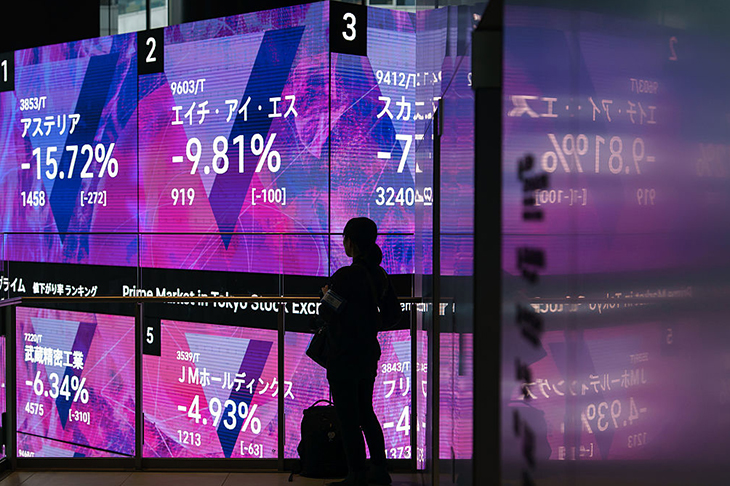
Tremors triggered by Tokyo’s excessive debt are apparent in Japanese financial markets. The danger is they could form a financial tsunami that heads elsewhere, if not everywhere.
Got something to add? Join the discussion and comment below.
You might disagree with half of it, but you’ll enjoy reading all of it. Try your first month for free, then just $2 a week for the remainder of your first year.