Can architecture solve urban crises? Or should architects and planners concentrate on mitigating the consequences of wider events (climate change, war, demographic and economic shifts), then hope for the best? What happens when we have no choice but to build or rebuild cities?
In her new book, Gabriella Bennett, a journalist interested in architecture and urban landscapes, spends two years flying around the world looking for answers to these and other questions. Woven through her adventures are two personal quests: to reckon with her unhappy adolescence in the Scottish postwar new town of Glenrothes; and to reset her life after a pandemic-era health crisis that led her to quit her job. It makes for an ambitious and engaging investigation, even if she is at times breathless about the projects she encounters.
In an apartment block created by a feminist collective, it took two years to decide on chairs for the common room
Her journey is epic. In Arctic Sweden, she explores Kiruna, a mining town whose centre must shift to a new location as the extracted ground subsides beneath its inhabitants. In Ukraine, she visits architecture students plotting and recording buildings lost to bombing in Kharkiv, and residents rehoused by charities outside Kyiv. In Vienna, she tours KalYpso, an apartment block created by a feminist collective, so design-conscious the residents took two years to decide on chairs for their common room; and, in Tokyo, she meets an urbanite whose apartment is so dinky he uses a miniature vacuum cleaner. (‘Cleaning hardly takes any time at all. Tidying is different.’). In Texas, she joins space fanatics watching rocket test launches from Starbase, aka ‘Mars-a-Lago’, Elon Musk’s remote, mono-industry city in the Rio Grande valley.
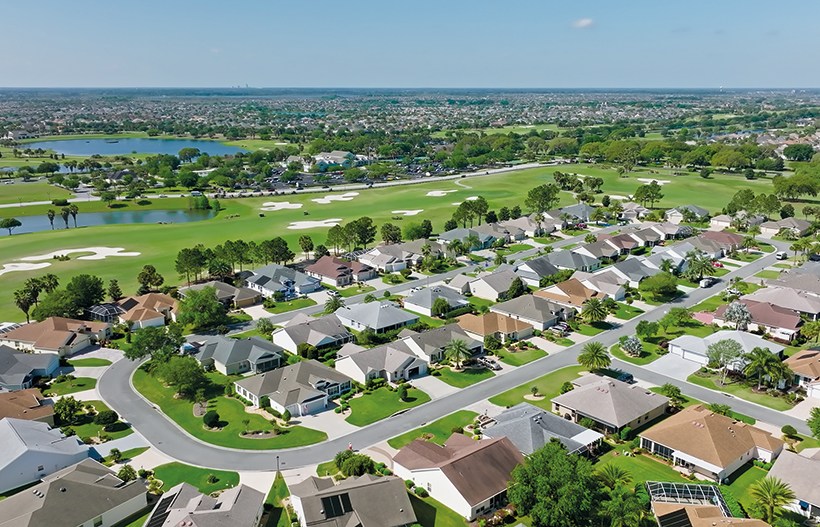
One of Bennett’s strengths is her eye for thrilling, dramatic and counterintuitive stories. She visits 11 destinations, and each project tackles a different problem, including loneliness. In Florida’s The Villages, the fastest-growing ‘age-segregated community’ for the over-55s in the US and a kind of party town for boomers, Bennett finds tales of sex parties and STDs at a record high. ‘You can take it or leave it, but that’s simply how it is,’ she deadpans.
Sometimes the story becomes Manichaean. There are goodies (indigenous people, artisans, architects with boutique practices and niche projects involving seaweed) and baddies (20th-century Scottish town planners, mining corporations, Foster+Partners). Bennett was a lonely teen-ager in Glenrothes, so she decides that 20th-century modernists got it all wrong. But she never knew the town’s modernist housing – she and her family lived in a farmhouse – and she doesn’t ask anyone who grew up in new-town Glenrothes how they experienced the place.
In Ukraine, she is impressed by an architect who shows her plans for a social housing project for the war-wounded. ‘I love it,’ she exclaims, though it has yet to be built. She may be right in these judgments, but she tends not to put her criticisms to her villains, nor difficult questions to the people she admires. While she does talk to some who live with her chosen architects’ work, those people have few serious complaints. But they can’t all be happy.
And occasionally her emotional involvement undermines her rigour. The closure of the Rothes Colliery, around which Glenrothes grew, was not ‘the worst PR disaster the National Coal Board had ever known’. That was, by some distance, Aberfan.
Elsewhere, the writing is superb. Bennett has a gift for atmospheric language and crystalline description, and she controls what could quickly become a sprawling and overly dense topic with excellent pacing (though there is a smattering of archi-jargon borrowed from Thomas Heatherwick – ‘humanising’, ‘soulfulness’ – mercurial words that sound delightful but are undefined). She stays on the right side of confessional writing: there is just enough of her personal story to engage without distracting from the vital stuff. She treats elements of city living that tend to concern women, such as eating out alone and manoeuvring prams, with as much importance as anything else. It is heartening to read reports from the far reaches of the world from a writer who was clearly unmoored by the pandemic but is now back covering ground with a sense of purpose.
Early on in the book, I worried that Bennett had put a lot of time and work into what might amount to a travelogue of architects’ vanity projects. But How to Build a City is not that at all. There is something of John Grindrod’s wry architectural odysseys, or even of Ian Nairn at his most lyrical in her writing. It is a serious and spirited attempt to find answers to problems that elude many architects and planners; to show us what is possible; and, perhaps, to demand from them the best that cities can be – whatever uncontrollable events may be heading our way.
Got something to add? Join the discussion and comment below.
You might disagree with half of it, but you’ll enjoy reading all of it. Try your first month for free, then just $2 a week for the remainder of your first year.