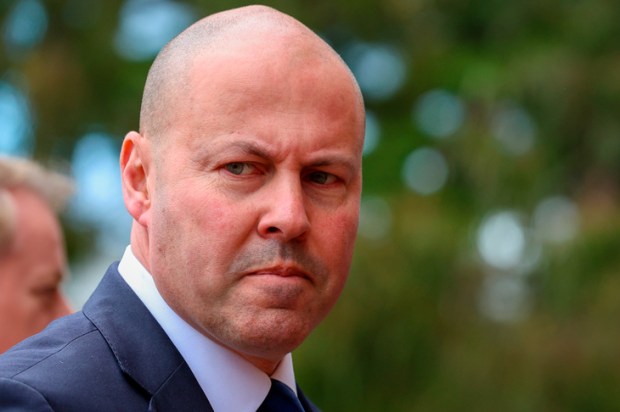
One Nation wants to be regarded as a serious party of government rather than merely a protest party. Fair enough. But parties aspiring to govern should expect their policies to be scrutinised, costed and criticised. That is what Opposition Leader Angus Taylor has done – but One Nation’s supporters have not taken kindly to it.
Taylor’s estimate that One Nation’s four headline policies would cost around $1 trillion over a decade sparked outrage. It shouldn’t have. Conventional costings put tax indexation at around $371 billion, income splitting at about $69 billion, lower migration at roughly $200–225 billion and higher defence spending at perhaps $275–350 billion. Whether every assumption is right is open to debate, but the arithmetic is within the right order of magnitude.
The difficulty is not the arithmetic but the lack of detail. One Nation’s migration policy illustrates the problem. It proposes a 130,000 visa cap but provides almost no breakdown by category. Senator Hanson exempted Pacific workers, essential temporary workers and working holiday makers, but the remaining allocations have to be guesswork. One thing, however, is clear: unless skilled migration is slashed, the cuts would fall overwhelmingly on international students – one of Australia’s largest export industries. That may reduce pressure on housing, but it also reduces export income, university revenue and the supply of skilled labour. Those trade-offs deserve to be acknowledged rather than ignored.
One Nation supporters were furious at Taylor’s critique that their policies are uncosted, incoherent and lack any credible plan to pay for their commitments, other than to abolish parts of the bureaucracy, a proposition that would cover only a tiny fraction of the cost. They would prefer that Taylor sing along with the One Nation cheer squad while they relentlessly deride the Coalition as the ‘uniparty’, identical to Labor.
Well, here’s one way in which Taylor is unlike Labor and One Nation. Labor promised more than 50 times before the last election that it would not increase the tax on capital gains or touch negative gearing. Yet it has since done both. And even when it costed a policy – like claiming its renewable energy policy would cut electricity bills by $275 a year by 2025 – it got it completely wrong.
One Nation’s treasury spokesman Barnaby Joyce, on the other hand, says the party will do its best to cost its policies but that it doesn’t have the resources. Really? It just raised more than a million dollars with its ‘Fire the liar!’ campaign. How much does costing policies cost? With donors increasingly sympathetic to the party’s cause, it’s a bit rich to cry poor. But even if One Nation gets into government, Joyce wants to outsource the quantum of government expenditure to the Reserve Bank. Why? Taylor simply proposes to cost and model all Coalition policies before the election.
Here’s another difference between Labor, the Coalition and One Nation. Labor recklessly increases international student numbers and visa charges, then simply pretends it has not created a housing crisis, instead increasing taxes on property investors. One Nation arbitrarily chooses a migration cap and provides no details on how it will work. Taylor says the Coalition will cap migration to match housing supply.
And despite what One Nation fans claim on the pages of Speccie, Taylor is anything but a carbon copy of Labor on climate and energy. In his budget reply speech, he pledged to abolish the Net Zero Authority, repeal the Safeguard Mechanism – Labor’s ‘great big carbon tax’ – end electric vehicle tax concessions, abolish Labor’s hidden carbon taxes, end subsidies for green hydrogen, and scrap the major transmission projects for the renewable energy rollout.
Instead of Labor’s obsession with emissions reductions, the organising principle is energy abundance to ensure affordability, reliability and security. He would work with coal-fired power station owners to keep generators operating longer, remove obstacles to gas and oil development, remove the ban on nuclear energy, rewrite environmental approval laws to accelerate resource projects, designate the Browse Basin gas project and the Taroom oil project as National Strategic Priority Projects, and encourage expanded domestic refining capacity, including biofuels and coal-to-liquids. He also committed to doubling Australia’s strategic fuel reserves and investing $800 million in additional fuel storage as part of a broader national energy security strategy.
Far from ‘stealing’ One Nation’s policy, Taylor’s program is more comprehensive, setting out an integrated program of institutional reform, regulatory repeal, fuel security, project approvals, electricity generation, strategic reserves, refining capacity and nuclear development.
Taylor’s speech reflects something largely absent from both Labor and One Nation: an attempt to integrate taxation, migration, defence, energy and investment into a coherent economic strategy rather than treating each issue in isolation.
That difference reflects not merely policy preferences but fundamentally different approaches to governing.
Taylor, Albanese and Hanson each come from different backgrounds, and their thinking has been shaped by their working lives.
Albanese has spent a lifetime immersed in the left faction of Labor politics. He’s an extremely skilful politician.
Hanson has also spent the last 35 years in politics but as the quintessential outsider, and she is extremely accomplished at communicating the anger of those who are outraged at the absurdity, waste and arrogance of Australia’s self-appointed elite.
Taylor has spent most of his life outside of politics. Before entering Parliament in 2013, he spent most of his career working with businesses; that’s why he knows how to cost a program, anticipate its unintended consequences, and balance the books. Those differences in background are reflected in the way they govern or propose to govern.
Labor deludes itself Australia can tax, regulate and decarbonise its way to greater prosperity. One Nation proposes to sharply reduce migration, restrict foreign investment and shrink one of our largest export industries without acknowledging the economic consequences or addressing them. Taylor argues that prosperity depends on expanding the nation’s productive capacity while managing those trade-offs honestly. Voters may or may not agree. But pretending the Coalition is simply Labor’s identical twin in disguise ignores one of the most significant shifts in Coalition policy for many years.
The real divide in Australian politics is not between insiders and outsiders, or left and right. It is between parties willing to confront the trade-offs inherent in governing and those that pretend they do not exist.
If the Coalition and One Nation are serious about replacing the Albanese government, they need to play to their strengths, minimise their weaknesses, and recognise both what unites them and what divides them, because effective cooperation begins with honesty about the trade-offs.
Got something to add? Join the discussion and comment below.
You might disagree with half of it, but you’ll enjoy reading all of it. Try your first month for free, then just $2 a week for the remainder of your first year.