This Little World opens with a description of the riots of 1517, an explosion of pent-up hostility and resentment against ‘strangers and aliens’. Recently arrived migrants from France and the Low Countries were blamed for aggravating the poverty and want suffered by locals. That Easter, a rabble-rousing preacher had called for Londoners to remedy this injustice: ‘As birds would defend their nest, so ought Englishmen to cherish and defend themselves, and to hurt and grieve aliens for the common weale.’ Soon afterwards, on the May Day holiday, apprentices gave drunken, unruly vent to their frustration in riots. Five hundred years flash by and so little has changed.
In her first book, Nandini Das explored the origins of the British Empire through a single Englishman of the early 1600s, Sir Thomas Roe, striking out into the wider world to make his fortune. One of the clever things about Courting India was how Das turned the tables on Roe, who in his memoirs made himself out to be a bold and decisive ambassador. Viewing Roe through the eyes of the people hosting him in Mughal India revealed him – and England, at the same time – to be hapless and ineffectual, far less great than he imagined.
This Little World is a companion piece in which Das turns her gaze inward but widens the focus, capturing a multiplicity of foreigners (or outsiders) who peopled Tudor and early Stuart England. She reveals an emerging nation state not rising into being fully fashioned but teetering between defensiveness and receptivity:
England’s porousness, for all its discomforts, gave it form. It gave the nation the capacity to define and renew itself, to recognise that belonging is never granted once and for all but must be lived, argued and reimagined in common.
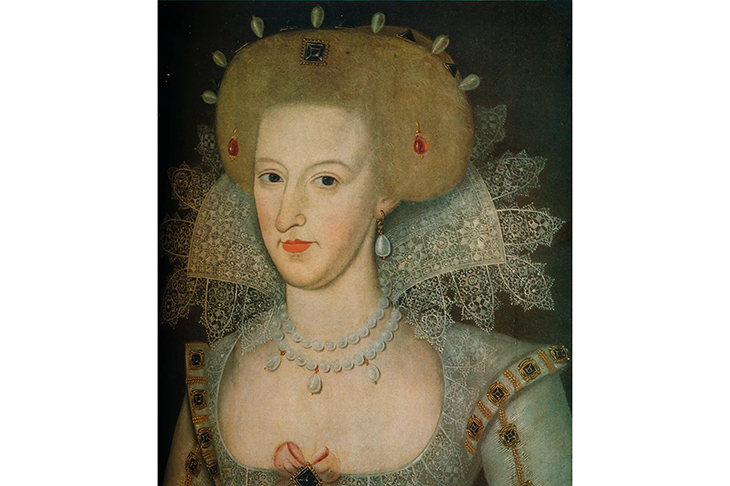
Look into the early modern period with Das as your guide and you will find that strangers, as they were called, were everywhere. From Holbein and Erasmus to Marcus Gheeraerts and John de Critz, the ‘creatives’ who fashioned the iconography of the Tudor and Stuart dynasties were often foreigners. In a chapter called ‘Invisible Woman’, Das focuses on one of the few women known to have worked in this milieu, the Flemish ‘paintrix’ Levina Teerlinc, who served four Tudor monarchs, probably designed the Great Seals for both Mary and Elizabeth and possibly taught Nicholas Hilliard. Given the paucity of documentation about her, it is a miracle a chapter could be written, but Das, so immersed in the material that her imagination can take flight, hangs a flesh and blood body on to the skeleton facts and breathes Levina into being.
The concluding chapter concerns the small group of Jews living in London during the Commonwealth. Since their expulsion from England in 1290, terrible rumours had spread about Jewish people: that they had a ghastly smell; that the men lactated and menstruated like women; that they drank blood and boiled Christian children for their dinner. Despite their physical absence, contemporary curiosity about Jews was intense, reflected in Marlowe’s The Jew of Malta and Shakespeare’s The Merchant of Venice. Travellers who encountered actual Jews in places such as Venice or Prague were amazed to find that they were ordinary people:
For all that contact could easily reinforce the crustiest of prejudices and inflame old suspicions, it could just as often, and sometimes unexpectedly, produce something radically different: the unsettling recognition of a shared humanity.
Peace with Spain in 1630 brought the return of a few Sephardic (Iberian) Jews. Antonio Fernandes Carvajal – or Abraham Israel Carvajal, as he was known at home – was one of these, whose fortunes were cemented as one of five suppliers to the New Model Army and whose success as a merchant working in and out of continental ports brought him into the intelligencing orbit of Oliver Cromwell’s spymaster, John Thurloe. England’s first written constitution, in 1653, offered protection from religious persecution. Although a petition for specific rights for Jews to worship freely was refused the following year, with very English understatement, Carvajal and his friends were able quietly to establish a small synagogue and cemetery in Aldgate. Its replacement, built nearby in 1701 when Carvajal’s got too small, is the only synagogue in Europe that has held services continuously since then.
It is unusual for historians to write with contemporary issues so openly at the forefront of their thinking, but Das is no ordinary historian. This Little World is at once an engaging and entirely fresh look at a period that is a foundational part of our national identity and an impassioned examination of our ideas about inclusion and exclusion, belonging and non-belonging, hope and fear. It works because it is rooted in exciting scholarship and lifted by wonderful writing, pulsing with ‘the restless energy of that in-between space’.
Got something to add? Join the discussion and comment below.
You might disagree with half of it, but you’ll enjoy reading all of it. Try your first month for free, then just $2 a week for the remainder of your first year.