
The passing, aged 100, of the former US Federal Reserve chairman Alan Greenspan, prompts thoughts about shifting tensions between politicians and central bankers. Greenspan’s 18-year Fed tenure spanned those of presidents Reagan, Bush senior, Clinton and Bush junior. All had reason to thank him for his mastery of markets, even though history now regards him as a key architect of the 2008 crisis, which came shortly after his retirement and was certainly fuelled by his era of easy money and light regulation.
And though Democrats occasionally took potshots at him for being a free-market right-winger at heart, few seriously accused him of Republican partisanship and no one challenged the abiding value of his institution’s independence. In the US and elsewhere today, the mood is far more mixed.
We might expect Elvira Nabiullina, governor of Russia’s central bank, to be a Kremlin apparatchik, but her countrymen should be glad that she isn’t. Having opposed the 2022 invasion of Ukraine, she was reported to have been ordered by Vladimir Putin to stay in her post when she tried to resign. Since then, she has won grudging international respect for keeping the Russian economy ticking over despite high inflation driven by military spending. But Putin wants her to cut rates faster to make it easier to fund deficits if he advances, in desperation, to all-out war. When she disappeared recently for three weeks, missing a high-profile meeting in St Petersburg and blaming a cough, conspiracy theorists saw a freezing-out by Putin ahead of her official departure next year. For sure, her successor really will be a stooge.
Whipping boys
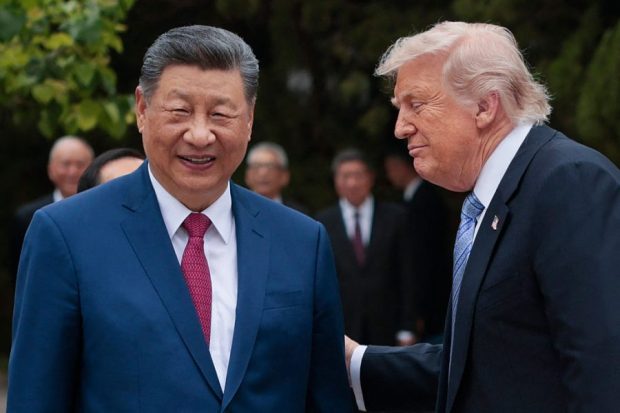
All of which has echoes of the standoff between the former Fed chairman Jerome ‘Jay’ Powell and President Donald Trump, who wanted Powell to cut rates faster to boost the stock market and help his billionaire buddies. Despite volleys of insults from the White House and spurious threats of criminal indictment, Powell maintained both his cautious policy stance and his dignity until his term ended on 15 May. His successor, Kevin Warsh, whose father-in-law is one of those buddies and who was called ‘Trump’s sock puppet’ when his appointment was announced, caused mild surprise with a reference to the Iran conflict (‘Inflation remains elevated… in part, reflecting supply shocks… in certain sectors, including energy’) that was bigged up on the Motley Fool market comment site as ‘throwing Trump under the bus’.
But Warsh’s willpower will surely be tested by his White House sponsor just as the hapless Andrew Bailey of the Bank of England will be besieged by pressure to support an Andy Burnham welfare-plus-nationalisation spree that trashes all previous fiscal rules; and Bailey’s predecessor, Mark Carney, now a world statesman, is remembered as little more than a Remainer prisoner of conscience during his years in Threadneedle Street.
For most of the last century, independent central banks modelled on the Fed and Germany’s Bundesbank were saluted as pillars of prudence and counterweights to democratic vagary. Nowadays, they are too often used as whipping boys for economic weakness or accused of impeding the populist will. If it’s a question of who throws who under the bus, the would-be autocrat is in the driving seat and the central banker is the one who needs to take care stepping off the pavement.
Bean there
Costa Coffee was founded in 1971 by Sergio Costa, son of a London-Italian café owner. It had grown to a 40-outlet chain by the time he sold to Whitbread, whose strategy was to diversify away from its brewing heritage.
Sold again to Coca-Cola (as a diversification into the coffee boom) for £3.9 billion in 2019, Costa peaked at 4,000 outlets around the world but ran into multiple big-chain competitors and straitened consumer spending. Coca-Cola tried to sell last year for £2 billion to private equity buyers, but the potential bid evaporated – while Costa, charging £4.40 for a latte, lost its UK market lead to downmarket Greggs (£3). A ‘restructuring’ has now been announced. Sergio Costa died a wealthy man in Monaco in 2022, leaving a perfect parable of the rise and fall of consumer brands.
Bonnes vacances
In France for a brief but baking-hot escape from the Starmer drama. One of my guests is stuck on Zoom dealing with a peril of London life: the downstairs neighbour who has broken house rules by becoming an Airbnb landlord for short-stay riff-raff, but is avoiding challenge by shifting ownership of his flat between offshore companies. Meanwhile, you might expect the French to be particularly hostile to Airbnb as a foreign disruptor of the traditional tourism trade which accounts for 10 per cent of their economy.
Yet here are full-page ads celebrating the contribution of California-based Airbnb to ‘the vitality of 29,000 communes’ (out of 35,000) across the country. The peg is the 90th anniversary of a law passed on 20 June 1936 which gave French citizens a right for the first time to two weeks’ annual paid leave. But the irony is it had nothing to do with ‘holidays’, which barely existed in that era: the elite had their summer villas, the lower orders had no more than the occasional charabanc excursion. According to some historians, the real motive for the 1936 law (alongside a reduction of the working week from 48 hours to 40) was to break a general strike which had followed the election of a centre-left Popular Front government.
Many factories were occupied by strikers and the ruse was partly designed to winkle them out when official congés payés began on 1 August. But the strike was over by then and the workforce has since advanced to 30 days’ holiday and a 35-hour week. Political trickery, slippery slopes? That’s the French for you, right? But let’s never forget they’re still at least 16 per cent more productive per hour than British workers.
Got something to add? Join the discussion and comment below.
You might disagree with half of it, but you’ll enjoy reading all of it. Try your first month for free, then just $2 a week for the remainder of your first year.