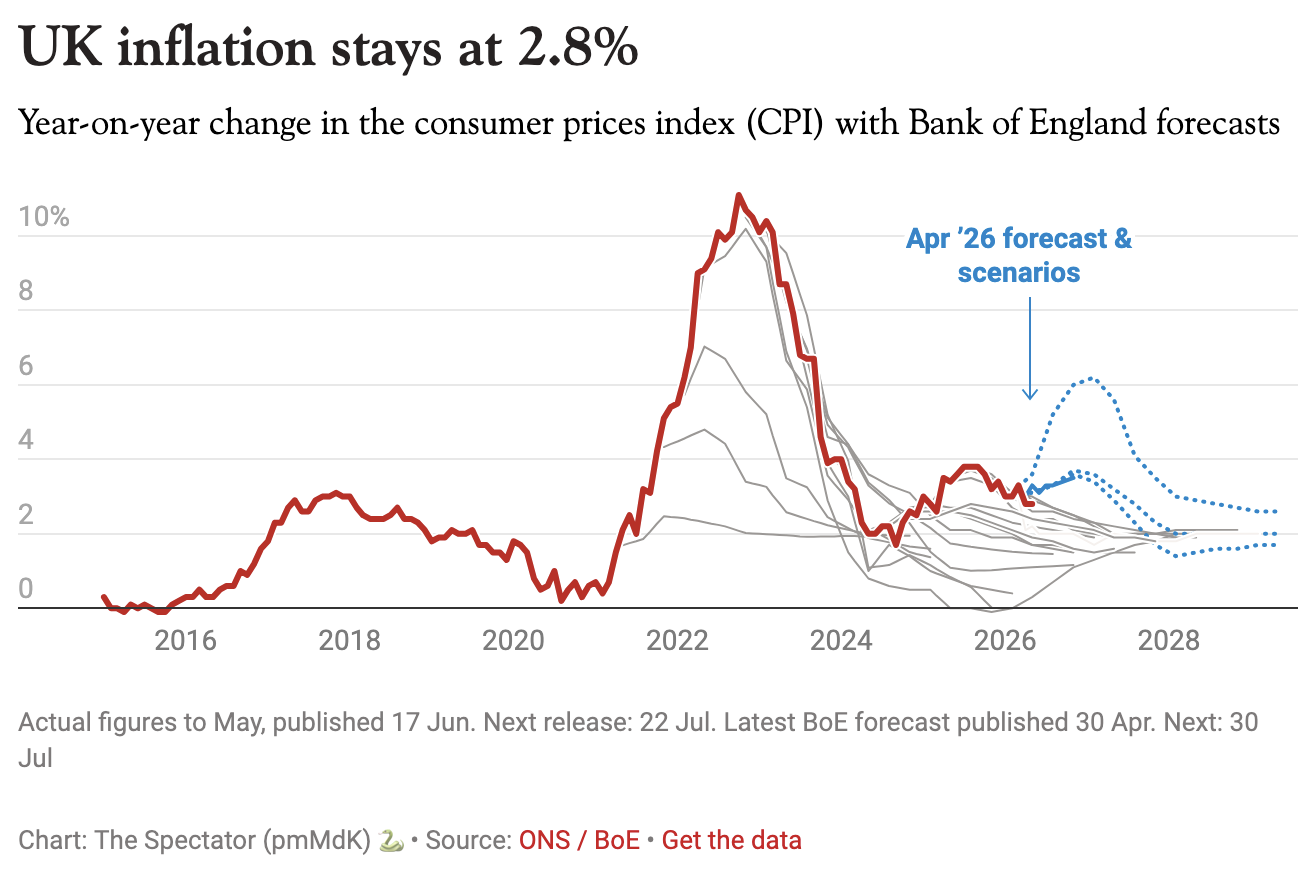
The Chancellor will be breathing a sigh of relief this morning as inflation holds steady. Figures just released by the Office for National Statistics (ONS) show that CPI in May remained at 2.8 per cent – the same as in April.
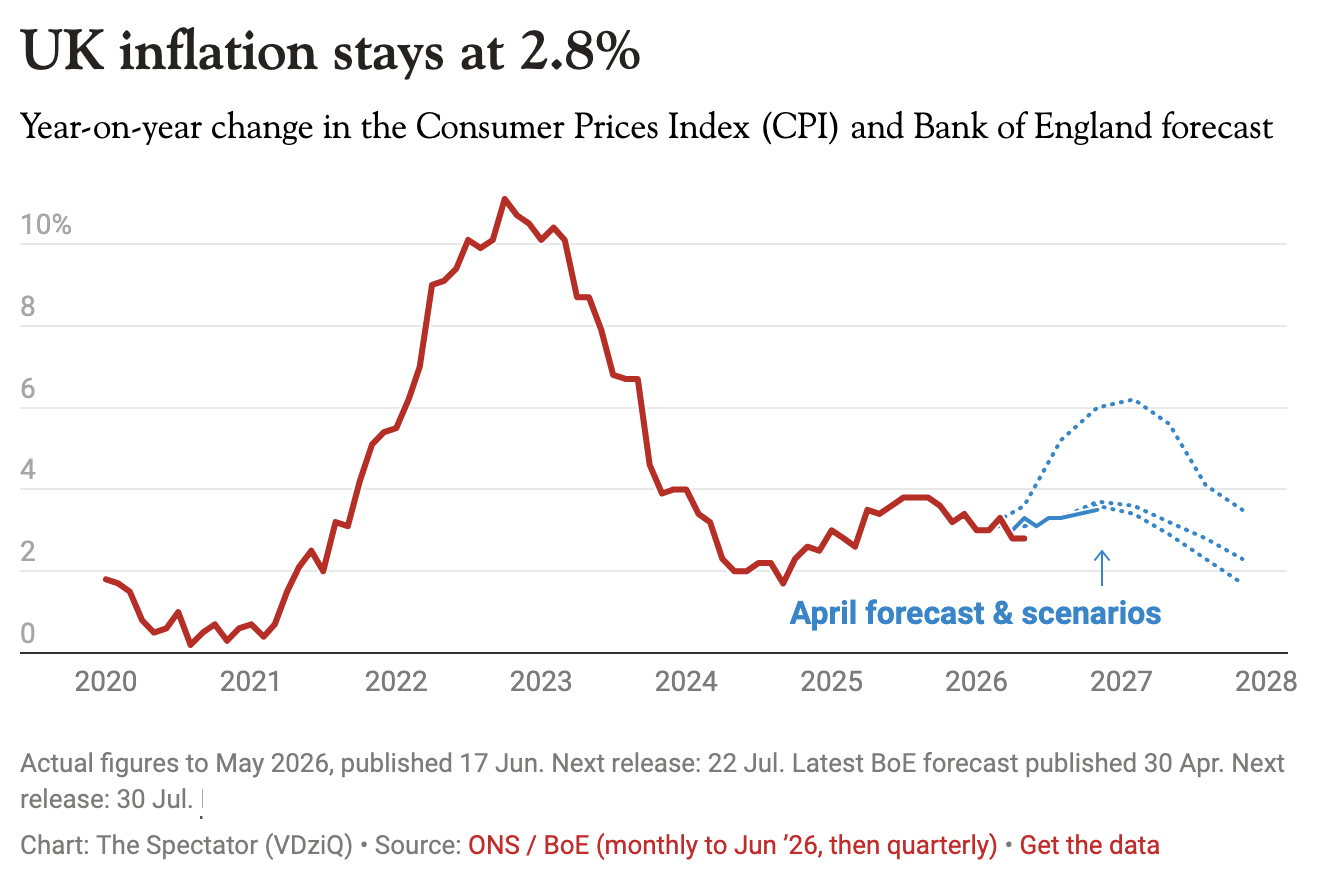
Figures from 2020
Figures from 2015
That news is welcome and goes against the grain of economic analysis, which had forecast a rise to 3 per cent. The fall in April was largely deemed to be artificial, thanks to last year’s massive increase in regulated and inflation-linked utility bills falling out of the series.
However, that did not come to pass. According to the ONS, a rise in transport costs, thanks to increased air fares, vehicle taxes and petrol prices, was offset by falling inflation in meat, dairy and vegetables, in what is surely welcome news for shoppers. Overall, food inflation fell from 3 per cent in April to 2.2 per cent last month, while the cost of domestic heating oil fell too.
Markets are far more effective than state intervention when it comes to protecting British shoppers
What all this means for the Bank of England – which next sets interest rates tomorrow – is that a rise in rates is off the table, given prices seem under control and the current level of 3.75 per cent is already hampering growth and employment. The question for the rest of the year instead is if and when it will next cut.
Meanwhile, core CPI – a less volatile measure of inflation – did tick up a little, and we can expect a rise later in the summer, given the energy price cap is set to increase by 13 per cent in July. However, what is clear is that we have escaped a price shock on the scale of the one experienced when Russia invaded Ukraine.
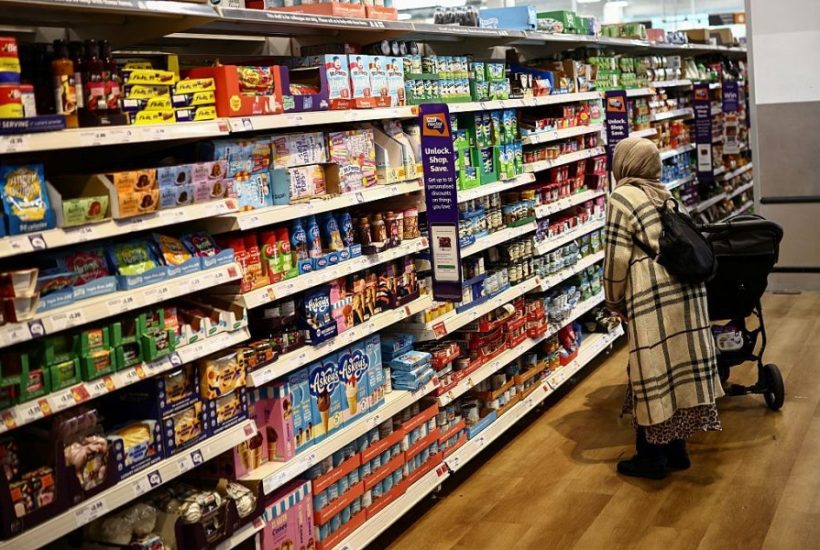
We do not, however, have the government to thank this month. Instead, given it is mostly food costs that have kept a lid on inflation, it is supermarkets and other firms operating within competitive free markets that have given us this reprieve. Far from the ‘price gouging’ and ‘profiteering’ Rachel Reeves kept warning about, the fiercely competitive nature of our supermarkets has meant prices have not soared. Where they did tick up, surveys show demand was simply not there from shoppers to sustain them.
The lesson is clear: markets are far more effective than state intervention when it comes to protecting British shoppers. The Chancellor owes supermarkets an apology and a thank-you note.