The dignity of work has long been a tenet of the West, encapsulating the very quintessence of the human experience.
We work because we are free and wish to improve life not only for ourselves but for our children. It is the dignity of work that permits us to buy property – an extension of our liberty – and allows us to participate in the civic sphere. It provides the opportunity to contribute to the common good.
The connection between the dignity of work and the common good has been expressed by some of the greatest of minds, such as Hobbes, Locke, and that great Anglo-Irish politician, Edmund Burke. These intellectual giants rightly viewed the dignity of work as central to civic life, especially for the common man. One of the ways this manifested was in the value associated with the trades.
However, this all changed with the introduction of globalisation.
As Maurice Glasman observes, globalisation promoted ‘change without continuity’ and ‘a modernity without tradition’, where stable employment gave way to transferable skills, and the relationships of community were replaced by self-defined identity. He notes that ‘the categories of labour, land, and money were rendered beyond political contestation’ reduced instead to mere commodities.
The result of this embrace of unfettered globalisation was the deindustrialisation of the West and the erosion of respect for vocational training in favour of the ‘knowledge economy’. This created an oversupply of university students lacking practical skills for the workforce, while entrenching a culture of mockery and condescension towards apprenticeships.
Then, like an avalanche of reality, Artificial Intelligence has entered the world and threatened the very basis of education. Once in, STEM has increasingly been pushed out. Coding and computer science education has rapidly become obsolete. Law and Health Sciences are at risk of diminishing value. For the first time in decades, white-collar jobs are being threatened.
And blue-collar jobs? Well, they are regaining value.
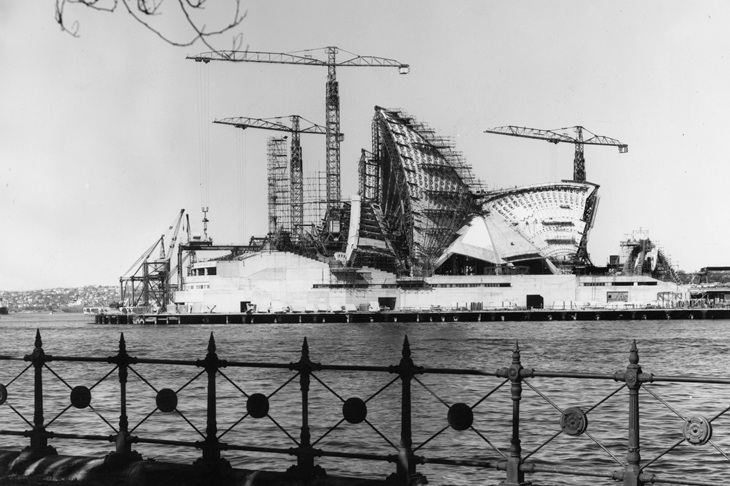
Some will mourn the declining economic value of the office as a symptom of a culture in crisis. Yet history tells us something different – that society as an organic culture has always affirmed the tradesman as an artisan who actively contributes to the common good through skilled labour. The medieval and Renaissance guilds come to mind. Communities that encouraged the creation of objects of both beauty and utility. The Piazza San Marco stands as a testament to this synthesis.
We are, I believe, on the cusp of a renaissance – both of intellectual culture and of the trades. But this will only occur if we re-examine our post-historical attitudes toward the nobility of manual work. We must encourage apprenticeships and fund programs that provide genuine pathways into a vocation.
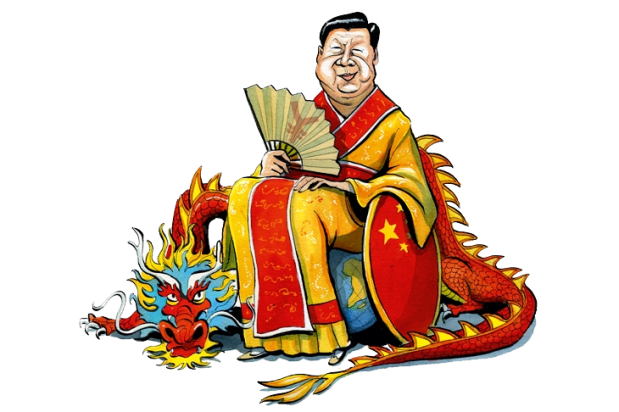
Moreover, we must move away from the policies of globalisation, particularly the offshoring of jobs to countries like China. Australia must reindustrialise by drawing on its vast natural resources. Encouragingly, parts of the country are already rediscovering this industrialised backbone through mining, energy, and regional production, demonstrating how resource wealth can be harnessed for national revival rather than dependence on foreign supply chains. This is what national renewal looks like: not dependence, but production; not abstraction, but work. There is, at last, a growing recognition that the dignity of work and industrial strength must go hand in hand if the nation is to endure.
However, this is not enough. The federal government must take responsibility for restoring the trades. To my dismay, the major parties show little interest in doing so, effectively hollowing out our economy and weakening our position on the world stage. They remain trapped in the misguided belief that more globalisation and further offshoring will somehow solve the very problems they created. They do not seem to understand that the knowledge economy was, at best, a temporary solution to a deeper structural failure.
The truth is simple. Reindustrialisation and the promotion of apprenticeships are not merely options – they are the only solution. A nation that does not build will not endure.