How do you write satire when you are up against a literary festival? It writes itself. I have been leafing through the programme of the Melbourne Writers’ Festival (7-10 May) and it’s full of occasions when anyone of masochistic disposition can enjoy literary leftists burbling on to other leftists of the proseccocialist variety with selections from the narrow repertoire of Queer, Aboriginal, anti-Zionist, anti-colonialist and climate obsessions that a leftist imagines to be the totality of life.
Like everything else these days the festival is heavily feminised. Its director is a woman – but why, if they were looking for female leadership, didn’t they turn to the director with the magic touch who got the Adelaide writers’ get-together so talked about? Instead, we have ‘creative writing’ graduate Veronica Sullivan, who’s on the board of the ‘literary journal’ Overland, a magazine of such absorbing interest that its federal and state ‘creative’ subsidisers have pulled the plug and condemned it to the begging bowl.
One thing that sticks out a mile is the number of ‘writers’ from or connected to Canada, a nation well up in the top two or three most boring in the world, and not coincidentally the place where the ‘indigenous’ fantasies prevalent in Australia – the renaming of cities that didn’t exist when the Aborigines had the continent to themselves, the appropriation of the term ‘aunty’ for female ‘cultural leaders’, the invariably ‘proud’ descent from historically dubious ‘nations’, indeed the very use of the phrase ‘first nations’ – were pioneered. The Aboriginal industry here pinched them, lock, stock and barrel.
As to satire, the programme is a masterpiece of inane culturespeak. Who could better the blurb about Chelsea Vowel (apparently a real name). Chelsea is, ‘Métis from so-called Canada from the community of manitow-sâkahikan (Lac Ste. Anne) Alberta, currently residing in amiskwacîwâskahikan (Edmonton). Parent to six children, she has a B.Ed., LLB, and MA. Chelsea is a queer, disabled, nêhiyawêwin (Cree) language instructor, public intellectual, writer, and activist educator whose work intersects language, gender, Métis self-determination, futurisms, and resurgence.’
Chelsea will enthral the audience with her views on ‘Indigenous Futurisms’, ‘a dynamic movement that transcends traditional literary genres, encompassing art, music, video games, fashion, and various media that express Indigenous perspectives on the past, present and future’ (in which case shouldn’t it be called ‘Indigenous Futurisms, Pastisms and Presentisms’?).
In just the first few pages of the programme there is such a parade of solemn self-exhibitionism the festival-goer is embarrassed for choice. There’s ‘Interdisciplinary artist’ and ‘queer nehiyaw aunty’ Jessica Johns, another Canadian, or should one say ‘member of Sucker Creek First Nation’, an authority on ‘horror’ – ‘graveyards, monsters, things that go bump in the night’, a horror she says that pales beside the plight of ‘indigenous peoples’, for whom ‘colonisation is as horrific as humanity gets’. I know it’s heresy even to think it but would there not have been just one indigenous person, scrabbling out an existence circumscribed by harshness, who would have regarded the arrival of Western civilisation as a blessing? Surely life is easier with the wheel.
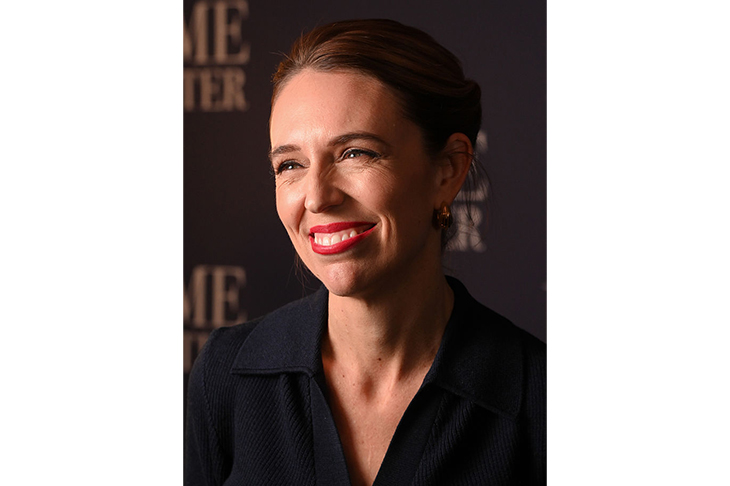
Jacinda Ardern, that is ‘the Rt. Hon. Dame Jacinda Ardern’ – aren’t these people supposed to be republicans? – will expatiate on ‘A different kind of power’, not further specified, but possibly what Covid placed in her hands to wreck the New Zealand economy with. Journalist Osman Faruqi piously believes that ‘a robust and diverse media landscape that holds government and institutions to account is essential to healthy democracy’ – healthy democracy being especially dear to the heart of his mother, Senator Mehreen, who thinks Australians who diverge from her opinions are ‘racists’.
One more Canadian, Quill – yes – Quill Christie-Peters, is an ‘Anishinaabe educator, scholar and self-taught visual artist’ and polymathically, a ‘traditional tattoo practitioner’.
And so it goes on. There are some old favourites. Erstwhile senator Bob Brown chugs on stage like a vintage car, his halcyon days of saving the environment long gone but polished up for the festival as a ‘story-teller’ in the bustling Queer department. The ‘modern Renaissance man’ – hear that, Leonardo? – Shaun Micallef is there plugging a book he’s written, looking glum, as though he were sitting through an act at that graveyard of humour, the Melbourne Comedy Festival, an old stamping ground of his. ‘Troubadour historian’ and tour guide Robyn Annear is one of the few smiling faces on display. The others have the expression of having detected a bad smell. ‘Activist, historian and essayist’ Tony Birch, a professor at Melbourne University, looks as though he’s spoiling for a brawl.
Sadly, one can’t have everything. Festival-goers will have to do without the presence of well-known spreader of sweetness and light Dr Randa Abdel-Fattah, the hill the Adelaide festival died on. Nor – and in the most progressive state in the Commonwealth, inexplicably – is there any Blak writer (the festival is shamefully white) to discuss, for example, the traditional literary implications of Victoria’s landmark ‘treaty’ and the fascinating story of its negotiation through the Grabba-Moolah truth and compensation commission. But be of good cheer: Bruce Pascoe is there.
Another name was instantly recognisable, Julie Andrews. Julie Andrews? I didn’t know she was a writer but there again, some of the others have pretty slender credentials. Julie’s melodious contribution would be a pleasant contrast to their unsmiling rectitude. She’d be the spoonful of sugar to make the medicine of grievance-wallowing go down. But of course that’s the wrong Julie Andrews. This one runs an exercise in race-stirring called ‘Gabra Bilk, Wurruwila Wutja (Clever Country, Clever People) research centre’. If the Julie I was thinking of had been director of the Mary Poppins research centre for taxpayer-funded modish literary pretentiousness would she have been asked to the festival too?
Got something to add? Join the discussion and comment below.
You might disagree with half of it, but you’ll enjoy reading all of it. Try your first month for free, then just $2 a week for the remainder of your first year.